By relegating Native communities to a position of perpetual pastness, settler colonialism situates them at what Denise Ferreira da Silva posits as the “horizon of death,” forever receding rather than actively shaping the present and future.1 Yet Native artists and activists persist in generating futurity on their own terms, refusing the horizon of death through collaborative acts of land reclamation and cultural resurgence.
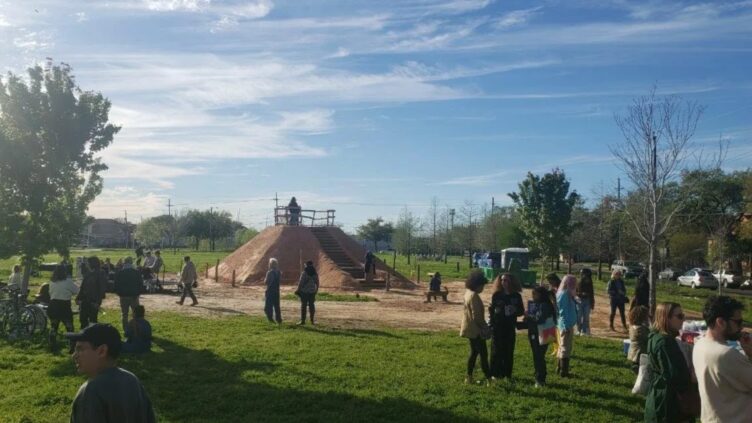
In 2024, multimedia artist, activist, and member of the United Houma Nation, Ida Aronson, joined an intertribal collective, composed of poet and ethnographer Jenna Mae of Cherokee, Eastern Siouan, and Mvskoke descent; social practice artist Ozone 504 of Saponi, Monacan, and Lenni Lenape descent; multimedia artist Monique Verdin, member of the United Houma Nation; and Dr. Tammy Greer, of the United Houma Nation, to create Nanih Bvlbancha, an earthen mound and Indigenous gathering site to honor the past and lay the groundwork for future generations. Unveiled in April 2024 on the Lafitte Greenway in New Orleans, Nanih Bvlbancha works as an earthen mound and Indigenous gathering site that the intertribal collective built in community to call attention to land loss and an urgent need to protect coastal and tribal communities. The project’s name, meaning “place of many tongues” in Chahta (Choctaw), signals how it directly challenges the temporal containment of Native peoples in the past, as Ferreira da Silva describes.
Nanih Bvlbancha operates as both an ancient form and a radically contemporary intervention. As a nanih (the Chahta word for hill or mound), it joins the thousands of earthworks constructed by Indigenous peoples across the Southeast dating back millennia, while simultaneously functioning as a modern monument to both ancestors and living communities. For example, when the colonists arrived in the late seventeenth century, Indigenous communities were already building and living on mounds; thus, Aronson and the collective of artists and educators built Nanih Bvlbancha to draw on those ancient mounds and honor them.2 The doubling of the past and present challenges the settler-colonial narrative that would relegate mound-building to a pre-contact past.
The mound incorporates soil from across the continent and the globe, bagasse donated by Alma Plantation in Pointe Coupee Parish (site of one of the earliest enslaved people’s uprisings), woven palmetto mats created collectively, and an oyster-shell chimney functioning as a drainage system.3 Embedded within the structure are a handmade Houma Language dictionary, poems in Atakapa-Ishak, natural pigment artworks, and creations by young people. These material traces encode what Aronson describes as practices for liberation, understood as a repurposing of materials entangled with plantation economies and extractive histories into structures oriented toward collective survival. The inclusion of soil from distant places honors the Mississippi River’s role in carrying sediment to form the delta while acknowledging the ongoing loss of Louisiana’s wetlands at one of the fastest rates on the planet.
This understanding of place challenges the settler colonial presumption that Indigenous nationhood must structure itself around exclusive territorial control. As Patricia Monture-Angus argues, Indigenous sovereignty is frequently articulated as a relationship with and responsibility for land rather than as sole control over it.4 The collective explicitly positions the mound within this framework, refusing the settler logic that renders land a commodity to be possessed and defended through exclusion. Alternatively, the mound offers what we might understand as a queered nationhood, one organized not around membership/non-membership binaries but around shared responsibility and accountability to place.
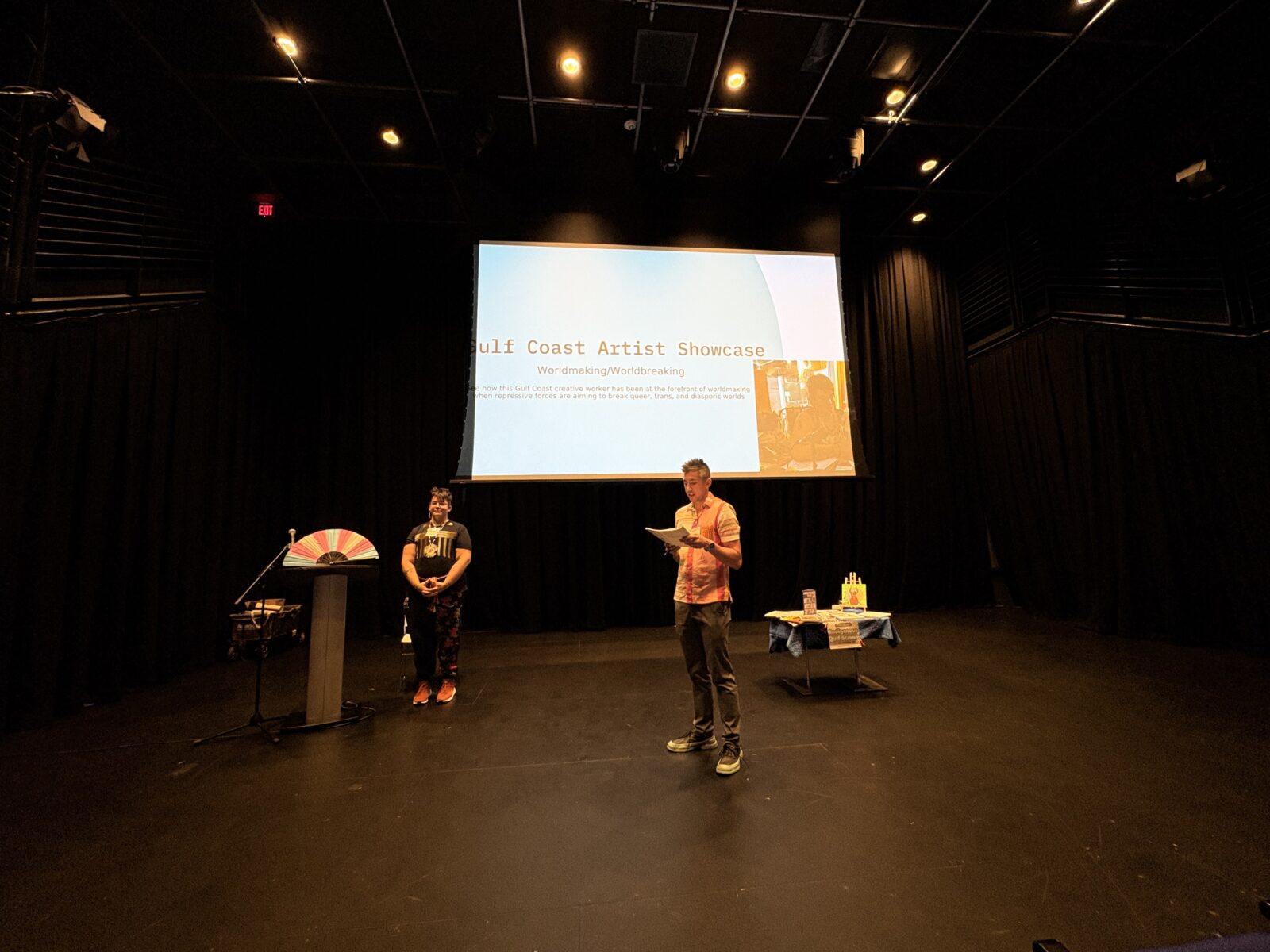
Nanih Bvlbancha was built through community workdays that drew diverse participation, according to Aronson. As they stated during the Gulf Artist Showcase for ASAP/16, “We made this in the neutral ground as a monument both to our ancestors and our modern community, to say that we’re still here, and we’re creating these things in a modern time.” Aronson’s insistence on presence operates beyond a mere demographic assertion. The mound functions as a site where Native peoples, particularly younger generations, can access knowledge systematically excluded from state curricula, countering educational erasure by creating an alternative pedagogical space where Indigenous presence requires no legitimation from the state, thereby unfolding a queering of settler futurity. Nanih Bvlbancha demonstrates that Indigenous futurity need not abandon ancestral practices to be legible as modern.
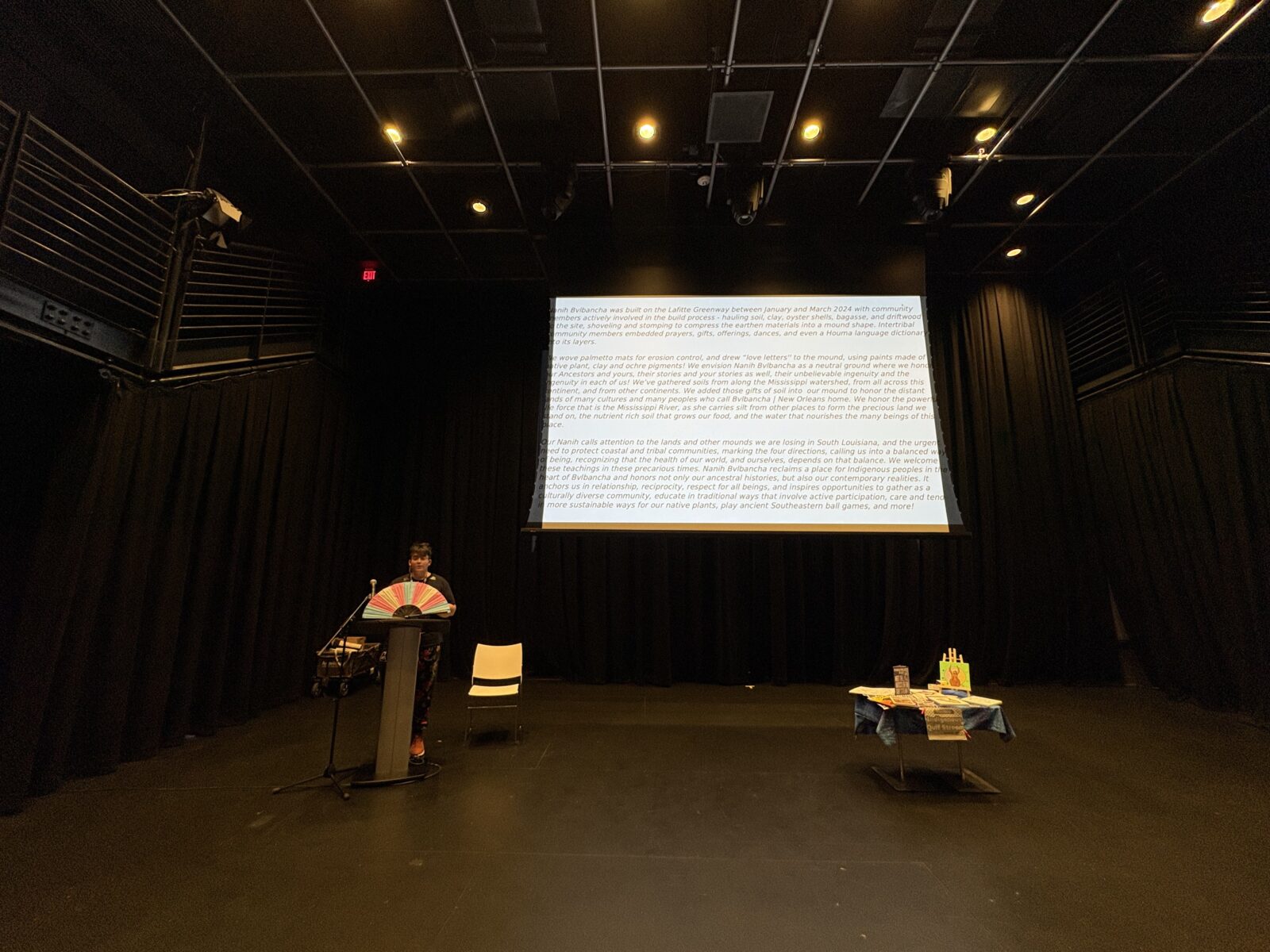
As part of Prospect New Orleans’ triennial art exhibition, the mound intervenes in ongoing debates about Confederate monument removal and what constitutes appropriate public memory in the post-Katrina Gulf South. Where removed Confederate monuments reinforced white supremacist narratives of the past, Nanih Bvlbancha offers an entirely different relationship to history and futurity. The collective explicitly connects the project to South Louisiana’s environmental devastation and rapid land loss, positioning the mounds in the delta as high grounds where biodiversity can persist as everything around it disappears. This framing proposes Indigenous architecture as a living technology that has preserved land and life for thousands of years, even as extractive industries and settler infrastructure accelerate ecological collapse. The mound thus functions as both a memorial and a blueprint, honoring ancestors while modeling sustainable relations to land that could support future generations.
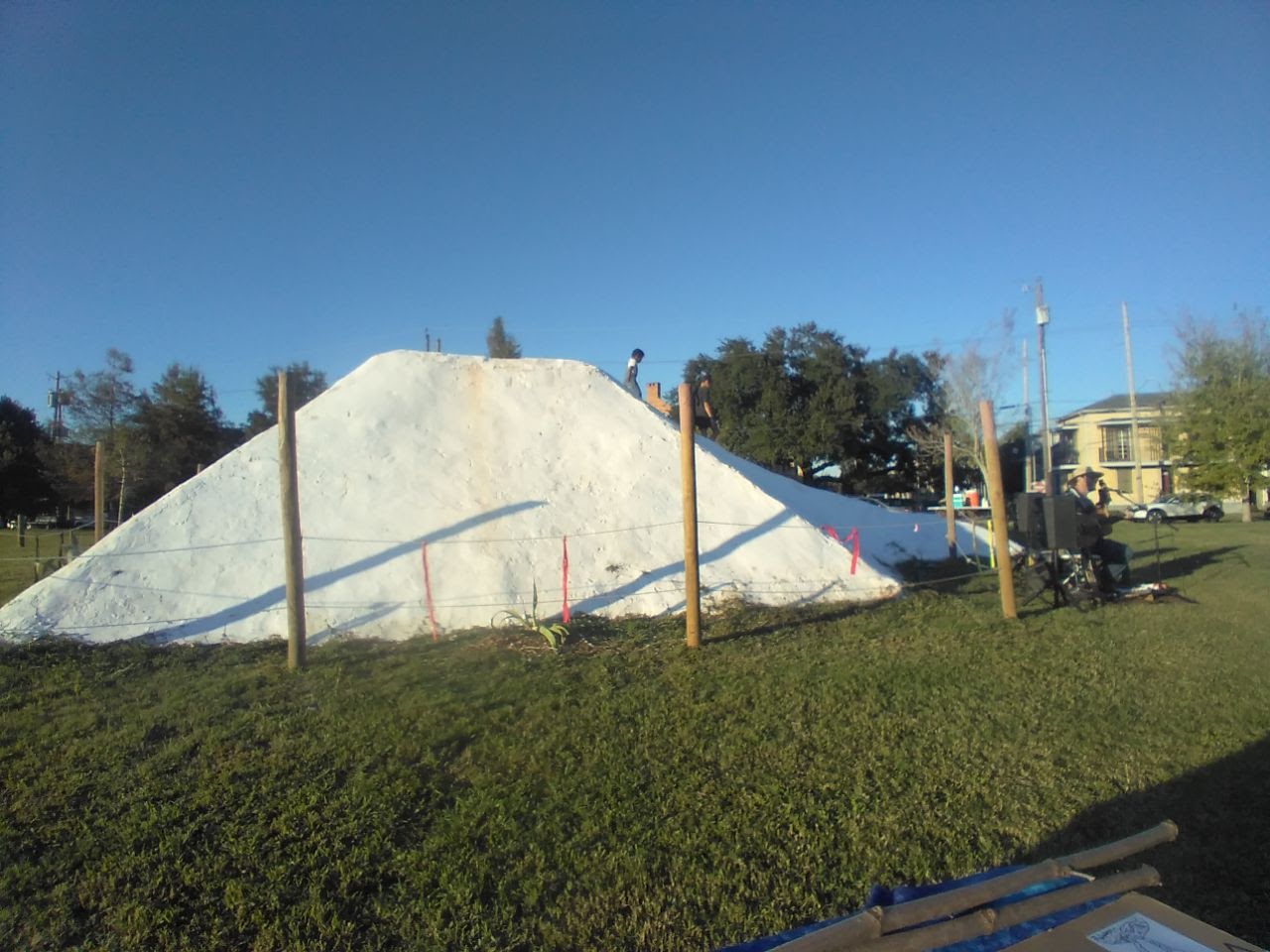
The mound stands as material refusal. It rises from earth that settlers claimed as property, built by hands that settler narratives insist have vanished, using techniques that predate the nation-state by millennia, oriented toward futures that exceed settler temporality. As the mound continues to host gatherings and teachings, it will transform, absorbing water, settling into the earth, and accumulating stories. The mound embodies impermanence by design. Unlike settler monuments that aspire to freeze history in bronze or stone, Nanih Bvlbancha demonstrates what sustains life: adaptive responses, care, and reciprocity in lieu of extraction. In a region where land itself is disappearing, and Indigenous communities face ongoing displacement, Ida Aronson and the intertribal collective offer a template for collective survival—a reminder that worldmaking has included Indigenous work for millennia, and that the futures we need are already rising from the earth.
: :
Endnotes
- Denise Ferreira da Silva, Toward a Global Idea of Race (University of Minnesota Press, 2007), 169.
- Tammy Greer and Mariah Hernandez-Fitch, “In the Spirit of Community: The Nanih Bvlbancha Mound,” Southern Cultures 31, no. 3 (2025): 78-87.
- Information about the mound’s construction and the intertribal collective comes from my interview with Ida Aronson (October 23, 2025); Zane Piontek’s “Nanih Bvlbancha: Building New History in the Place of Many Tongues,” Antigravity Magazine, July 2024; and Tammy Greer and Mariah Hernandez-Fitch, “In the Spirit of Community: The Nanih Bvlbancha Mound.”
- Patricia Monture-Angus, Journeying Forward: Dreaming First Nations’ Independence (Fernwood Publishing, 1999), 36.
Waleska Solorzano