On May 2, 2022, a draft decision leaked from the US Supreme Court confirmed what many had feared: that the highest U.S. court was set to overturn the 1973 decision Roe v. Wade and roll back protections governing women’s rights.1 Almost immediately after, appointment books and entire clinics began to close in multiple U.S. states. This situation was far from isolated; in the U.K., pandemic gains for women in access to early at-home abortion–a temporary amendment to the Abortion Act 1967–rolled back on August 30, 2022. Then in November of 2024, U.S. voters returned Donald Trump to the highest office in the country, where he and his team hit the ground running in early 2025 to implement Project 2025 proposals, many of which included continuing to limit access to reproductive freedom as well as making draconian impositions on the bodies of women. These horrors were brought into stark relief with incidents around the country, including Adriana Smith’s forced gestation and delivery despite the material fact of her brain death. As these and other examples, both domestic and international, demonstrate, our contemporary moment extends threats of regression and regulation that have been evident since Roe v. Wade‘s genesis into a new era of experimentation in anti-abortion laws the right now feels emboldened to attempt.
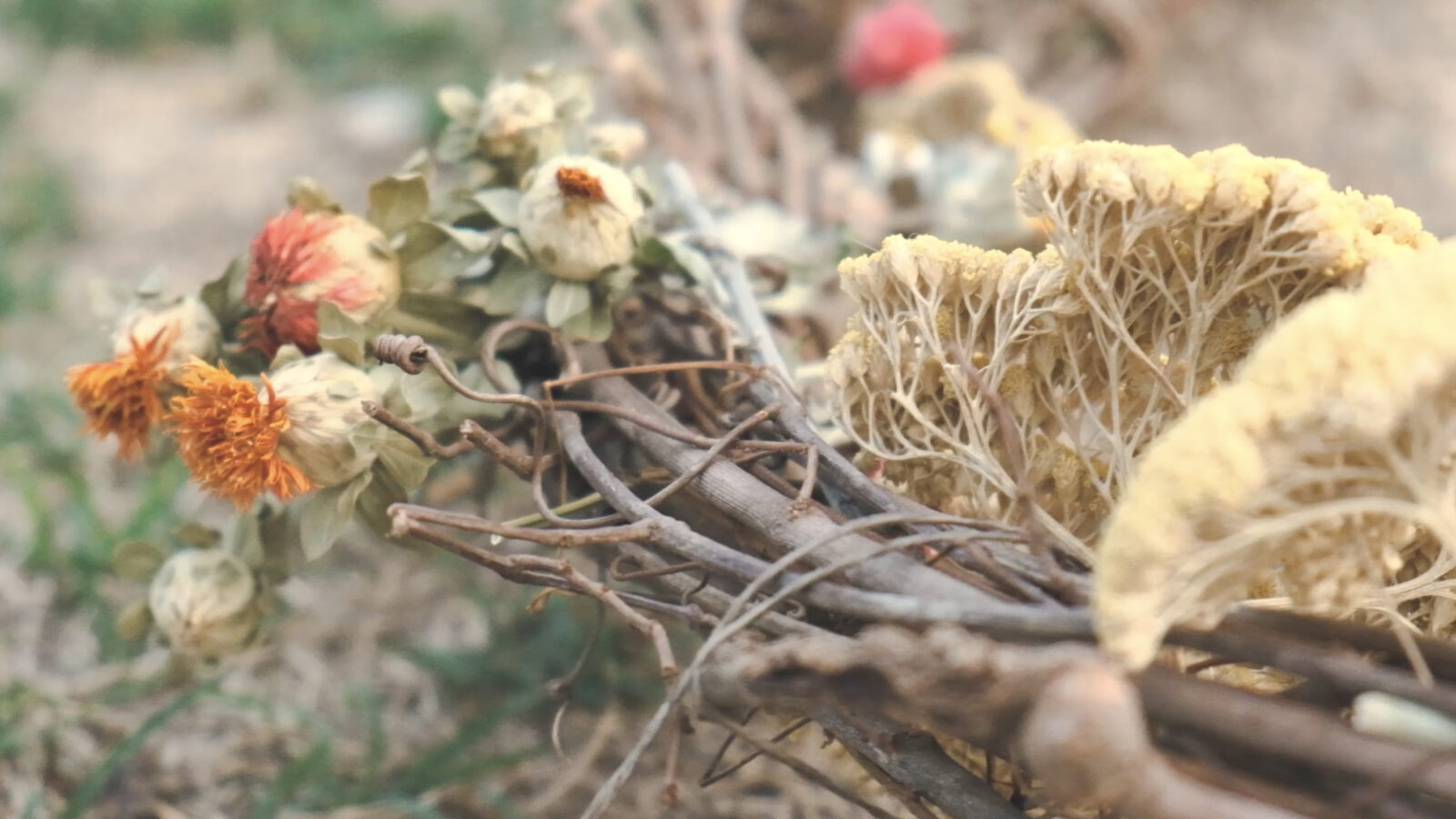
In light of these unprecedented attacks on abortion access concomitant with greater restrictions on women’s rights to make choices about their bodies, this cluster takes up the politics surrounding the history of abortion as it threads through art practice and activism. The prioritization of the rights of the unborn over the those of girls, women, and others to their own bodies has a deeply rooted precedent and has thereby been a subject of artistic engagement and counterstrategy from the deep past through contemporary feminist art—a lineage that can be traced, for example, from the production of ancient Greek medical tools to Lena Chen’s performance practice, one piece of which appears as the featured image for this introduction, to Lydia Nobles’s sculptures. The art and literature analyzed within this cluster act on and with their audiences, exploring how artists and writers have continued to think about and engage with reproductive freedom—often while flying under the radar of mainstream control—and situating abortion within a deep historical framework of reproductive justice that remains relevant and urgent in the present.2
As this cluster demonstrates, draconian impositions on the bodies of women and those with uteruses highlight the necessity of having an intersectional perspective when attempting to theorize reproductive regulation. While abortion refers to a very specific set of practices, as both the deep history and the present debates around abortion come into focus, one sees that abortion also acts as something of an umbrella term that encompasses many other aspects of health and well-being, especially within a reproductive justice framework—aspects that cannot be fully siloed or disentangled. For example, hormones used for reproductive management and abortion can also be used to assist with birth, but not just that: they can be used for perimenopause support and gender affirming care for trans women. In particular, Misoprostol (a treatment on the list of the World Health Organization’s “Essential Medicines”) is widely used for both medical abortion and labor induction (the fascinatingly termed “cervical ripening”), as well as to treat post-partum hemorrhage.
Within this larger context, several throughlines appear in this cluster. In many pieces, abortion encompasses aspects of reproductive care that might initially seem in opposition to it. As Roe’s foundation on patient-physician privacy has long been understood to rest on an unstable foundation, rhetorics of choice similarly occlude the differential experiences of racialized, classed, and disabled people. As mentioned above, the closer one looks at abortion, the more entangled one finds it to be with all aspects of reproductive care, so that even seemingly straightforward “positives” like contraception or “horrors” like infanticide demonstrate, instead, the situatedness of bodies and experiences. What looks like freedom for some might turn out to be violation for others, while what seems like tragedy might also be understood as a kind of liberation, shaped by the terms of one’s lived experience. In this light, while the primary focus of the work in this cluster is always abortion, the larger context of motherhood, childhood, pregnancy (and pregnancy complications), medical care, and midwifery—including its own historical links to witchcraft—is often present, along with issues of who is doing what work on whose body. Those overlaps reflect the scholars represented in this cluster, all of whom are committed to reproductive justice more broadly: securing the larger social, medical, and material support for mothers to become pregnant and raise children as well as access to all forms of reproductive care, including abortion.
Historically, expanding strategies for reproductive management bore a sobering connection to eugenics movements and the classed, raced, gendered, and abled hierarchies that those movements sought to uphold. Underlying such movements is the fundamental question of personhood and who counts as a person, a question also underlying debates about the appropriate timelines for abortion. Several authors in Alice Wong’s anthology, Disability Visibility, address the intersections of reproductive and disability justice, including disability rights attorneys, Harriet McBryde Johnson and Rebecca Cockley, who are disabled. In “Unspeakable Conversations,” Johnson recounts several public exchanges with the philosopher Peter Singer concerning disability-based infanticide and its blurred edges with abortion.3 Cokley notes the instrumentalization of disability within debates about abortion, arguing that “[t]he way disability is framed in the political messaging around access to abortion care is very frustrating. And at the same time, the disability community is dependent on the medical-industrial complex for our quality of life. But removing options doesn’t improve that . . . ” Cokley rejects such weaponization to further restrict access to abortion, emphasizing that “the right to decide what happens to our bodies is a fundamental principle in the disability community” and preserving bodily autonomy remains the highest good.4 Several essays in this issue acknowledge these entangled histories while refusing their weaponization on similar grounds.
Finally, sexual freedom—and the right to sexual pleasure—threads through multiple contributions, alerting us to the interconnectedness of pleasure and full reproductive freedom. The logic that allows those who criminalize and restrict access to abortion to push children on women’s bodies and to limit the ability of women to manage their reproductive capacity or continued gestation is deeply linked to the dismissal of sexual pleasure as an end in itself for women. Both remove enjoyment; both focus on control and duty. Pleasure becomes political, as the artists and writers analyzed by these essays recognized, and in light of this, we hope you will find your own pleasure and moments of resistance as you explore the work presented here.
Our cluster’s title—“From the Gaps”—draws from Lena Chen’s moving multi-modal abortion project, We Lived in the Gaps Between the Stories, which itself alludes to Margaret Atwood’s 1985 The Handmaid’s Tale and the larger complex of nationalist patriarchal control over reproduction and bodies more generally.5 In the novel, Atwood’s protagonist, Offred, muses on the affordances of living in the margin: “We were the people who were not in the papers. We lived in the blank white spaces at the edges of print. It gave us more freedom. We lived in the gaps between the stories.”6 We note that Atwood’s themes, now 40 years old, have only become more pressing over time, such that contemporary artists now stake out this same space—a fact both remarkable and unsurprising, given that Roe v. Wade didn’t even survive for the standard lifespan of an American woman. Living in the margins thus affords a degree of freedom but at the expense of having a powerful public voice, and its protections for Offred and her compatriots—or any of us—only go so far. And yet . . . it is a space we might stake. In evoking Chen’s performance work and Atwood’s novel in the framing for this cluster, we claim this gap—what Barbara Johnson calls the monstrous or unspeakable that attaches itself to women under patriarchy—as a form of protection, an off-grid zone where communities of care can form.7
: :
Endnotes
- We wish to acknowledge that the material in this cluster was in part generated by conference panels we convened, including a double panel at the Association for Art History in April 2023 on art and abortion and a panel at the Pacific Ancient and Modern Language Association in October 2023 on literature and abortion. We also collaborated with some of the cluster participants to present this material and related work in a panel titled “The Aesthetics of Reproductive Justice” at the Association for the Study of the Arts of the Present in October 2025. Finally, as coauthors, cluster editors Jennifer Stager and Leila Easa published “Subjects and Verbs: the Past, Present, and Future Tenses of Abortion Rhetoric” in the Post45: Contemporaries cluster, “Abortion Now | Abortion Forever,” edited by Margaret Ronda, Jeannette Schollaert, and Jena DiMaggio on the one-year anniversary of the Dobbs decision. We thank Lisa Regan for her signature careful read of the whole cluster; Michael Dango, whose insightful editorial eye greatly improved this work; and Tyler Tennant, whose production skills and patience have supported this cluster as well as our Post45 piece. We are indebted to all of those occasions and collaborators for giving us the opportunity to think more about this urgent topic.
- The scholarship on this history is vast. For a recent useful starting point, see Lori Hertogh, Lori et al., “An Annotated Bibliography on Rhetorics of Reproductive Justice,” Reflections: A Journal of Community-Engaged Writing and Rhetoric (2022): 26-59.
- Harriet McBryde Johnson, “Unspeakable Conversations,” in Alice Wong, ed. Disability Visibility: First-Person Stories from the Twenty-First Century (New York: Knopf Doubleday Publishing Group, 2020), 3-27.
- Rebecca Cockley, “The Antiabortion Bill You Aren’t Hearing About,” Disability Visibility: First-Person Stories from the Twenty-First Century, edited by Alice Wong (Knopf Doubleday, 2020), 161.
- For the initial performance, see Wave Pool Gallery. On the post-Dobbs performance, see Shanti Escalante-De Mattei’s article in ArtNews. Chen’s residency and performance included workshops led by herbalist Ellie Mae Mitchell, florist Patricia Campos, growers Village General and Camp Washington Urban Farm, and chef Madeline Ndambakuwa.
- Margaret Atwood, The Handmaid’s Tale (Ballantine Books, 1985), 74.
- Barbara Johnson, “Review of My Monster/My Self by Mary Shelley, Nancy Friday, and Dorothy Dinnerstein,” Diacritics 12, no. 2 (1982): 2–10.
Jennifer Stager
Leila Easa