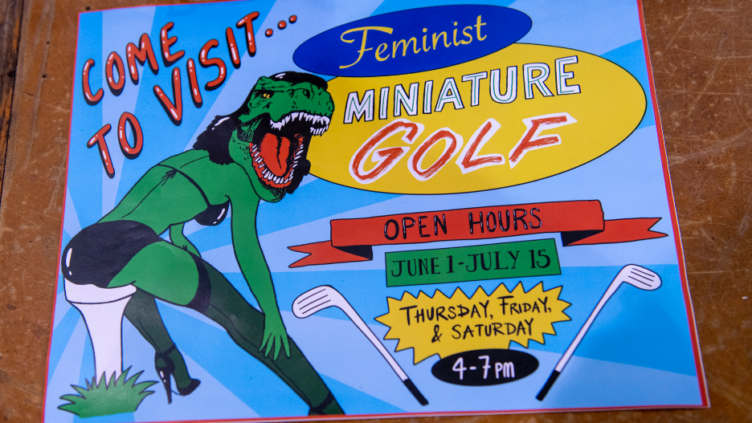
I have been thinking a lot lately about what reproductive justice looks like, especially in this moment. I mean this question quite literally. What would our resistance look like if we thought more about aesthetics? What new kinds of resistance might emerge if aesthetics were central to our conceptualization of reproductive resistance? What can happen to our art and politics when creating cultural texts becomes our way of doing something politically? What aesthetic choices might make our doing reproductive justice sing? These questions are in many ways inspired by one that feminist artist Carmen Winant asks in Notes on Fundamental Joy: Does hope have an aesthetic?1
In Spring 2023, less than a year into our new post-Roe reality, I set out to answer these questions through building the world’s first and only feminist reproductive justice mini golf course. Throughout the course, housed in a hockey rink at Middlebury College (otherwise unused during the summer), we utilized the vibrant and playful aesthetics associated with mini golf to invite people into conversations about reproductive justice. Mini golf has what National Geographic describes as a “subversive history” because it “has always been a welcome alternative for people who were shut out of golf clubs for elite white men.” Jane George argues that women were blocked from golf because being active was regarded as “unladylike” and, further, because their presence “was regarded as a distraction” to men.2 Across the Jim Crow South, Black golfers banned from full sized golf courses would practice at mini golf courses, which explains why mini golf courses became a site for civil rights advances. In 1964, a mini golf course in St. Augustine, Florida became the “first public place open to Black people.” Today, mini golf players are more likely to be women, people of color, and younger than those who play traditional golf.
The Reproductive Justice Mini Golf aimed to connect this subversive history of mini golf with the serious goals of the Black women in the early 1990s who coined the phrase “reproductive justice” as a way to articulate that reproductive rights are not enough to ensure reproductive equity or freedom, especially for women of color and poor women.3 One needs both access to abortion (not just the legal right to abortion) and also access to resources to raise children for abortion to be a real choice. We saw the mini golf course as a site for addressing abortion injustices—and the ways in which they transpire along racial, class, and geographic lines—as well as expanding players’ understandings of the breadth of contemporary reproductive justice issues beyond abortion.
In what follows, I provide a tour through the eleven holes we designed for Reproductive Justice Mini Golf. At each hole, players were greeted by a pin-up style dinosaur holding a placard with text about the topic that hole explored. The dinosaurs provided accessible levity for a serious topic. To create opportunities to engage with additional content, each hole also included five QR codes linked to a website with additional information. The 65 distinct QR codes throughout the course allowed us to incorporate 50 single-spaced pages of educational content into the exhibit via 250-word bits. Our plan to make academic material more digestible by breaking it up worked; the website has been viewed 3,200 times by 2,100 unique visitors. In the twenty days this immersive installation was originally open to the public, more than 1,800 people visited—in a town with a population of 10,000 and on a campus with 2,500 students.
: :
Hole 1: History of Science and Medicine (Scene: a hospital)
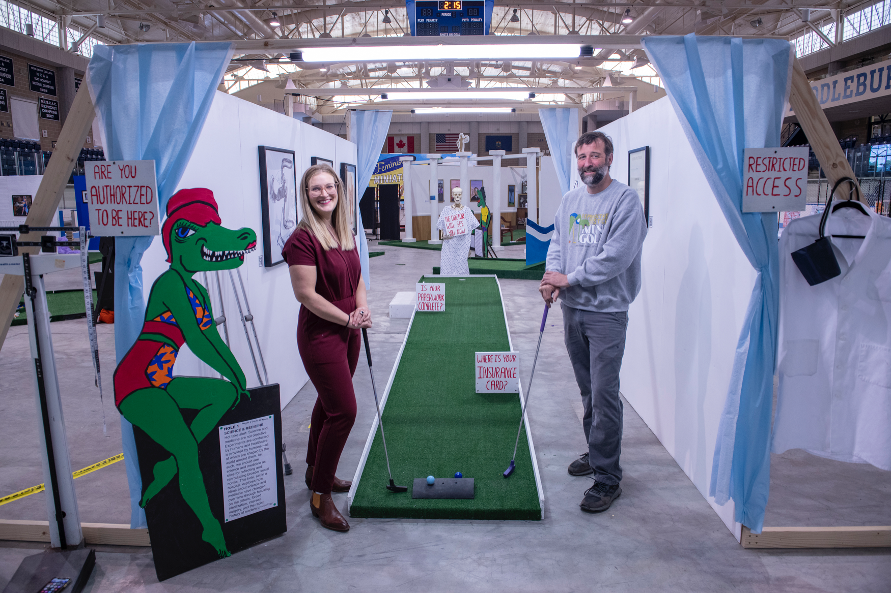
Science and medicine are not objective. Experiments are conducted by humans, and healthcare is provided by humans—all of whom are shaped by the world around them. As such, we should see science and medicine as sites for reflecting and reproducing broader social norms. This hole explores the social construction of science and medicine. Topics include intersex surgery, the healthcare Native women receive through Indian Health Services, and the racist history of modern gynecology.
Hole 2: Contraception (Scene: a church)
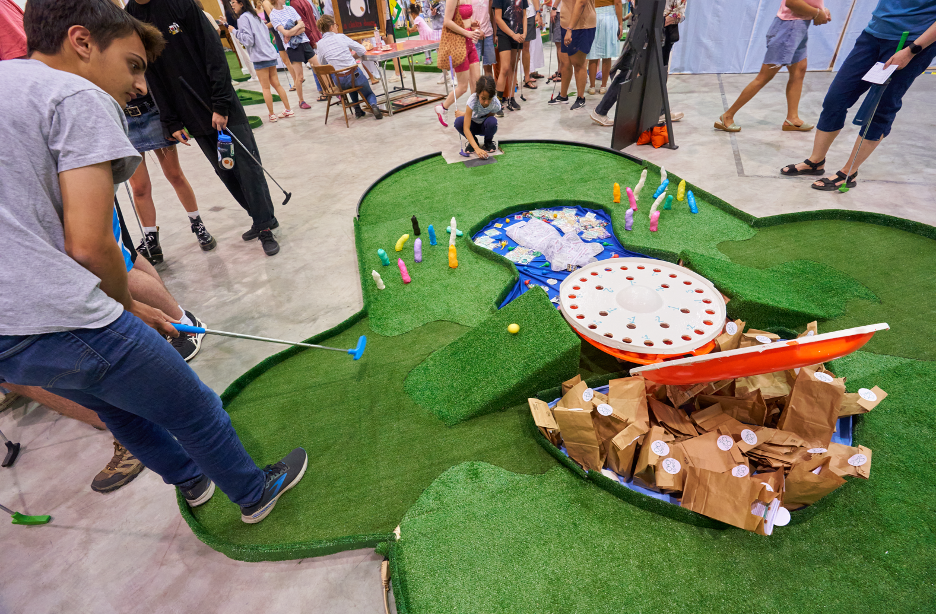
When birth control pills first became available in the 1950s and 60s, feminists viewed them as a vehicle for women’s liberation. Today, 90% of women and transmasculine people have used contraceptives. But this is not the whole story. This hole focuses on the racist and eugenicist history of birth control, as well as the side effects of different forms of contraception available today.
Hole 3: Care work (Scene: a home kitchen)
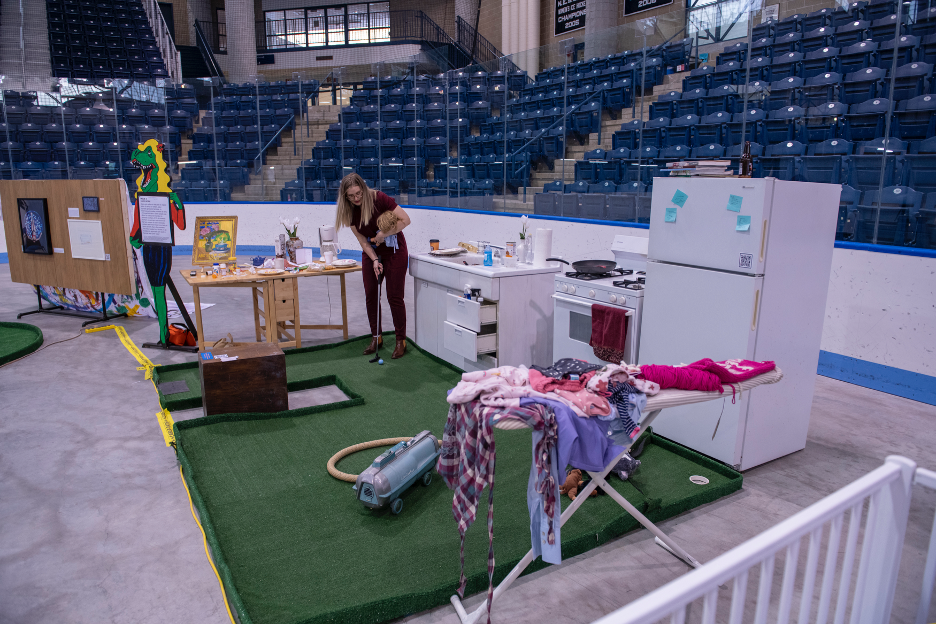
Care work refers to the paid or unpaid labor of caring for others, labor typically gendered feminine. In heterosexual couples, women do 65% of household labor. Some people can afford to outsource this labor to domestic workers. 91% of domestic workers are women and more than half are women of color. Domestic workers are three times more likely to live in poverty than other workers. This hole invites you to approach care work in feminist ways.
Hole 4: Surrogacy (Scene: a baby’s nursery)
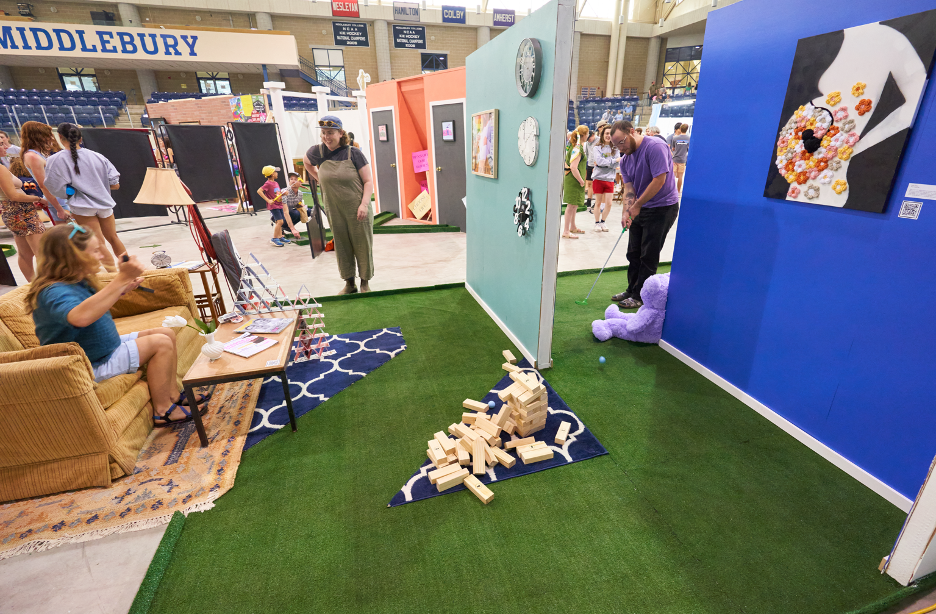
Feminists have long expressed concerns about the exploitative aspects of surrogacy and other reproductive technologies. Despite this, LGBTQ+ rights advocates have recently begun to frame surrogacy as a matter of “fertility equality” and a “queer” issue, especially for gay men. But, if we take feminists’ critiques of the surrogacy industry seriously, maybe surrogacy is not as “queer” as some say. This hole places feminist and queer discussions of surrogacy within the home, both that of intended parents and surrogates.
Hole 5: Sex Education (Scene: a school)
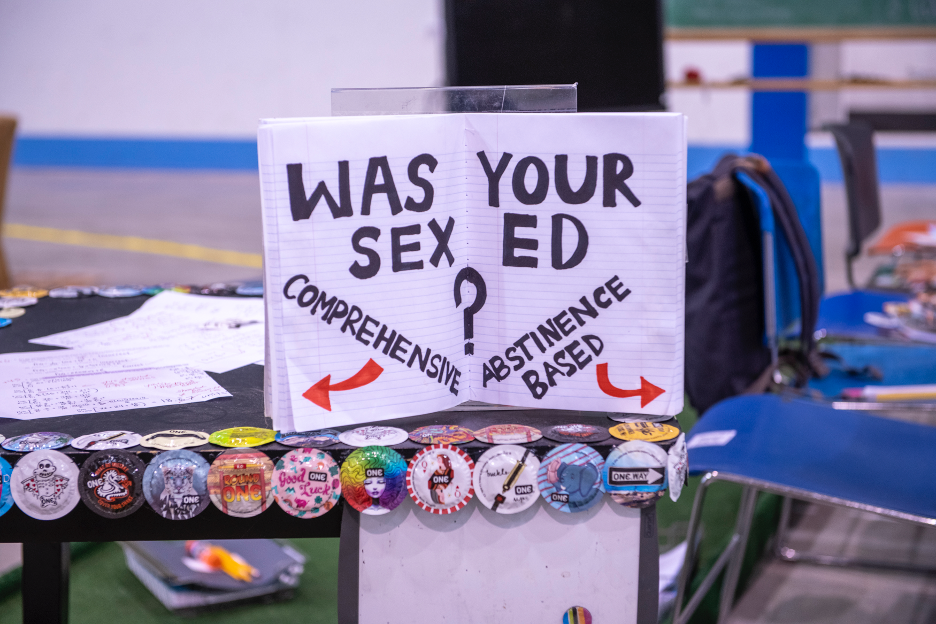
U.S. sexual health education generally falls into one of two categories: abstinence-based and comprehensive. Studies demonstrate that abstinence-oriented sex ed—which advocates chastity—is ineffective and harmful. This hole highlights why these programs fail to reach their stated goals of reducing teen pregnancy and sexually transmitted infections. For sex ed to be most effective, it must be inclusive of all students, and contain discussions of abortion, birth control, pleasure, gender, and power dynamics.
Hole 6: Crisis Pregnancy Centers (CPCs) and Abortion (Scene: a CPC/abortion clinic)
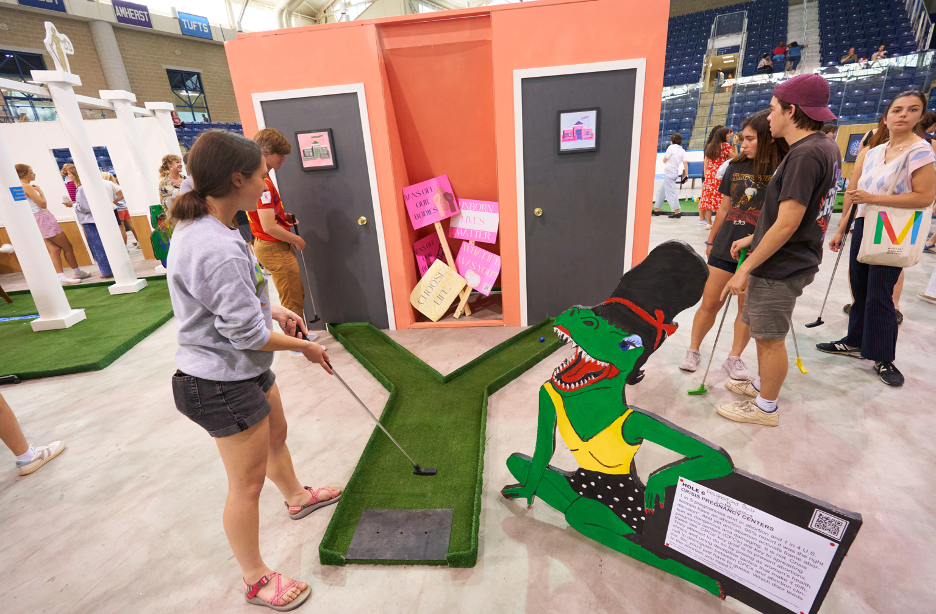
1 in 5 pregnancies end in abortion and 1 in 4 U.S. women have an abortion. 95% report it was the right decision. And yet anti-abortion activists frame abortion as dangerous and damaging. It is not. Crisis pregnancy centers (CPCs) are key to spreading these lies. CPCs’ primary goal is to prevent abortions. They attempt to do so by posing as women’s health clinics, circulating inaccurate medical information about abortion and birth control, and using deceptive tactics that make it difficult to distinguish between CPCs and abortion clinics. So, you’ll just have to guess: Which door leads to the abortion you need?!
Hole 7: Transportation
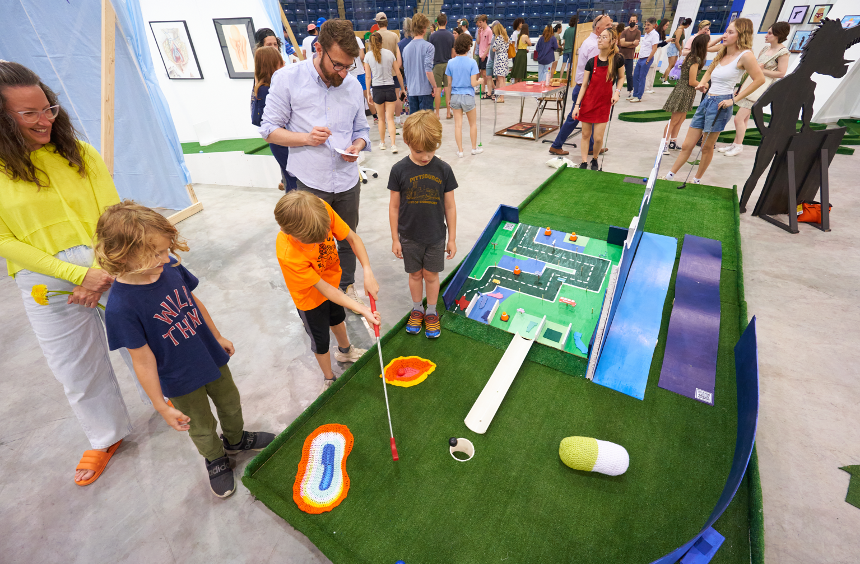
This hole examines the ways in which geography informs access to reproductive health care. Hopefully, you live in a state with legal abortion, in a neighborhood that hasn’t been deemed “hazardous,” and can steer clear of mobile crisis pregnancy centers. If not, beware!
Hole 8: Environmental Justice (Scene: a courthouse)
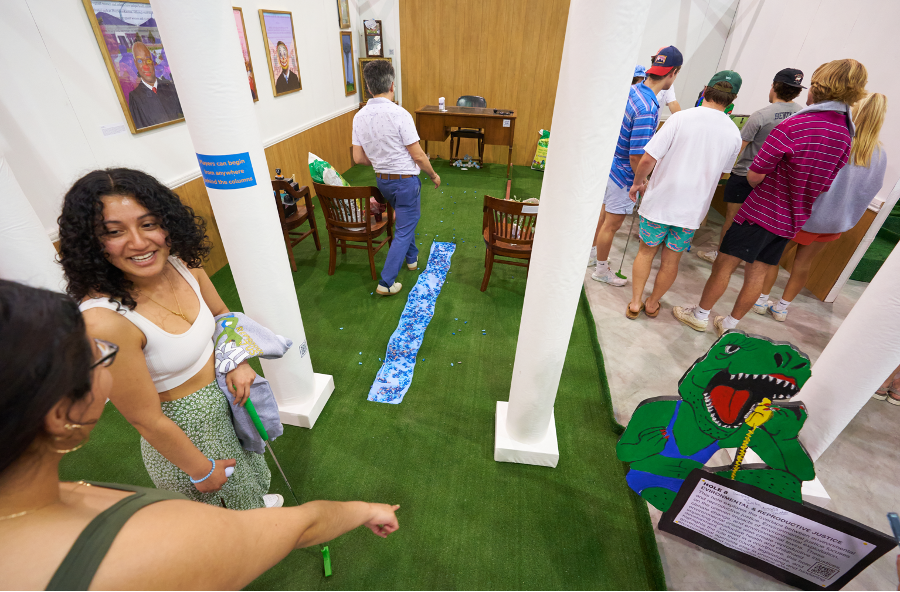
This hole explores the overlaps between environmental and reproductive justice. Environmental justice focuses on the uneven impacts of environmental exploitation, climate change, and environmental toxins. These crises create reproductive injustices, impacting reproductive health and childhood development. Located in a courthouse, this hole highlights the role of courts, legislatures, and governmental agencies in promoting and hindering environmental and reproductive justice alike.
Hole 9: Adoption & Foster Care (Scene: the bedroom of a child in foster care)
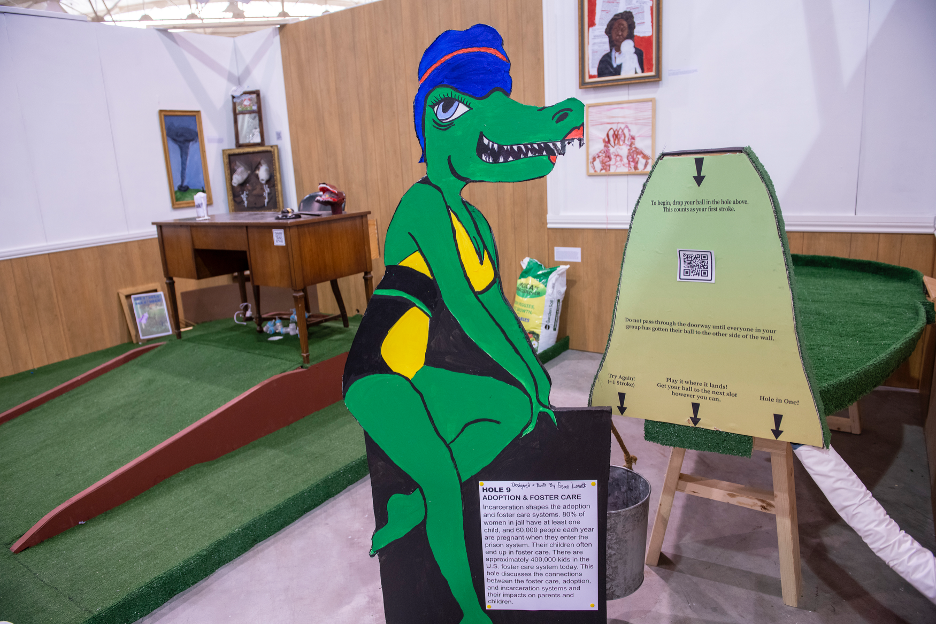
Incarceration shapes the adoption and foster care systems. 80% of women in jail have at least one child, and 60,000 people annually are pregnant when they enter the prison system. Their children often end up in foster care. Today, there are approximately 400,000 kids in the U.S. foster care system. This hole discusses the connections between foster care, adoption, and incarceration and their impacts on families.
Hole 10: Incarceration
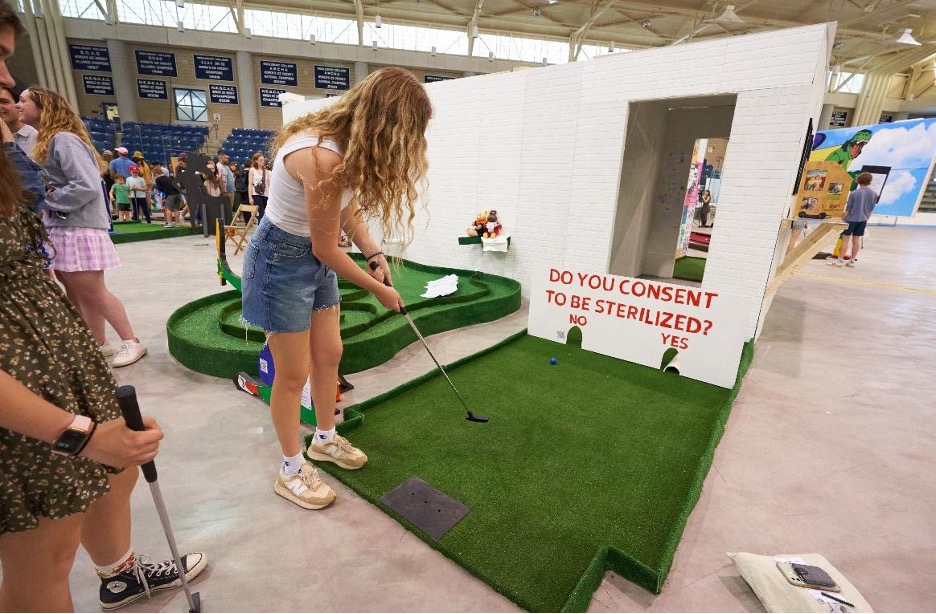
The story of incarceration is one of violence: forced separation from children, being shackled while giving birth, loss of parental rights, forced sterilization, criminalization of Black mothers, immigrant detention, complete rejection of bodily autonomy. You are about to enter a replica of a 6’ x 9’ solitary confinement cell, where many of these forms of state violence play out.
Hole 11: Reproductive Justice Advocacy (Scene: a bar)
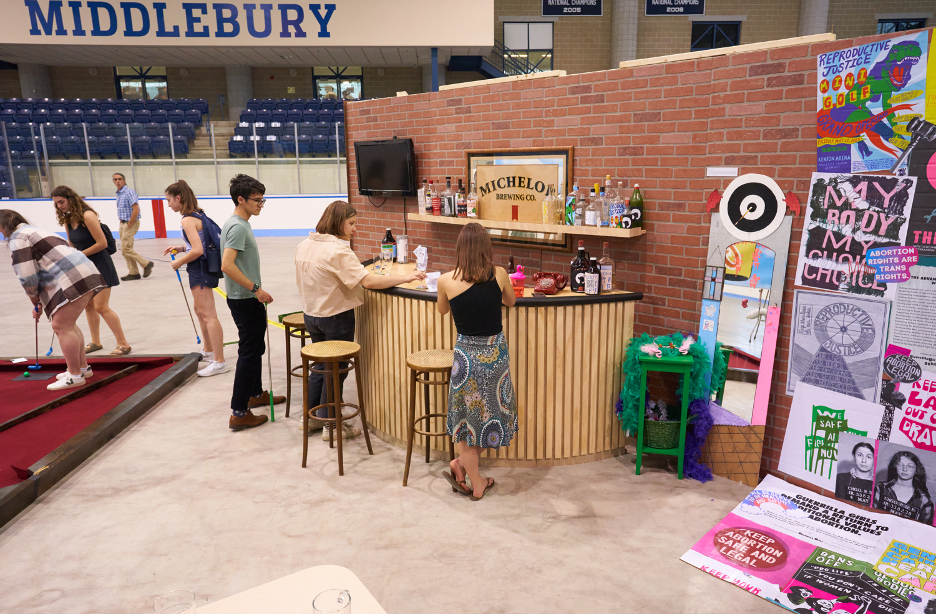
You are wrapping up your journey through the Reproductive Justice Mini Golf course in a bar, where so much feminist resistance has been plotted! Some of this activism has occurred through the courts, some has been direct action, and some has used art in provocative ways. When you leave this bar, what will you do to support reproductive justice?
: :
Abortion and Crisis Pregnancy Centers: An In-Depth Look at Hole #64
While the above overview provides a gloss of the mini golf course, it cannot convey its nuances—and it is in the details where we find the real magic of this immersive exhibition. In this section, let me walk you through one hole in particular as an example of this immersion.
You have arrived at hole 6. There are two doors. You cannot distinguish between the two. You know you need an abortion, but you don’t know which door leads to the abortion clinic and which one leads to the crisis pregnancy center (CPC). At first, you think you will just have to guess. But then you see a QR code on one of the protest signs between the two doors and you click on it hoping for a clue:
Abortions were frequent in the early 1800s, occurring at approximately the same rates as they do today. Ads for “clinics for ladies” where “menstrual irregularities” from “whatever cause” could be addressed were common. People generally believed that abortion prior to quickening—feeling the first movements of the fetus—was not terribly different from preventing pregnancy altogether. With the establishment of the American Medical Association in 1847, male doctors worked to turn abortion, a simple medical procedure, into a moral debate. We continue to see the consequences of this move. Crisis pregnancy centers (CPCs) are central to the anti-abortion movement’s ongoing attempts to produce abortion as undesirable. Today, there are more than 2,600 CPCs in the U.S. and just 765 abortion clinics—numbers that were reversed in the 1980s. CPCs, which critics call “fake clinics,” are in all fifty states. In Middlebury, VT, the CPC is called “The Women’s Center” and is located around the corner from the high school. It uses many of the misleading approaches that scholars have identified as patterns among CPCs.
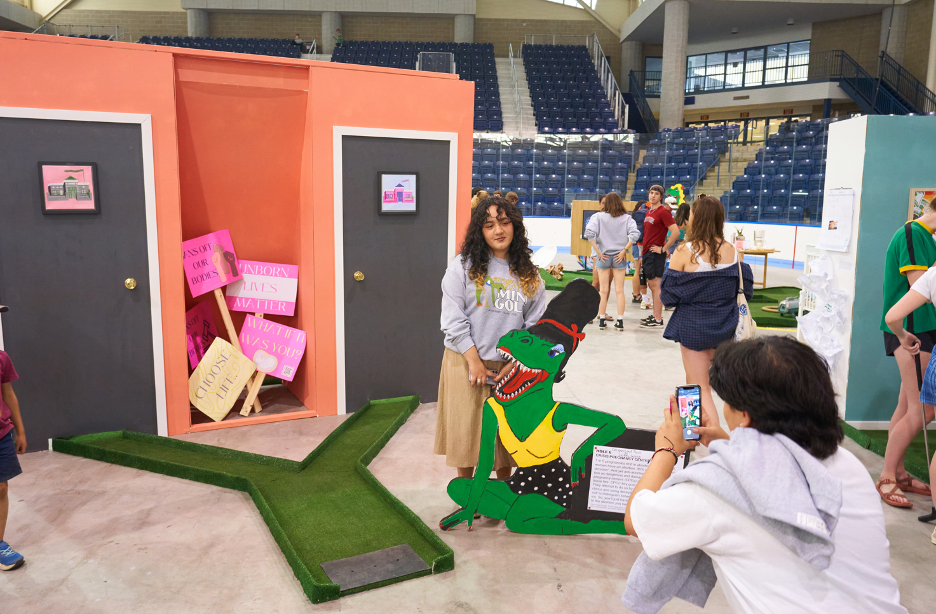
No clues, exactly, but important historical context and relevant local information. But then you notice the artwork on the two doors, and you realize they function as clues! The buildings—like the doors—are nearly indistinguishable. This is, of course, the point. But you happen to know that the abortion clinic at the center of Dobbs v. Jackson Women’s Health Clinic, the case that overturned Roe v. Wade, was painted pink. And in the painting on the right, the building is pink. Hoping that this is a clue, you decide to aim for the door to the right. You follow the ball around the corner.
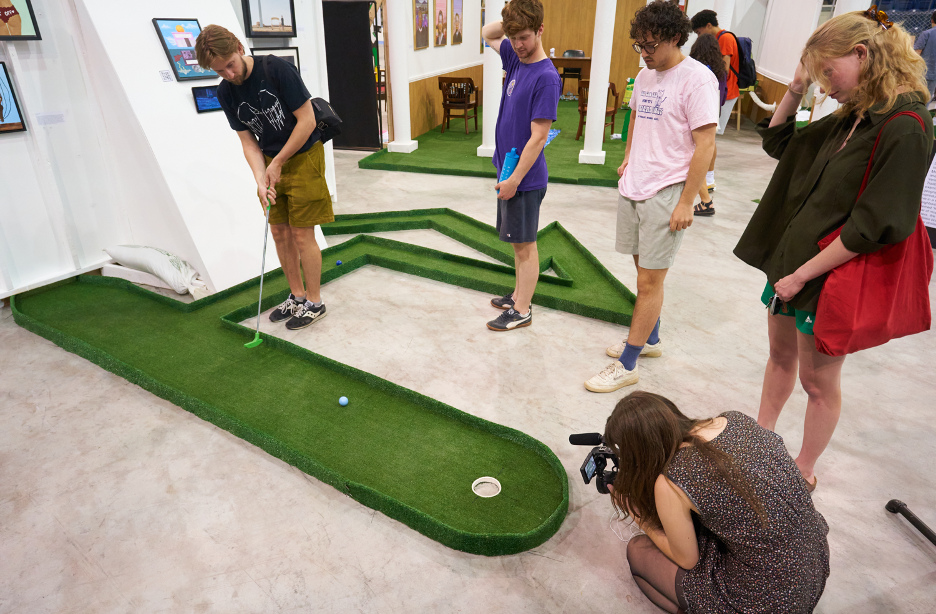
Your knowledge and attention to detail paid off! You were rewarded with a direct shot to the hole! Had you aimed left, and gone through the door of the CPC, you would have been met with a zigzaggy path that impedes your ability to get to the hole. This path symbolized the difficulties that CPCs create for those in need of abortions. A QR code speaks to the real-life referents of the zigzags:
Deception is central to CPCs’ strategies. Critics have illustrated the many forms this deception takes: disguising their political and religious motivations; implying they offer abortions when they do not; opening near abortion clinics with the intention of confusing and thus hijacking those en route to clinics; and peddling false information regarding abortion. Scholars found, for example, that 80% of crisis pregnancy center websites listed in state resource directories related to pregnancy include false or misleading medical information, including that abortion leads to breast cancer, infertility, and mental health issues, among other claims repeatedly proven false. Such inaccurate information is given credence by the aesthetics of CPCs, which suggest they are medical clinics when they are not. For instance, some CPC volunteers wear white lab coats and CPCs also increasingly offer free ultrasounds, although they do not make clear to clients that these ultrasounds are meant to be “non-diagnostic,” and therefore are not medical in nature. Because CPCs do not provide medical care, they are not subject to the same regulations as medical clinics, including patient privacy laws such as HIPAA. This means that whatever personal information you give to CPCs (in intake forms, in internet chat boxes, or in conversations) is not private or protected. CPCs disproportionately impact people of color, low-income people, and people in rural areas—those who already face greater barriers to healthcare.
While you wait for your friends who entered through the CPC door to finish playing the hole, you check out the student art and artists’ statements on the back side of the wall.
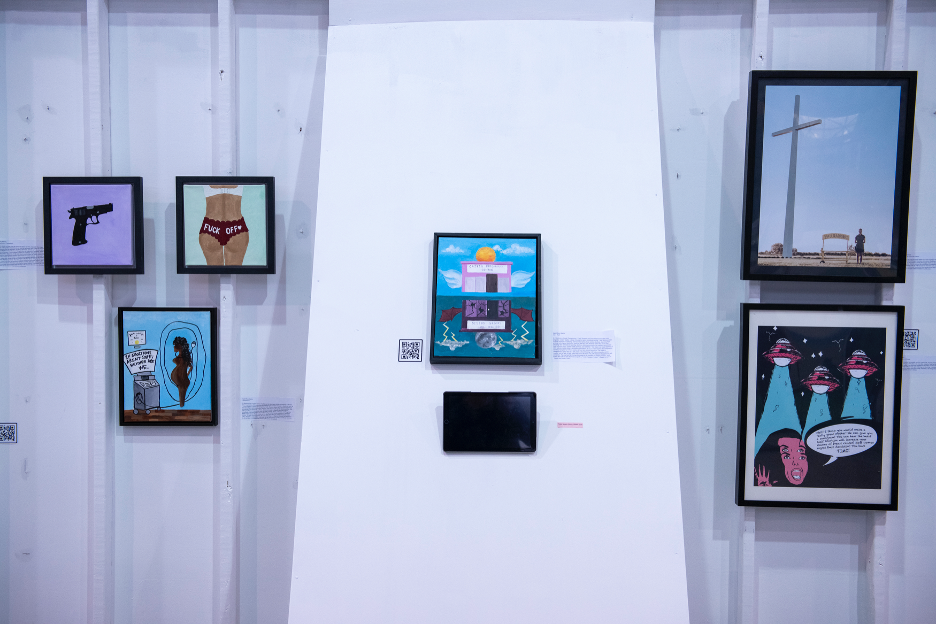
A QR code explains why we should be especially concerned with CPCs in our post-Roe landscape:
CPCs comprise the largest component of the U.S. anti-abortion movement. As the number of abortion clinics shrinks in a post-Roe world, the threats CPCs pose increase. One strategy that CPCs use is to delay people’s access to health care. As fewer states offer late-term abortions, delayed access to healthcare can result in people who otherwise could have obtained an abortion nearby being forced to travel significant distances to obtain the procedure later in their pregnancy. As worrisome, CPCs in states where abortion is now illegal are set up to aid in state surveillance and potentially incarcerating people who obtain abortions.
You and your friends have all finished playing the hole and you notice that getting the ball to the hole took far more strokes for those who went through the CPC door, something you chat about with your friends. Luckily, everyone in your group was able to get your abortions—something you know isn’t true for everyone in the real world. You are now ready to turn toward the next hole. But first you notice one other art installation: a 1950s style table with art under it, behind it, and on top of it. You notice a liquor bottle with a sticker that includes a phone number and the words “Call Jane” on it. Curious, you pick up the phone and you hear the voice of a woman asking the person on the other end of the phone for “Jane.” Made for the mini golf course by sound artist David Miranda-Hardy, a professor of Film and Media Studies, the scene that unfolds during the phone call is comparable to one of the thousands received by the Jane Collective, an abortion referral service through which members eventually learned how to perform abortions themselves.
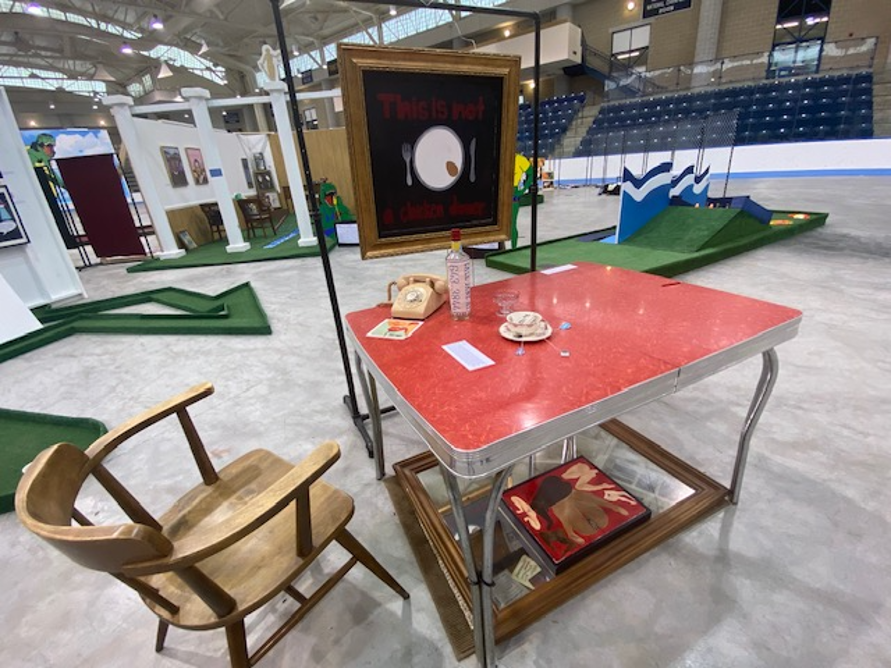
A cup, filled with tea bags of herbs that are known abortifacients, sits beside the phone. A QR code on the table explains that the kinds of restrictions that lead people to use herbs and to acquire abortions outside of the medical system have differential impacts.
Abortion never has been equally accessible. The Hyde Amendment, originally passed in 1976, prohibits the use of federal funds to cover the cost of abortions. In practice, this law means that low-income people enrolled in Medicare, Medicaid, or other public healthcare programs have even less access to abortion than those whose insurance covers the procedure. Today, Hyde remains in effect. We know who bears the brunt of these laws. Black women are five times as likely as white women to have an abortion, and Latinx women twice as likely to do so. In addition, abortion has become increasingly consolidated among the poor: studies show that 75% of abortion patients are low-income or poor. Any abortion restrictions, therefore, disproportionately impact people of color and low-income people.
As you finish engaging with the art and educational material interwoven throughout the hole, you realize you feel a strange mix of things. The content is decidedly depressing. But you are enjoying learning, you are impressed by the art, your friends are nearby, and, ultimately, you’re having a really good time.5 My belief that reproductive justice activism should be joyful, pleasurable, and fun is informed by Sara Ahmed’s formulation of the feminist killjoy, through which she suggests that we can find joy in things that are enraging. And we can use feminist and queer knowledge production and artistic production in order to do so. In fact, the greatest lesson we can learn from the Reproductive Justice Mini Golf course is that we absolutely have to.6
: :
Endnotes
- Carmen Winant, Notes on Fundamental Joy: Seeking the Elimination of Oppression through the Social and Political Transformation of the Patriarchy that Otherwise Threatens to Bury Us (Printed Matter, 2019).
- Jane George, “‘Ladies First’?: Establishing a Place for Women Golfers in British Golf Clubs, 1867–1914,” Sport in History 30 (2010): 288-308.
- Loretta Ross and Rickie Solinger, Reproductive Justice: An Introduction (University of California Press, 2017). For additional information about women of color and reproductive justice see also: Zakiya Luna, Reproductive Rights as Human Rights: Women of Color and the Fight for Reproductive Justice (New York University Press, 2020); Jennifer Nelson, Women of Color and the Reproductive Rights Movement (New York University Press, 2003); Jael Silliman, Marlene Gerber Fried, Loretta Ross, and Elena Gutiérrez, Undivided Rights: Women of Color Organizing for Reproductive Justice (Haymarket Books, 2016); and Patricia Zavella, The Movement for Reproductive Justice: Empowering Women of Color Through Social Activism (New York University Press, 2020).
- For examples of scholarship that we drew from to write the website text about crisis pregnancy centers and abortion, see: Alice X. Chen, “Crisis Pregnancy Centers: Impeding the Right to Informed Decision Making,” Cardozo Journal of Law and Gender 19, no. 1 (2013): 933–960; Aziza Ahmed, “Informed Decision Making and Abortion: Crisis Pregnancy Centers, Informed Consent, and the First Amendment,” Journal of Law, Medicine, and Ethics 43, no. 1 (2015): 51–58; Amy G. Bryant, Subasri Narasimhan, and Katelyn Bryant-Comstock, “Crisis Pregnancy Center Websites: Information, Misinformation and Disinformation,” Contraception 90, no. 6 (2014): 601-605; Carly Thomsen, “Animating and Sustaining Outrage: The Place of Crisis Pregnancy Centers in Abortion Justice,” Human Geography 15, no. 3 (2022): 300-306; Carly Thomsen, Zach Levitt, Christopher Gernon, and Penelope Spencer, “Anti-abortion Ideology on the Move: Mobile Crisis Pregnancy Centers as Unruly, Unmappable, Ungovernable,” Political Geography 92 (2021): 1-10; Carly Thomsen, “Feminist Art as Feminist Activism: An Anti-Crisis Pregnancy Center Exhibition in the Post-Roe Landscape,” Fighting Mad: Resisting the End of Roe v. Wade (Los Angeles: University of California Press, 2024): 151-59; Carly Thomsen and Grace Tacherra Morrison, “Abortion as Gender Transgression: Reproductive Justice, Queer Theory, and Anti-Crisis Pregnancy Center Activism,” Signs: Journal of Women in Culture and Society 45, no. 3 (2020): 703-730; Ziad W. Munson, The Making of Pro-Life Activists: How Social Movement Mobilization Works (University of Chicago Press, 2008); Carly Thomsen, Zach Levitt, Christopher Gernon, and Penelope Spencer, “Presence and Absence: Crisis Pregnancy Centers in the Contemporary Abortion Landscape,” Human Geography 16, no. 1 (2022): 64-74.
- In addition to my co-leaders Rayn Bumstead and Colin Boyd, to whom I am endlessly grateful, many dedicated collaborators shaped the mini golf course: David Miranda-Hardy and his Film and Media Studies (Middlebury College) class created films featured at several holes; the Trivia Time podcast producers, led by Kelly Sharron (University of Kansas), produced a trivia game connected to the mini golf course’s content; students of Stina Soderling (Hamilton College) and Virginia Thomas (Providence College) created art featured throughout; students at the Gender Institute for Teaching and Advocacy at Metropolitan State University, Denver, directed by Anahi Russo-Garrido, designed a hole and builders in Vermont Works for Women’s Trailblazer Program then constructed the hole; and Mark Jensen, a local master carpenter, provided extensive support to student builders. All of these collaborations were enabled by significant grant funding from private foundations as well as those internal to Middlebury College. Finally, the images shared throughout this essay were taken by the author, Caleb McKenna for Seven Days, and Todd Balfour for the Axinn Center for the Humanities at Middlebury College.
- Sara Ahmed, The Feminist Killjoy Handbook: The Radical Potential of Getting in the Way (Seal Press, 2023
Carly Thomsen