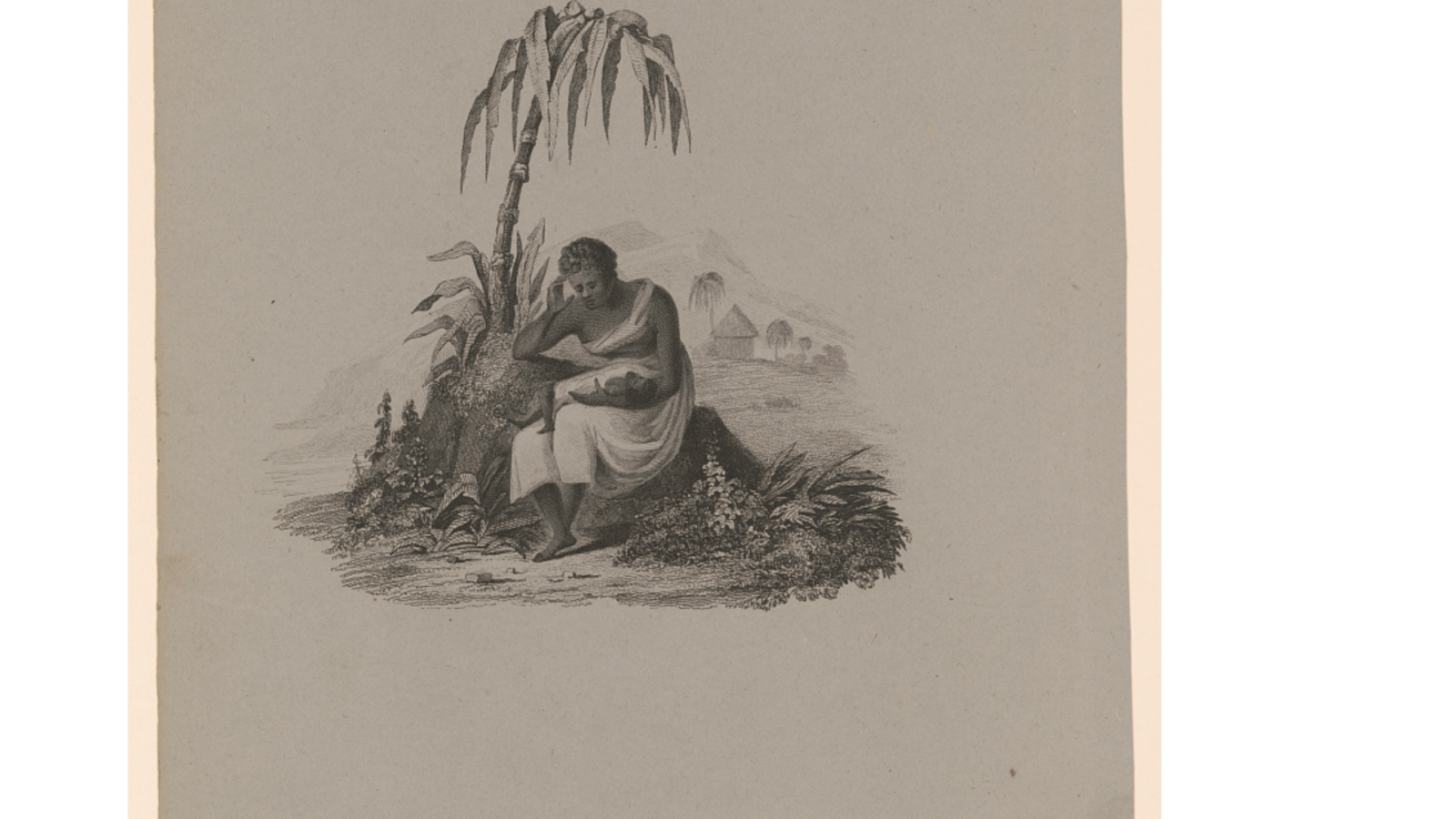
“How had those years dealt with her slave sister, the little playmate of her childhood? She, also, was very beautiful; but the flowers and sunshine of love were not for her. She drank the cup of sin, and shame, and misery, whereof her persecuted race are compelled to drink.”
— Harriet Jacobs, Incidents in the Life of a Slave Girl
“Is an elephant a person?”
This was the question mused by the NPR newscaster on Wednesday, May 18, 2022. Less than a week after the grocery store mass shooting in Buffalo, New York (May 14, 2022), by a white supremacist, resulting in the deaths of ten Black people, and less than a week before the mass shooting at Robb Elementary School in Uvalde, Texas (May 24, 2022), during which nineteen children and two teachers would be killed, advocates for the Nonhuman Rights Project petitioned New York’s highest court to establish personhood for Happy the elephant.
“Is an elephant a person?”
It was amusing to hear initially, and then, again, when they finished the five-minute news segment—as if repeating the question would alter my opinion. As an anthropologist, it was a completely ridiculous notion—an elephant cannot be a person—emphasized by the fact that Wednesday, May 18th was my first day listening to the news since POLITICO leaked the initial draft majority opinion written by Associate Justice Samuel Alito. As a cis-Black woman who had once again witnessed the violation and denial of my humanity in Buffalo, preceded by the placement of my reproductive autonomy in limbo, personhood for an elephant was nothing short of insulting. But, as a descendent of enslaved Africans in the Americas—legally, constitutionally three-fifths of a person (amended not erased)—I couldn’t completely ridicule or disregard the subjugation of Happy.
There is, unfortunately, an unironic similarity to Happy the Elephant’s quest for freedom and the continued fight for bodily and reproductive autonomy of human beings, especially people of color who are often overlooked and excluded by traditional feminist scholars and activists who transform “women’s rights” into one-size-fits-all declarations. To illustrate, the first chapter of Toni Morrison’s Beloved, her 1987 novel exploring the ongoing aftermath of chattel slavery, introduces cow animal imagery and metaphor triggered by the return of its main character Sethe’s lover, Paul D: “fucking cows, dreaming of rape, thrashing on pallets, rubbing their thighs and waiting for the new girl . . . ”1 The cow is symbolic of the institution of chattel slavery and the dehumanization of African Americans in this system. Throughout the text, Morrison’s metaphor persists. In Chapter 2, after Sethe and Paul D have sex, Paul D thinks “the jump . . . from a calf to the girl wasn’t all that mighty” (33). Sethe’s later assault is described in similar terms; when recounting and re-membering, Sethe describes them as taking her “milk.”
When the draft majority opinion leaked and permeated American consciousness, many concerned citizens turned to Margaret Atwood’s The Handmaid’s Tale as the unfortunate testament of what is and the horror of what could be. But it is Morrison’s Beloved, published just two years after The Handmaid’s Tale, that recalls the reality of what was, i.e., the continuous battle for bodily and reproductive autonomy waged by Black and Indigenous people in America since Matoaka2 was kidnapped and the first slave laws were passed in 17th century Virginia. Throughout Beloved— genre-bending bildungsroman with elements of historical fiction, (arguably) Afrofuturism, and horror, loosely based on the life and trial of Margaret Garner—Morrison uses magical realism to explore the themes of motherhood, freedom, love, rememory, and generational trauma while also reconciling with the complex history of slavery in the United States of America. By Morrison’s own account:
I think now it was the shock of liberation that drew my thoughts to what “free” could possibly mean to women . . . equal pay, equal treatment, access to professions, schools . . . and choice without stigma. To marry or not. To have children or not. Inevitably these thoughts led me to the different history of black women in this country—a history in which marriage was discouraged, impossible or illegal; in which birthing children was required, but “having” them, being responsible for them—being, in other words, their parent—was as out of the question as freedom. (xvi)
Morrison’s highlights the gap between the conceptualization of freedom in 20th century America and the lived realities of Black women in America. It is this gap with which we must reckon as we approach another anniversary of Dobbs v. Jackson Women’s Health Organization.
In Beloved, Sethe’s struggle provides a mirror to the real-life experiences of enslaved and persecuted Black women, including Elizabeth Key suing the colony of Virginia for her freedom in the 17th century; enslaved women’s utilization of abortifacients (such as okra, calomel, and turpentine); and racial terror, violence, and the forced sterilization of Black women in the 20th century. But the novel provides a mirror most of all to Margaret Garner.
It is critical to consider that, aside from the physical labor, the emotional labor of birthing Black children—consensually or not—at that time in American history would be psychologically distressing. It is a cultural trauma that—under the continued threat of systemic racism—has survived over 400 years and continues to impact contemporary Black parents as well. What must it have felt like to look into the eyes of your small child—to know their suffering and understand your inadequacy to save them—and make that decision. This is something even Toni Morrison, as a feminist, a writer, but especially a mother, struggled to confront: infanticide.
Garner was by no means the first enslaved woman to commit infanticide, nor was she the first to be convicted because of her actions, though she is arguably the most infamous. In fact, there is no way to adequately tell how many enslaved children died as a result of infanticide. In Killing the Black Body: Race, Reproduction, and the Meaning of Liberty, Dorothy E. Roberts recounts the conviction of an enslaved woman from Missouri: Jane, who poisoned her child, Angeline, over the course of several days in 1831—two years before Garner was born. Another enslaved woman (unnamed) poisoned her fourth child (unnamed) after her three oldest were sold off.3 Committed by enslaved women, infanticide was the tragic result of a people in crisis pushed far beyond their breaking point—the greatest sacrifice, the ultimate rebellion, and the paramount testament to a mother’s love.
Born in June 1833, Garner, unlike her fictional counterpart, Sethe, was the product of rape. She was eventually gifted to the wife of Archibald K. Gaines and worked as a “house slave.” Due to the threat of proximity, historians believe that at least two of Margaret’s four children were fathered by Archibald Gaines—in contrast to Sethe whose four children were fathered by her husband, Halle. According to her eulogy in The New York Times, Garner, 22 and pregnant, fled the Gaines plantation in Boone County, Kentucky with her husband, her in-laws, and her four children. Like Sethe, Garner crossed the Ohio River and sought refuge at a safehouse owned by her cousin, Elijah Kite. Nevertheless, this story does not have a happy ending: “Garner found herself in that fleeting lightless instant of a mother’s incongruous love on a frigid night when slave catchers surround her cousins’ home and when she made the decision . . . to slit the throat of her 2-year-old daughter rather than return her to slavery.” Garner’s trial lasted two weeks and she gave her testimony while holding her youngest—an image like the one Morrison paints of Denver suckling Sethe’s breast, drinking her mother’s milk and her sister’s blood. However, despite the atrocity and the precedent set by Jane’s murder conviction in Missouri 25 years prior, Garner was indicted and convicted for property damage. Afterwards, Garner, her husband, and their remaining children were sent to Louisiana; ironically, one child did not survive the journey. Garner died from typhoid fever two years later.
What must she have felt?
Perhaps this is why Morrison resurrected and breathed new life into Garner—giving her twenty more years, a home, and her daughter back. Or perhaps it was nothing so complex.
During Reconstruction (1865-1900) and the Era of Progress (1890-1920s), as the nation struggled to adjust socially and politically to thousands of formerly enslaved African Americans entering American society with the promise of freedom looming overhead, racial and class policies didn’t disappear. Rather, they received a facelift. New Black Codes passed, followed by the establishment of Jim Crow Laws and the formation of the Klu Klux Klan. The start of the 20th century saw the expansion of racial science and the implementation of Eugenicist laws and policies, of which birth control—regarded as a hallmark of reproductive freedom and liberation from “compulsory motherhood and gender stereotypes”—was a popular topic of conversation.4
Margaret Sanger’s original arguments in favor of birth control were wholly feminist and posited women’s right to sexual liberation—sexual expression without fear of pregnancy. However, Sanger’s ideas of sexual gratification contrasted with traditional feminists who admired the “moral superiority of motherhood.”5 Aligning herself with eugenics allowed Sanger to establish a national need for birth control as means to “curb reckless breeding by the unfit”—i.e., people of color, people of the lower class and education status, and people with mental or physical disabilities, etc.6 By 1939, Sanger’s allegiance with Birth Control Federation of America aided the establishment of clinics near Black neighborhoods in the American South. Although Black scholars and community leaders also promoted family planning as a necessary tool for progress, the effect of Sanger’s advocacy within a racist national context meant the coerced sterilization of “unfit peoples,” with an attendant threat of racial terror violence heavily concentrated in the American South. And until the issue of racial terror was addressed, what good was mainstream feminism for Black women? In 1918, just a year before the 19th amendment was passed, a white mob lynched Mary Turner, then eight months pregnant. What use was the right to vote or a medical contraceptive if your child could be ripped from your womb prematurely or dragged from a family home and lynched during a hot Mississippi summer?
In 2018, the “Father of Gynecology,” J. Marion Sims (1813–84) came under fire for having performed experimental surgeries on enslaved women without anesthesia. Today, contemporary medical practices further support Sim’s dehumanization of Black people. Prior to the public condemnation of Sims, Black icons Beyoncé Knowles and Serena Williams gave birth to their children in June and September of 2017, respectively. Both endured life-threatening complications that required several months of recovery. While information regarding Beyoncé’s preeclampsia is limited, Serena publicly recounted her traumatizing experience and, in her own words, speculated what would have happened if she weren’t a first-class athlete. Most likely, she would have died. Data collected in 2021 showed the maternal mortality rate for Black people in America was higher than all other racial groups (2.6 times higher than White Americans) with 69.9 deaths per 100,000 live births. Compare that statistic to an overall 12 deaths per 100,000 live births in other high-income nations such as the United Kingdom or France. According to the CDC, Black Americans also saw an increase in SIDS in 2020, obtaining the highest overall infant mortality rate compared to other demographics. This phenomenon is the result of an inadequate system that hinders low-income individuals and people of color’s access to prenatal and postpartum care beyond individual interactions—the location of hospitals and clinics, persistence of food deserts, lack of education, affordability, etc.
Alabama—home of J. Marion Sims—enacted an abortion ban in May 2019, criminalizing abortions after six weeks except in the case of health risk to the pregnant person, with no exceptions for cases of rape or incest. The following month, a Black woman from Pleasant Grove, Alabama, Marshae Jones, was charged with manslaughter for the death of her unborn child. In December 2018, Jones—five months pregnant at the time—allegedly initiated an argument with another woman, Ebony Jemison, over the father of her unborn child in the parking lot of a Dollar General. The dispute escalated and Jemison shot Jones in her stomach. The fetus did not survive. While a grand jury failed to indict Jemison, Jones was arrested and charged on the precedent that the fetus “is dependent on its mother to try to keep it from harm.” It is a miserably conservative sentiment in the context of Sethe and Garner and Turner, because it was their fault, too—for being dealt the metaphysical dilemma of being born Black and woman in America.
Toni Morrison died on August 5, 2019. She did not witness the halt of global societies as the pandemic raged the following year nor the mass civil unrest following the deaths of Ahmad Aubrey (February 2020), Breonna Taylor (March 2020), or George Floyd (May 2020). She did not see the end of Roe v. Wade nor a second Trump presidency. She did not mourn strangers a world away martyred by a U.S.-funded genocide.
Two weeks following her death, a YouTube channel uploaded an interview conducted shortly after the release of Beloved in 1987. In the interview, Morrison discussed the reasoning behind Beloved—its social and literary purposes—as well as the way in which the novel presented themes and characters. Morrison states:
I really wanted [Sethe/Margaret’s] past—her memories, her haunting memories—not to be abstract. I wanted her to actually sit down at the table with the things she’s been trying to avoid and explain away. Which . . . is this past . . . this terrible thing that happened. To confront it. As a way of saying ‘That’s what the past is.’ It’s a living thing. It’s this relationship between ourselves and our personal history and our racial history and our national history that sometimes gets made, sort of, distant. But if you make into a person, it’s inescapable—the confrontation.
Beloved, in and of itself, was Morrison’s rememory—a very real and painful past she went back and claimed to edify America’s collective memory. When presented with the critique that her characters were extraordinary—as in “unrealistic”—Morrison, in the same interview, responded by saying, “My characters are not bigger than life. They are, in fact, as big as life. Life is really, very big. We tend to cut it down—these days—smaller and smaller and smaller . . . to make it fit—I don’t know what—a headline or a rule.” This is a disservice she attributes to other writers—not named—rather than the audience.
Atwood’s characters were real and large as life, but their lives—systemic sexual exploitation and coerced reproduction—were an unrealized fear based on the experiences of Indigenous American and enslaved African people in the Americas. Morrison’s rememory compels us, the reader, to appreciate dystopia as a record, not a warning, and to integrate Black and Indigenous cultural memories into the larger collective, because the canary stopped singing centuries ago.
Now, we return to Happy the Elephant—news of their case neatly sandwiched between the tragedies in Buffalo and Uvalde—and the question at hand: “Is an elephant a person?” Ultimately, the court ruled in opposition, but still, I present a counter question: In the eyes of this colonial empire, am I?
: :
Endnotes
- Toni Morrison, Beloved (Vintage, 2004), 13. Hereafter cited parenthetically in the body of the essay.
- Named “Amonute” at birth, and popularly referred to as “Pocahontas,” she was the daughter of Chief Powhatan, Wahunsenaca, born at the end of the 16th century. “Matoaka” is her private name that has, in recent years, been reclaimed by her descendants who have rejected the name “Pocahontas” and the whitewashed narrative of the “Indian Princess” that “saved” John Smith.
- Dorothy E. Roberts, Killing the Black Body: Race, Reproduction, and the Meaning of Liberty (Vintage, 2017).
- Roberts, Killing the Black Body, 56.
- Roberts, Killing the Black Body, 72.
- Roberts, Killing the Black Body, 73.
B.J. Wright