One of the more agreed upon features of “millennial literature” is the centrality of the internet and digital technologies.1 The lives of millennial writers and their characters are thought to be fundamentally shaped by these phenomena which they, unlike the previous generation, have always lived with. To borrow Zara Dinnen’s phrasing in The Digital Banal (2017), they are in some senses “co-constituted” or have “become-with” digital devices, speed and connectivity.2 A less discussed but equally constant, and in some ways connected presence in the lives of many millennials has been and is the so-called “war on terror.” Like the internet, and insidiously enabled by it, the war’s racist “clash of civilizations” logic has only gathered force in the decades since it was named and launched by the George W. Bush administration in America. Millennials have always had the war on terror in some form. Of course, the violence of this “war” has been experienced most acutely in Middle Eastern nations, but securitization—via those same digital technologies—in Western capitalist democracies has meant that surveillance, racial profiling, and Islamophobic violence, have become part of the fabric of everyday life. Concurrently, daily acts of extreme drone violence abroad have become widely accepted as a kind of inevitability of the times.
Such logics are entrenched, integral to the lives of a generation in ways that can be diffuse and difficult to trace back to an original moment of crisis. And yet, the most frequently discussed literature of the war on terror—authored mostly by Gen-Xers and Boomers—tends to center 9/11 as a moment of rupture, when “everything changed,” positioning the conflict as an extended but temporary break from normality. In this context, Jamil Jan Kochai’s collection of short stories, The Haunting of Hajji Hotak and Other Stories (2022), which follows and revisits some characters from his debut novel, 99 Nights in Logar (2019), represents an important and affecting intervention. Kochai’s characters, in stories set in both the Black Mountains villages of Logar Province and the Sacramento suburbs, are often young people for whom the war on terror has always existed. Yet while Kochai’s fiction moves away from event-based narratives of 9/11 and the war on terror, and their depictions of psychological trauma, forms of haunting pervade these stories, often relating to the previous generation’s experiences of conflict and loss. Indeed, in The Haunting of Hajji Hotak and Other Stories, Kochai invites us to distinguish haunting from firsthand trauma or PTSD, as stemming from a singular traumatic event.
“Trauma” and “haunting” are both terms that describe ways in which the past interacts with the present and are often used synonymously or in close connection. However, while trauma refers to experiences too violent or overwhelming to be processed in real time, and to belated reactions to such events, haunting—as defined by Mark Fisher, Avery Gordon, and Sedeq Rahimi—occurs when past social and political injustices are unresolved. Fisher famously emphasizes lost futures that manifest as “persistences, repetitions,” and “prefigurations.”3 For Gordon, haunting is “an animated state in which a repressed or unresolved social violence is making itself known, sometimes directly, sometimes not.”4 Rahimi insists on the pervasiveness of such phenomena: that “the very experience of everyday life is built around a process that we can call hauntogenic, and whose major by-product is a steady stream of ghosts.”5 These distinctions between haunting and trauma are useful given the ways notions of “trauma”—particularly in relation to 9/11—have been folded into exceptionalist rhetoric that works to obscure entrenched forms of systemic violence. Instead of “situating the historical present as the scene of an exception that has just shattered some ongoing, uneventful ordinary life,” as Lauren Berlant puts it, Kochai’s depictions of haunting cannot be localized to a single traumatic rupture.6 In what follows we will consider the ways Kochai’s vision of haunting suggests that the war on terror itself is a new phase of America’s ongoing “forever war” as envisioned by Ronak Kapadia: as not “a radical historical or political rupture,” but rather “a continuation of a longer history of US imperialism that has been erased or evaded.”7 Indeed in Kochai’s stories the ghosts of previous phases of this history, co-mingle with its contemporary forms.
Kochai’s particular interest is in the ways historical conflicts in Afghanistan haunt the present day lives of people in villages around Logar Province and in the Californian Afghan diaspora. In the latter this is uniquely potent in that America’s alignment with Afghan fighters has shifted dramatically across generations: from the support and sponsorship of the Mujahideen in the Soviet-Afghan war, to the hostile engagement with the Taliban after 9/11 which has led to thousands of civilian deaths. In this essay, we focus on the title story from The Haunting of Hajji Hotak and Other Stories (2022), first published in The New Yorker in 2021, and consider how Kochai’s narrative design constructs a hauntology that eschews event-based logics. Specifically, we argue Kochai’s innovative use of the second person, which places the reader in the position of the surveillance agent, combined with the story’s obvious thematic interest in haunting (signalled by the title), suggests that surveillance is itself a kind of haunting that is both visible in the material realities and consequences of imperial warfare, and invisible in the covert technologies of monitoring. In this story then, there is both an ethical form of haunting, wherein the lost futures and injustices of past conflicts haunt the present, and an oppressive form of haunting in which an initially hidden form of state violence (surveillance) torments its protagonists. In Kochai’s story, these distinct forms of haunting intersect in ways that draw attention to the historical contiguity of the Afghan Soviet War and war on terror. This intersection gains critical force and coherence, through Kochai’s use of the second-person surveillance agent-narrator, with whom the reader is aligned. Through this subject position the reader-agent sees how the protagonists are haunted by imperial violence of the past, but is also made complicit in state violence of the present. The hauntology that emerges, therefore, is one that combines ethical and oppressive forms of haunting. This multivalent hauntology recalls Amanda Glasbeek’s critique of the discourse of transparency in surveillance studies. For Glasbeek, “invisibility is not simply the obverse of visibility; absence is not the flip side of presence, and haunting is not the opposite of transparency.”8 And yet, analysis of surveillance benefits from “a ghost method,” which “forces us to into a temporal and spatial analysis in which the haunting presences of colonialism, enslavement, and patriarchy are always relevant, demanding of us a redress.”9
Another crucial formal feature off Kochai’s story that adds yet a further dimension to its hauntology is its play with genre. The story’s second-person surveiller begins watching the Hotak family like a TV sitcom, bringing the ideological currents of this genre, which has been so forceful in shaping American domestic norms, into play. Amplifying this, the story is also layered with echoes of the US short story tradition’s own subgenre of stories of post-conflict civilian life or “post-militariness”—Hemingway’s “Soldier’s Home” (1925) or Salinger’s “A Perfect Day for Bananafish” (1948), for instance. “The Haunting of Hajji Hotak” works with and against the genre conventions of these traditions, which in some ways “haunt” the story—at least in the sense that the unheard and marginalized voices occluded by their own white, patriarchal, and imperial narrative logics seek space and representation. Thus, we might see this story as exemplar of Theodore Martin’s theorisation of contemporary genres, which “lead distinctly double lives, with one foot in the past and the other in the present” and “contain the entire abridged history of an aesthetic form while also staking a claim to the form’s contemporary relevance.”10
: :
“It’s really a tragedy, you think.”
Before we turn squarely to “The Haunting of Hajji Hotak,”—the closing story of Kochai’s collection, we want to briefly discuss the story that begins the book, also originally published in The New Yorker. In “Playing Metal Gear Solid V: The Phantom Pain,” teenage misfit Mirwais buys and then settles into the titular game, released in 2015 and set during the Afghan-Soviet war, while his family try variously to draw him out of his dank bedroom. The story is focalised by Mirwais, who uses the second-person “you” to immerse the reader in his thoughts and position. This device gains complexity through the dynamics of a gameplay narrative: just as the reader inhabits Mirwais’ subject position, Mirwais inhabits the position of his game-play avatar. Early in his game, he begins seeing ghosts of his own family: “you come upon the house where your father used to reside, and it is there—on the road in front of your father’s home—that you spot Watak, your father’s sixteen-year-old brother, whom you recognize only because his picture (unsmiling, head shaved, handsome, and sixteen forever) hangs in the wall of the room in your home where your parents pray” (8). As Anna Badkhen notes, Mirwais’s gaming becomes a “time-traveling rescue mission” from 2015 Sacramento to 1980s Logar. His goal: prevent Watak’s demise at the hands of the Soviets, one of his family’s “phantom pains.”11 Though Mirwais’s quest is personal his dual position is politically evocative. Sitting in his Sacramento bedroom, immersed in the game, he is simultaneously aligned with the aims of America’s Cold War-era objectives, and also the archetypal racialized other of its war on terror-era “enemies.” Yet, the story is not simply evoking stark reversals of position, or generational ruptures. Everything we learn about Mirwais and his family in this story and the rest of the collection, points to continuities between conflicts of the past and the present, the dead and the living.
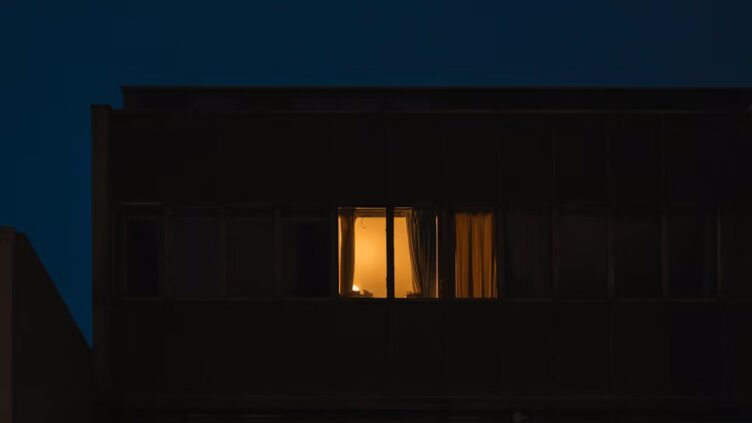
If the experiment with second person narrative positionality in this story suggests the imaginative investment on the part of the second-generation, for whom the family’s pain can only be accessed through virtual play, it also—disturbingly—flips the script, inviting the vicarious witness (and reader) into the position of the persecutor. In this regard, the formal strategies of “The Haunting of Hajji Hotak” are even more troubling. In this case, the second person “you” places the reader in the narrative position of a surveillance agent, watching and listening to an Afghan-American family. The story begins ominously: “You don’t know why, exactly, you’ve been assigned to this particular family, in this particular home, in West Sacramento, California” (249). Here, this device creates for the reader what Shamima Noor describes as an “uncomfortable proximity” to this deeply intrusive narrative perspective.12 The reader observes the Hotak family from the surveiller’s perspective and through this central device layers of haunting are constructed. The seven-person Hotak household—a version of the family from “Playing Metal Gear Solid V”—comprise the titular patriarch, his wife “code-name Habibi,” mother, “code-name Bibi,” sons Mo and Marvin who are both college students (Marvin an avid gamer is a slightly older Mirwais), and their younger daughters Mary and Lily; another son, a Berkeley-educated Marxist lives away from home. As we observe the rhythms of their domestic lives, overlapping hauntings occur.
Most conventionally, this happens in the ways Hajji, Habibi, and Bibi are haunted by losses that occurred during the Afghan-Soviet war. Hajji feels this acutely because he lived while loved ones died (an injury precluded him from fighting) and Kochai explicitly depicts him as “haunted”: “that his injury probably saved his life, and that his living—while his brother died, while his sister died, while his cousins and friends and neighbors all died—has haunted him his whole life” (265). This haunting is amplified by the fact that Hajji, Habibi and Bibi are far from home. When Habibi’s mother takes ill at home in Logar, she too is haunted and asks Marvin: “Do you think she will forgive me for abandoning her in that city?” (262). When Marvin “pretends to pause his video game” (he is playing online so can’t, really), he is “killed over and over again” (262). In this moment, while talking to his mother about family at home in Afghanistan, the video game “time-travelling” to his/Mirwais’s parents’ home in “Playing Metal Gear Solid V” comes back into focus adding texture to a scene in which the past remains in the present (262). After all, if we read these as two versions of the same family, as the collection invites us to do, Habibi’s guilt over her left behind mother is connected to Marvin’s / Mirwais’s game play fantasy of saving his dead Uncle’s life. In “The Haunting of Hajji Hotak,” the second-person narrative is crucial, and resonates with Katherine D. Johnston’s arguments about literature and surveillance. Johnston notes that, “dependent on point of view and perception, literature can’t help but engage surveillance,” because books “invite readers into new perspectives, spaces, thought processes, and experiences.”13 However, Johnston also points out that literature “trains readers to see this insight as subjective, partial.”14 The discomfort created by Kochai’s use of the second-person, invites just this kind of reflection on partiality and bias and suggestively builds a connection between our complicity in the haunting of the Hotak family, and the traumatic pasts that haunt Hajji and Habibi.
: :
Always Watching
The narrative positioning of you-as-agent implicates the reader in the post-9/11 surveillance regimes that specifically target Muslim Americans. Such racialized and invisible haunting aims to craft a narrative out of nothing: “What details is he going to want to draw out of this family in order to turn them into these suspects, or to criminalize them in these different ways? What details is he not going to want to pay attention to, but that are still going to draw him away?”15 And while the reader has already discovered the Hotaks’ innocence from other stories in the collection, the narrative perspective Kochai offers delimits what Deepa Kumar calls state-sponsored terrorcraft: the creation of a terrorist identity through the fantasy of a Muslim threat.16 In other words, the intimacy of the present tense and second person narration, of you learning from and ultimately growing to care for the Hotak family, counters the state’s epistemological missions to create a racialized threat against the American homeland. In this sense, alongside the critical vectors it opens, Kochai’s use of the second person recalls Preti Taneja’s assertions in Aftermath that the “second person in fiction is an empathy device: it can bring the sense of the other closer than the first, and it can distance, too. As if the reader is alive inside the text or is in the text.”17
“The Haunting of Hajji Hotak” thus commits to demonstrating the everydayness of the central family through the eyes of the state, upturning not only suspicions and stereotypes about Muslim Americans but also critiquing the nation’s Islamophobic surveillance infrastructure itself. The domestic setting, and acts of spectating on their homelife, further emphasize the Hotak’s ordinariness. You, as an agent, quickly learn that the family is not so different than any other family. For example, central to the story is Habibi’s family in Afghanistan and how that distance between family shapes the American home. Present in absence, they occupy a tense space within the California home because of their past and their proximity to the Taliban. You spend time listening to Habibi’s frequent conversations on the phone only to find nothing afoot. Only two instances come close to being suspicious to the American security state. Habibi’s parents live in a village in Logar Province, which is under Taliban control. You listen in:
“Taliban,” she will whisper into her phone, as if she knows you are listening.
Just the sound of it makes your heart race. (256)
Then, later, you eavesdrop on a quiet argument Habibi and Hajji have about her brothers: “You recognize their names and suspect it has something to do with the fact that they were employed as interpreters for the US military in Afghanistan. Hajji, you know, considers these men to be traitors” (258). Despite vague references to the Taliban, nothing comes out of these discoveries except some domestic turmoil: “Habibi turn[ing] away and from her husband, mutter[ing] something under her breath, and [crying] herself softly to sleep” (258-259).
Kochai thus renders surveillance as an act of state terror not only intrusive but wholly useless: “you search for clues, signs, evidence of evil intentions. But to no avail. Life merely goes on” (259). The racialized haunting depicted through the unseen yet intimate narrative perspective of a surveillance agent and narrated through entwined second person-present tense depicts American empire’s crown jewel—surveillance paradigms—as cracked. “The Haunting of Hajji Hotak” rewrites imperial logics through the narrative perspective of the empire. “A time of ever more state security and imperial violence,” Kapadia notes, “the historical present necessitates more sensuous ways of knowing and feeling that challenge the militarized imperatives of the state and exceed the visual register alone.”18 That is, Kochai utilizes the present tense and the experimental narrative perspective through the surveillance agent to undercut those racialized imperatives that craft Muslims into terrorists. Empire cannot strike back if there is nothing to report. Indeed, the story’s telos is a kind of queer calculus that “advances an account of both dominant knowledge apparatuses and data logics of the US security state as well as alternative logics, affects, emotions, and affiliations of diasporic subjects living and laboring in the heart of empire.”19 By the end of the story, you have ironically developed an intense investment in the Hotak family and “you begin to doubt your purpose” spying on them: “You should update your supervisors. You should advise them to abort the operation. But you won’t. Not now . . . There’s too much left to learn” (263–264).
And much left to do. Until the very end, “The Haunting of Hajji Hotak” is plotless apart from minor melodramas: “Mary is about to apply to colleges . . . Mo is planning to propose . . . Marvin is making new friends on campus” (264). The Hotaks are so normal that nothing happens as you observe them. But when Hajji, alone at home, falls from the attic and injures himself, it is up to you, the agent, to save him. At the risk of being discovered, you call the ambulance. The agent transforms from an observer poised to see, hear, and say something into a literal deus ex machina: “Hajji pleads to God, and you hear him, and you answer” (265). Irony lurches the story forward toward suspended animation, as Hajji becomes relentlessly paranoid about being surveilled in the wake of your aid and the story ends with him searching the broken pieces of his house for you. The observant ghost is now the haunted.
In this dialectic flip, Kochai reminds us that even “beneficent” surveillance reaps horrific consequences. Torin Monahan warns of the “easy slippage into the celebration of surveillance-enabled transparency (provided we believe that such transparency will be corrective in some way), which is a tendency that may inadvertently affirm surveillance logics while obscuring their racist origins and legacies.”20 Despite the lack of evidence against the Hotak family, you, the agent, continue to watch—but to what end? Mobilized under the guise of homeland security, ubiquitous surveillance splinters the Hotak home as you subject it to the ravaging imperial eye. We’re left in suspended animation as “Hajji searches for you in shattered glass, broken tile, in the strips of his wallpaper, the splinters of his doors, his tattered flesh his warped nerves, and in his own beating heart” (267). Note the way Hajji’s search for you burrows from the material architecture of the home to innermost recesses of the body. The structure of the sentence itself mirrors the penetrative fantasy of surveillance. Hajji has become the surveiller. The search never stops, nor does the haunting.
: :
Modern Family
Alongside this state monitoring, inter-familial surveillance pervades the home. In the name of care rather than racialized suspicion, this monitoring between family members portrays haunting as less terrifying but no less invasive. Like you who haunts the family as a state-mandated practice from the shadows, the interfamilial watching and monitoring is an invisible practice. Mary, Hajji’s eldest daughter, hacks her siblings’ social media accounts to pass the time. Reading her brother Mo’s messages, she “is a ghost on his profile, always careful to read only what he has already read and to leave everything else untouched” (258). Similarly, Bibi, Hajji’s mother, “is always listening” and “reports back all that she hears to her only living brother, in Afghanistan” (250, 251). In both cases, the women, you remark as you watch them surveil their family, “could have been a fine spy” (254).
Regardless of what you, the agent, believe, the inter-familial surveillance underscores the family’s unwillingness to communicate with each other, a side effect of the generational traumas that continue to affect their lives. From the early descriptions of Hajji “wandering around his house or his yard, searching for things to repair—rotted planks of wood, missing shingles, burned-out bulbs, broken mowers, shattered windows, unhinged doors” until the injuries he sustained in the Soviet occupation that killed his family flair up, violence of the past lingers (249). Kochai maps the innocuous, broken wounds of the family home onto the family within, an evocative move given the story ends in paranoid tatters. Read as domestic fiction, Kochai’s story limns the reach and extent of the forever war’s haunts and haunting. Beyond time and place, the past disturbs the present and manifests through the broken family.
This nesting of surveillance in the story—of the reader inhabiting the position of the agent (“you”) watching Mary and Bibi watch their family—echoes a sitcom-like narrative structure. No private act remains concealed, and yet the story’s narrative structure of various spectators (the reader, the “you” agent, and the characters) is deeply familiar. As Brett Mills writes about the British sitcom Peep Show, “The fact that this doubling of viewing positions is not confusing . . . demonstrates how normal the intrusion of video technology and the acts of seeing and being seen have become.”21 Indeed, watching a sitcom feels like quotidian surveillance. We watch as the camera offers a glimpse at the prosaic lives of, albeit fictional, people. You, the agent, even call attention to the sitcom-like characteristics of your job. When every member of the household “laughs as though in a scene in a sitcom,” you watch along (260). And for a moment, the family is as normatively American as the Brady Bunch, Cosbys, or Pritchetts.
Always keen to see or hear something “suspect” from racialized subjects, arbiters of forever war scrutinize Muslims to craft narratives of suspicion. Kochai structures “The Haunting of Hajji Hotak” in this haunting televisual way to highlight not just the normalcy of hyper-surveillance, but to also depict the fetishistic qualities of the forever war’s policing regimes. Fetish begets fantasy under war on terror logics as the state unceasingly searches for something punishable. Sitcom structure, by following a family regular in its dysfunction and unexceptional in its experiences with imperial warfare, reiterates how “the surveillance society renders privacy near redundant” and intensely racialized.22
What emerges from the surveillance structure in form and theme is a metatextual assertion about short stories themselves. The hauntings that organize “The Haunting of Hajji Hotak” are themselves subject to a hauntology of form. The American short story has often emerged from violence. Kochai joins the likes of Ernest Hemingway, J.D. Salinger, and Tim O’Brien, to use the form to convey the domestic aftermath of the horrors of war. But Kochai’s story is also haunted by this form, which has rarely engaged with the structural violence at the heart of warfare, and certainly privileged white, heteronormative, American subjects. Jamil Jan Kochai’s short story, and indeed his whole collection, dares to pull up the floorboard to reveal the putrid heart of contemporary American empire. “The Haunting of Hajji Hotak” makes clear that haunting didn’t begin with 9/11; its origins lie in deeply rooted infrastructural and racialized violence from long ago. To haunt is to remain, linger, and straggle. These ghosts have always loitered, screaming out to be heard.
: :
Endnotes
- Ariel Katz, “Writing Millennial Technology.” Ploughshares, 30 November 2022. https://pshares.org/blog/writing-millennial-technology/.
- Zara Dinen, The Digital Banal: New Media and American Literature (New York: Columbia University Press, 2018), 2.
- Mark Fisher, Ghosts of My Life: Writing on Depression, Hauntology and Lost Futures (London: Zero Books, 2014), 28.
- Avery F. Gordon, Katherine Hite, and Daniela Jara, “Haunting and thinking from the Utopian margins: Conversation with Avery Gordon,” Memory Studies 13, no. 3 (2020): 339.
- Sadeq Rahimi, The Hauntology of Everyday Life (Basingstoke: Palgrave, 2021), 3.
- Jamil Jan Kochai, “The Haunting of Hajji Hotak,” The New Yorker, November 8, 2021, 56-60.
- Ronak Kapadia, Insurgent Aesthetics: Security and the Queer Life of the Forever War (Duke University Press, 2019), 36.
- Amanda Glasbeek, “The Haunting of Surveillance Studies: Seeing, Knowing, and Ghostly Apparitions,” Surveillance and Society 20, no. 4 (2022): 369, 364-371.
- Amanda Glasbeek, “The Haunting of Surveillance Studies: Seeing, Knowing, and Ghostly Apparitions,” 369, 364-371.
- Theodore Martin, Contemporary Drift: Genre, Historicism, and the Problem of the Present (New York: Columbia University Press, 2017), p. 6.
- Anna Badkhen, “The Haunting of Hajji Hotak by Jamil Jan Kochai,” World Literature Today 96, no. 6 (2022): 53.
- Shamima Noor, “The Haunting of Hajji Hotak and Other Stories by Jamil Jan Kochai,” Wasafiri 38, no. 1 (2023): 88-89.
- Katherine D. Johnston, Profiles and Plotlines, Data Surveillance in Twenty-First Century Literature (Iowa University Press, 2023), 30.
- Katherine D. Johnston, Profiles and Plotlines, 30.
- Bareerah Y. Ghani, “On Voice, Rhytm and Experimenting With the Short Story: An Interview with Jamil Jan Kochai,” phoebe, 11 March 2023. https://phoebejournal.com/on-voice-rhythm-and-experimenting-with-the-short-story-an-interview-with-jamil-jan-kochai/.
- Deepa Kumar, “Terrorcraft: empire and the making of the racialised terrorist threat,” Race & Class, 62, no. 2 (2022): 34-60.
- Preti Taneja, Aftermath (Transit, 2021), 41.
- Ronak Kapadia, Insurgent Aesthetics: Security and the Queer Life of the Forever War, 9.
- Ronak Kapadia, Insurgent Aesthetics: Security and the Queer Life of the Forever War, 10.
- Torin Monahan, “Reckoning with COVID, Racial Violence, and the Perilous Pursuit of Transparency.” Surveillance and Society 19, no. 1 (2021): 1-10.
- Brett Mills, “‘Paranoia, paranoia, everybody’s coming to get me’: Peep Show, sitcom, and the surveillance society,” Screen 49, no. 1 (2008): 51-64, 55-56.
- Brett Mills, “‘Paranoia, paranoia, everybody’s coming to get me’: Peep Show, sitcom, and the surveillance society,” 51-64, 56.

Arin Keeble
Jay N. Shelat