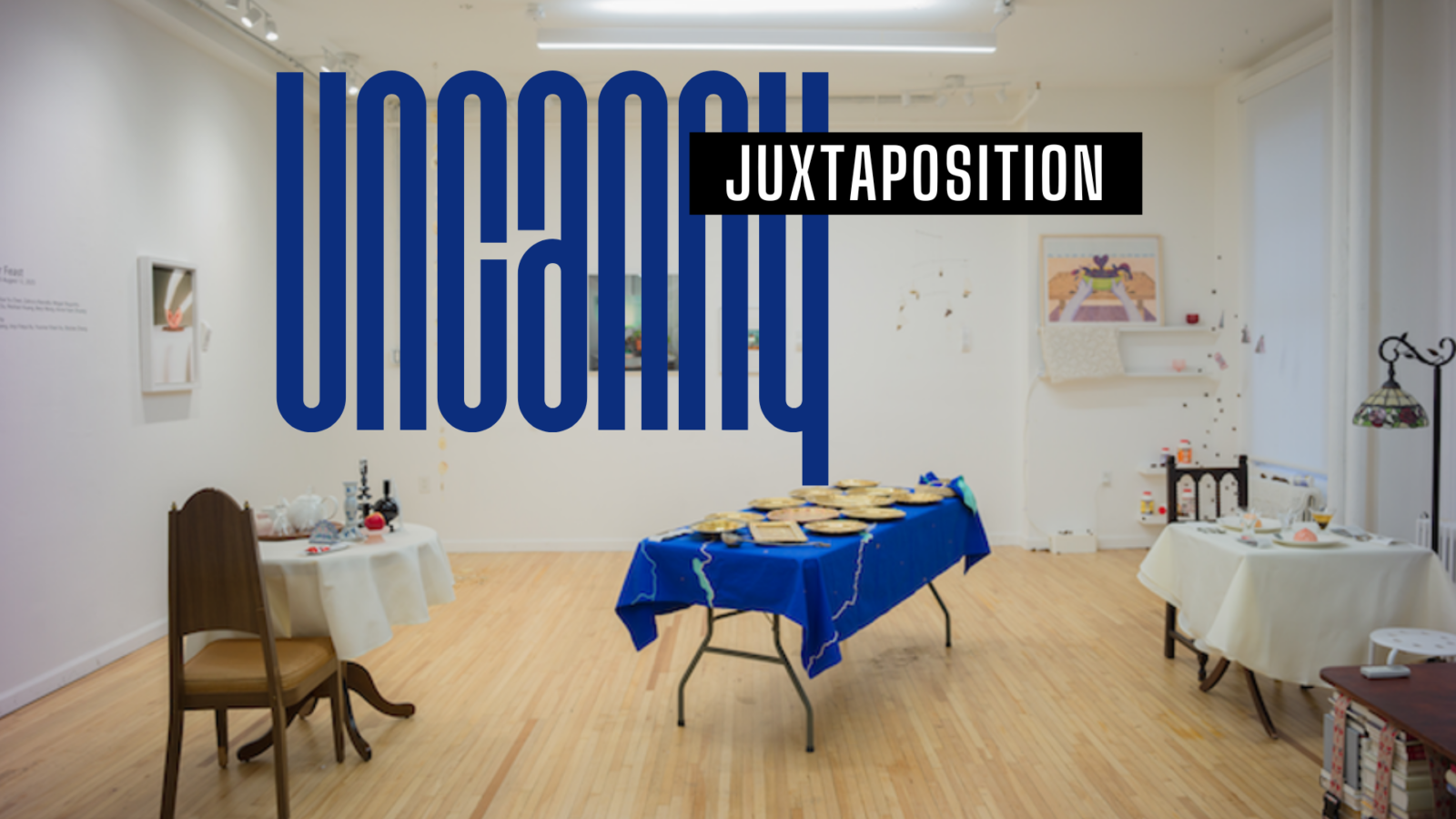
Two recent exhibitions in New York, Inner Feast (Accent Sister, August 20251) and Group Lick (Tutu Gallery, April–June 20252), use food and appetite, digestion and consumption as their conceptual ground. Yet they engage with the topic from two contrasting perspectives. One treats art as psychic nourishment—something to be metabolized and transformed inwardly. The other emphasizes the marks that consumption leaves behind, sculptural residues that reveal desire through erosion.
At the same time, neither show can be understood apart from the spaces that hosted them. New York has a long tradition of artist-run, small-scale, and domestic galleries that exist outside the commercial white cube. Excessive costs and institutional gatekeeping have prompted artists, curators, and communities to establish their own “micro-institutions”: bookstores, apartments, or hybrid living and working spaces where art coexists with daily life. Both Accent Sister and Tutu Gallery extend this lineage: one as a bookstore and community hub, the other as a DIY gallery project.
Studying the two recent shows about digestion and consumption from two community art spaces in New York City, the article asks: how do community art spaces themselves become digestive organs, shaping art into shared nourishment or visible traces for the community?
: :
Inner Digestion at Accent Sister
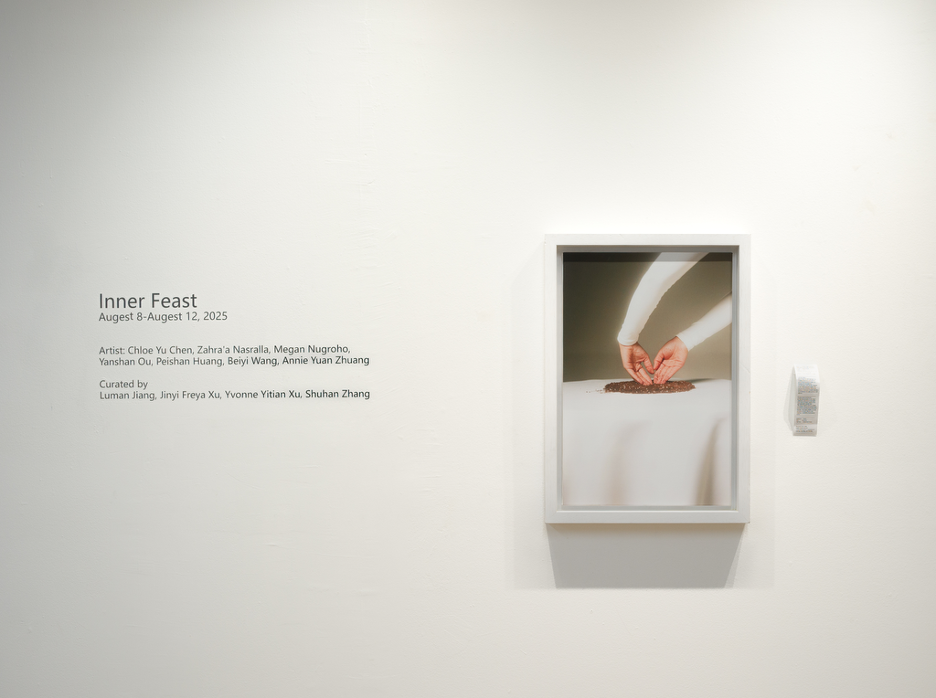
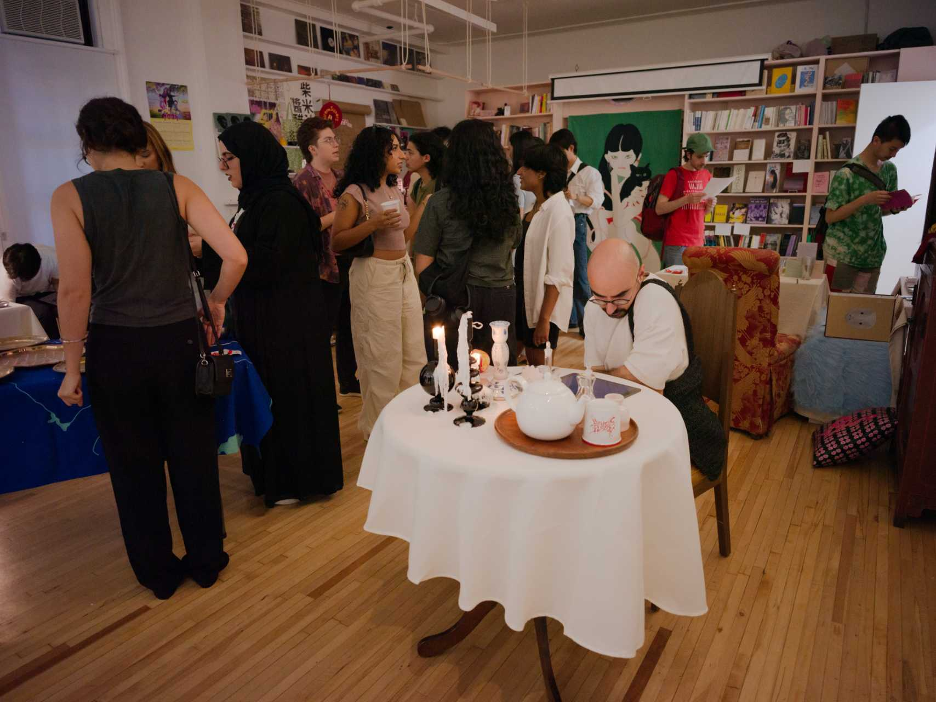
For a week in August 2025, in Accent Sister’s gallery space, there were strips of receipt paper curling slightly at the edges inside, displayed alongside the art pieces. Borrowing from the visual reference of a restaurant bill, the receipt strips shows information about the artist and the art piece subtly suggesting the relational digestion of art and its viewer. Each strip is printed with details such as titles, time, and processes, framing the artwork as both meal and transaction—turning the act of viewing into a form of consumption and accountability. A curatorial group—Luman Jiang, Jinyi Freya Xu, Yvonne Yitian Xu, and Shuhan Zhang—presented the show about food and digestion, described as “psychological banquet”. According to Freya Xu, the show unfolded as a kind of psychic menu—moving the audience from appetite to conflict, and finally toward transformation. The framing concepts came from Freud, Jung, and Daoism, but what mattered more was how these ideas were made tactile through ordinary materials.
At the center, Zahra’a Nasralla presented a table covered in bright blue cloth displaying golden plates—less offerings than placeholders for ritualistic desires that are never fully satisfied. Around it, smaller tables held arrangements of food and video art combining works from Yansuan Ou and Chole Chen. With Accent Sister being the community space, the books and household objects around the space are staged as if the gallery had been set for a communal meal. Incorporating the familiar grammar of common items, the show created an atmosphere in question of memory, appetite, digestion, and control.
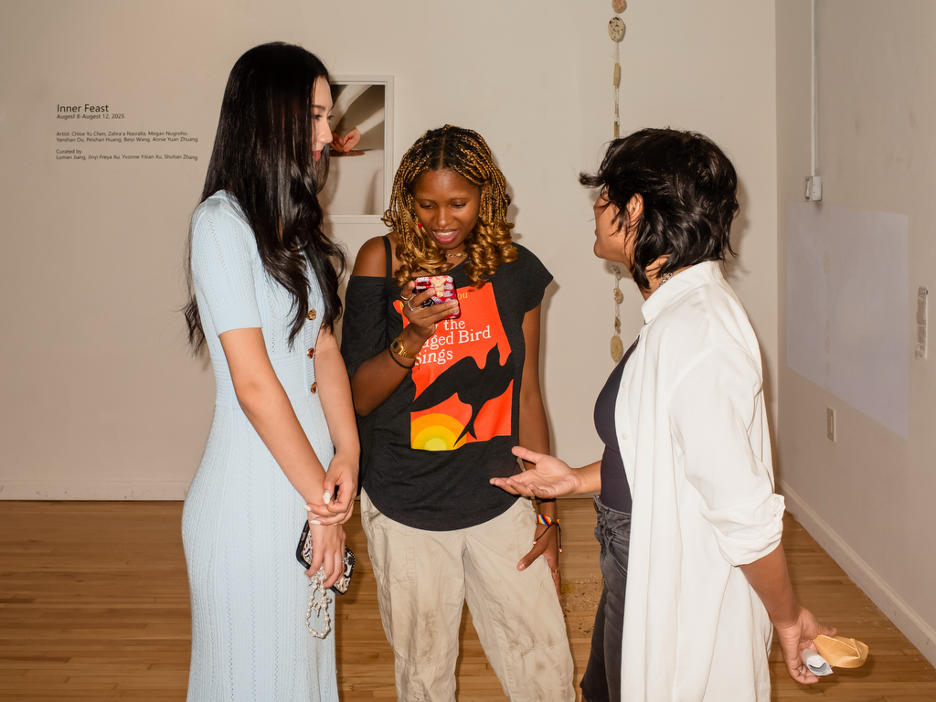
Freya Xu explains that collaborating with Accent Sister was a heaven-made match because Accent Sister is first and foremost a feminist bookstore and literary community, where conversations, texts, and gatherings already circulate as forms of nourishment. When she staged Inner Feast as a “psychological banquet,” the bookstore context amplified the metaphor: the show became another text to be read, another meal to be digested collectively. Bookshelves and household objects in the space blurred with the art objects, reminding audiences that digestion here was not just symbolic but social — art metabolized into the rhythms of a feminist community. In the space of Accent Sisters, the arts about food are submerged in household and community-oriented setup, such as couches, hand-written menu on whiteboard, and crafty decorations. In a way, the community members’ actions of reading, eating, and conversing folded into each other, turning the gallery into a site of shared sustenance where meaning was produced through collective attention rather than solitary viewing.
Peishan Huang’s digitally collaged Evidence of Objects #1 appeared as a sumptuous dish but was rendered instead as residue—the leftover trace of memory after the meal, in parallel to the prompting of the AI-generated imagery. In her composition, a green glass lamp glows faintly alongside some artificial fruit, mirroring the obscure shadows projected on the window gauze of the space. Together, the setting and the piece portrayed an alternative dreamy architecture. Other than physical visuals, Annie Yuan Zhuang’s mobile used spices and scent to trouble the distinction between interior and exterior, drawing attention to the Chinese medicinal idea of balance and its influence on the artist’s life philosophy. More on the conceptual elements, in the center of the space, a large assembly of tableware by Zahra’a Nasralla forms into cartographies, exposing how identity is organized through acts of serving and partitioning.
What unified these gestures was the curatorial structure: digestion not as metaphor but as methodology. Freya Xu describes her curatorial methodology as “life experience, self-generation, and soul construction,” framing the exhibition as a process rather than a presentation. Visitors were not invited to consume the works as spectacle; they were asked to metabolize them, to let them unsettle, linger, and reshape. To metabolize here meant to internalize and remake, fully immerse in the experience of food, and turn viewing into an act of transformation. Upon lingering and digesting, one may be drawn to the unique exhibition label made out of receipt paper. The symbol of receipt serves as proof and a conclusion that one has experienced the artist’s experience and was part of this feast. In a way, Inner Feast positioned the community not as passive viewers but as co-digesters, presenting art as psychic nourishment.
: :
Consumption and Remains at Tutu Gallery
If Inner Feast mapped what happens within food and digestion onto artistic expression, Xinan Helen Ran’s solo show, Group Lick presents how appetite leaves traces on matter. The exhibition took its cue from “lachryphagy—the phenomenon of butterflies sipping crocodile tears—and translated this instinct into sculptural language”. What remains after consumption is not absence, but residue: an altered surface that makes desire visible.
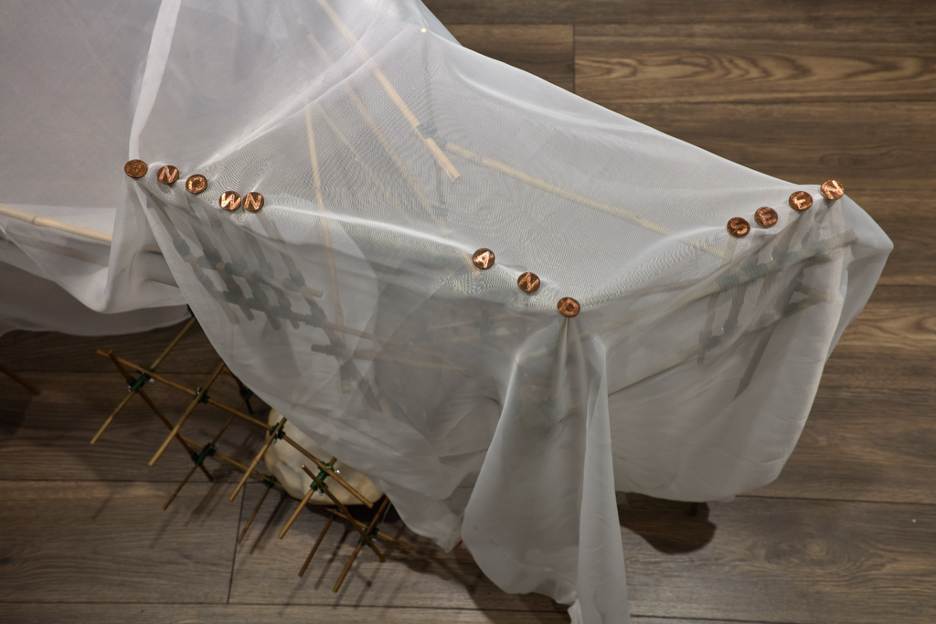
The exhibition’s centerpiece consists of a lightweight bamboo scaffold with translucent veils looming over a salt lick block that was once fifty pounds, then eroded by over seventy ewes and lambs on a farm in New Hampshire. Displayed in its reduced state, the block served as a fossilized record of repetitive licking and biting—acts of appetite that had slowly carved its surface into grooves and hollows. Each groove and hollow is a record of repetitive need. On the bamboo structure, each stake is capped by a polished penny facing up—showing the reflective edge from the cycles of touch and constant movement of the currencies’ circulation.
Nearby, on the fireplace mantle of Tutu’s gallery space sat a small vintage statue of a girl and dog, its surface veined with delicate salt crystals that caught the light. The figures leaned gently toward one another, their legs worn smooth by decades of touch, as if memory itself had begun to crystallize across their bodies. Surrounding the space, brass push plates, dulled by constant rubbing, and photographic portraits of dog statues with polished snouts extended the logic of erosion. With tight visual rhythm and dynamic contrast, Group Lick shows the mundane acts of licking, pressing, and rubbing become inscribed into material as memorials of intimacy.
In Group Lick, consumption—normally marked by a lack of presence—is inscribed into material. The nonhuman—goats, dogs, butterflies—becomes the agent of alteration, showing appetite as a communal force that reshapes the monumental into something soft, uncanny, and shared. On the other hand, the polished pennies gleam recalls small acts of offering or exchange, linking the work’s cycles of erosion to the gestures of handling, giving, and spending that sustain daily consumption, except this time, by humans. Almost in the same manner as Inner Feast engages the audience to join the show, by presenting the remains of the consumed with tension and points of comparison, Ran invites the audience to fill in the gap and therefore converse with the piece.
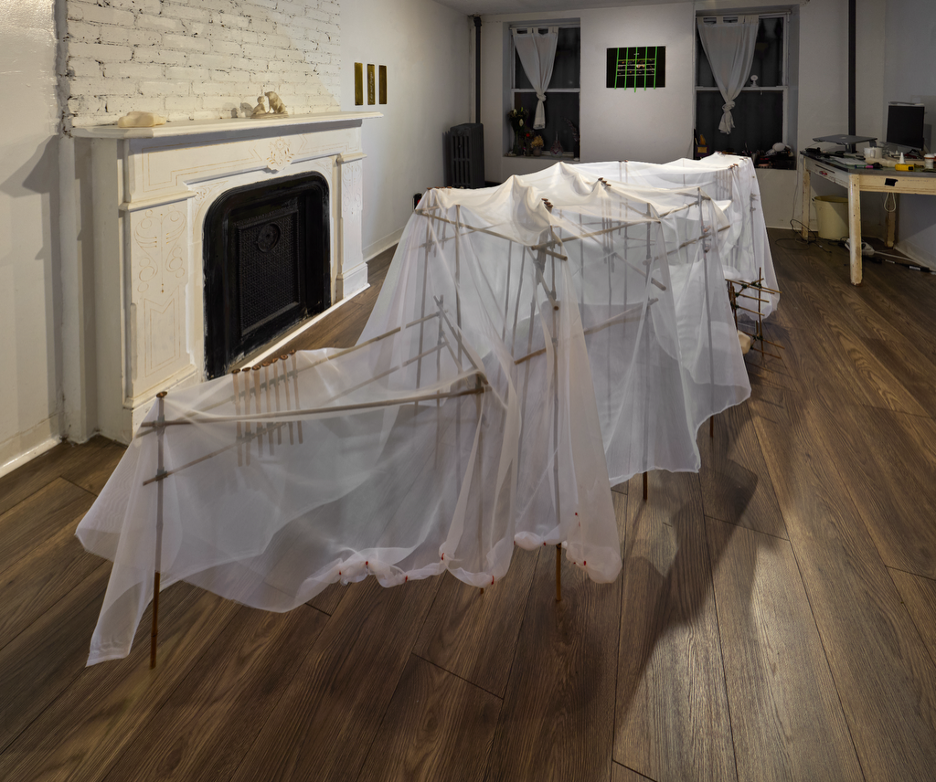
As mentioned, in Ran’s works, consumption and digestion become tactile, collective, and accumulative. The setting of Tutu Gallery, run by a cat named Tutu and its human assistant April, amplified the show’s logic. In the way that salt is shaped by the tongue through licking, the gallery itself and most of the shows that it hosts are shaped by the creatures’ modes of habitation. In response, the arts remain. Art presented in Tutu does not feed or be passively consumed but becomes an archive of appetite and shared desire, making visible the surfaces softened by communal desire.
: :
Cross-Reading the Methodologies
Reading Inner Feast and Group Lick together reveals that digestion and consumption are not separate categories but recursive processes that feed into each other.
In Inner Feast, the curling receipt-paper labels become fragile proofs of transformation—like salt licks of the mind marking the residue of something inward made visible. The show’s insistence on ephemerality suggests that even inward transformation leaves an outward residue, whether in memory, symbol, or documentation. Digestion, in this sense, cannot be contained inside; it inevitably marks the outside. In Group Lick, the logic of digestion continues: salt blocks, brass plates, and polished pennies preserve the gestures of contact and erosion, turning consumption into evidence. As a result, the residues of appetite do not merely record loss; they metabolize into new forms of reflection and community memory. Consumption here is not the end point but the raw beginning of another cycle of digestion. If the receipts testify to exchange through language, the coins do so through touch—each glint a record of circulation and shared handling.
Both shows make digestion not a metaphor but a method: processes of taking in, breaking down, and returning transformed. But most importantly, in both Accent Sister and Tutu Gallery, community becomes the organ that sustains this cycle—absorbing, marking, and returning art into shared life. By looking at these two exhibitions through their community spaces, digestion and consumption take on a larger meaning. Accent Sister transforms art into psychic nourishment for a collective; Tutu registers the material traces of communal desire. Both show that alternative spaces are more than neutral containers but organs of digestion themselves—processing, metabolizing, and transforming art into the lives of those who gather there.
: :
Endnotes
- Inner Feast, group exhibition curated by Luman Jiang, Jinyi Freya Xu, Yvonne Yitian Xu, and Shuhan Zhang, Accent Sister, New York, August 8–12, 2025.
- Group Lick, solo exhibition by Xinan Helen Ran, Tutu Gallery, New York, April 25 – June 13, 2025.
shuang cai