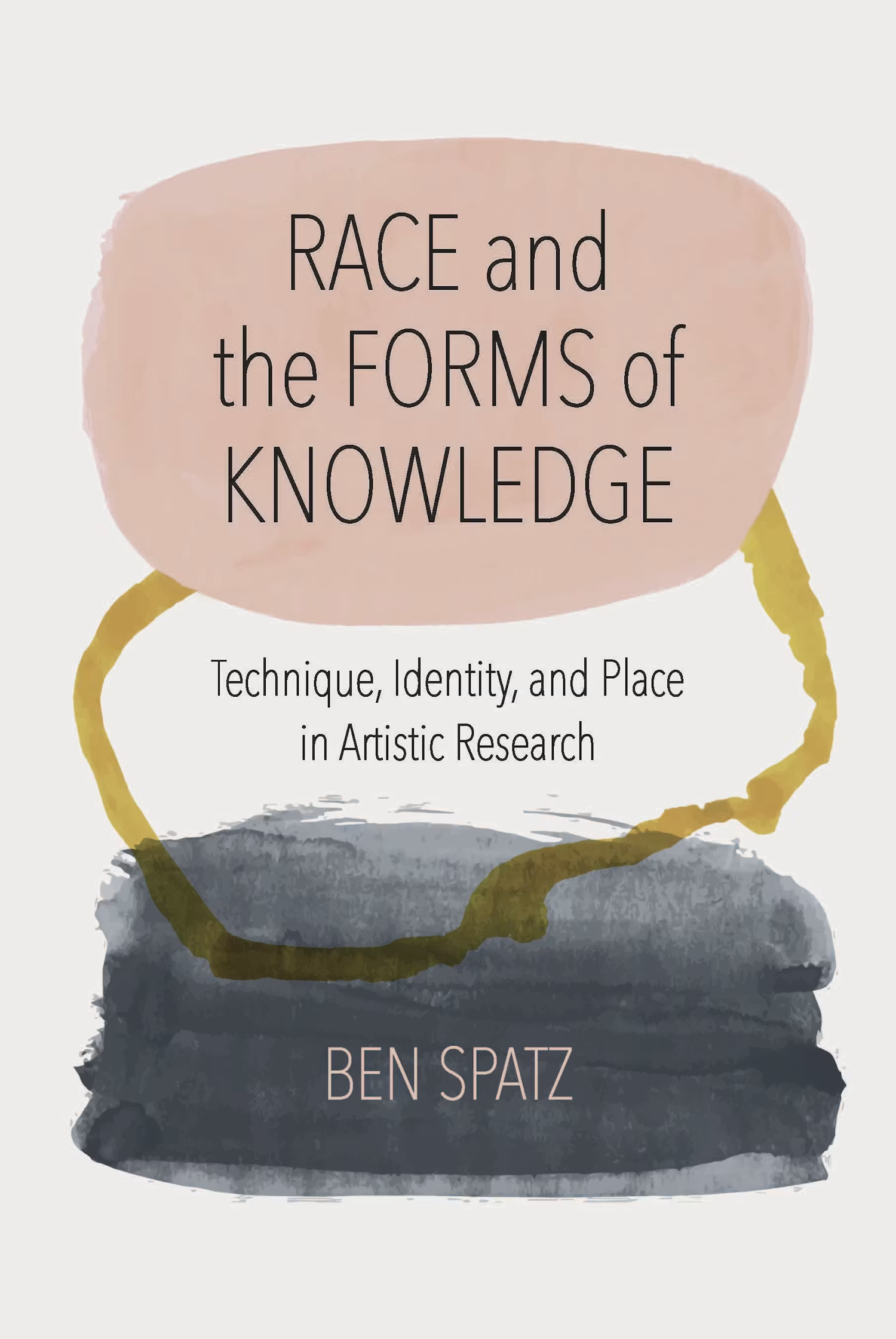
Approaching the university as a site of both critique and endeavor, Ben Spatz’s Race and the Forms of Knowledge: Technique, Identity, and Place in Artistic Research offers a series of refreshingly challenging claims whose implications for academic inquiry reach deep into the fields of performance studies, Black studies, Jewish studies, and whiteness studies.1 Their point of departure is showing that performance studies has yet to embrace the radical potential of its core belief that embodied experience qualifies as knowledge production. Although we say we value practice as research and art as thinking, our modes of communicating knowledge remain conventional. To live up to the “epistemic revolution” (3) of our core beliefs, Spatz advises, we must follow the “institutional interventions” of Black studies (and, later in the book, Jewish studies and Indigenous studies) and foreground the embodied and audiovisual as much as the textual (4).
Because there are few, if any, domains of human activity not touched by Spatz’s call “for a radical reexamination and reformulation of ‘research’ (knowledge, thought, rationality, the mind, discourse) and equally of ‘art’ (creativity, discovery, skill understanding, craft, life, practice),” Spatz’s web of interlocutors is appropriately capacious (17). Consider Chapter 1, “Molecular Identities,” in which Spatz joins critiques of identity from Black studies with those theorized in the dramaturgical practices of Dorinne Kondo and Katherine Profeta, respectively. The gridlocked identity formations presumed by a “casting” model—a model wherein identity materializes as a product adhering to a person—can be corrected by a dramaturgical one, wherein identity materializes and reconstitutes itself continuously through process. Turning to dramaturgy as a site for explicating the entwinement of materiality and form (that is, the conditions of knowledge production and the forms of knowledge production) allows Spatz to elucidate how artistic research works as knowledge production.
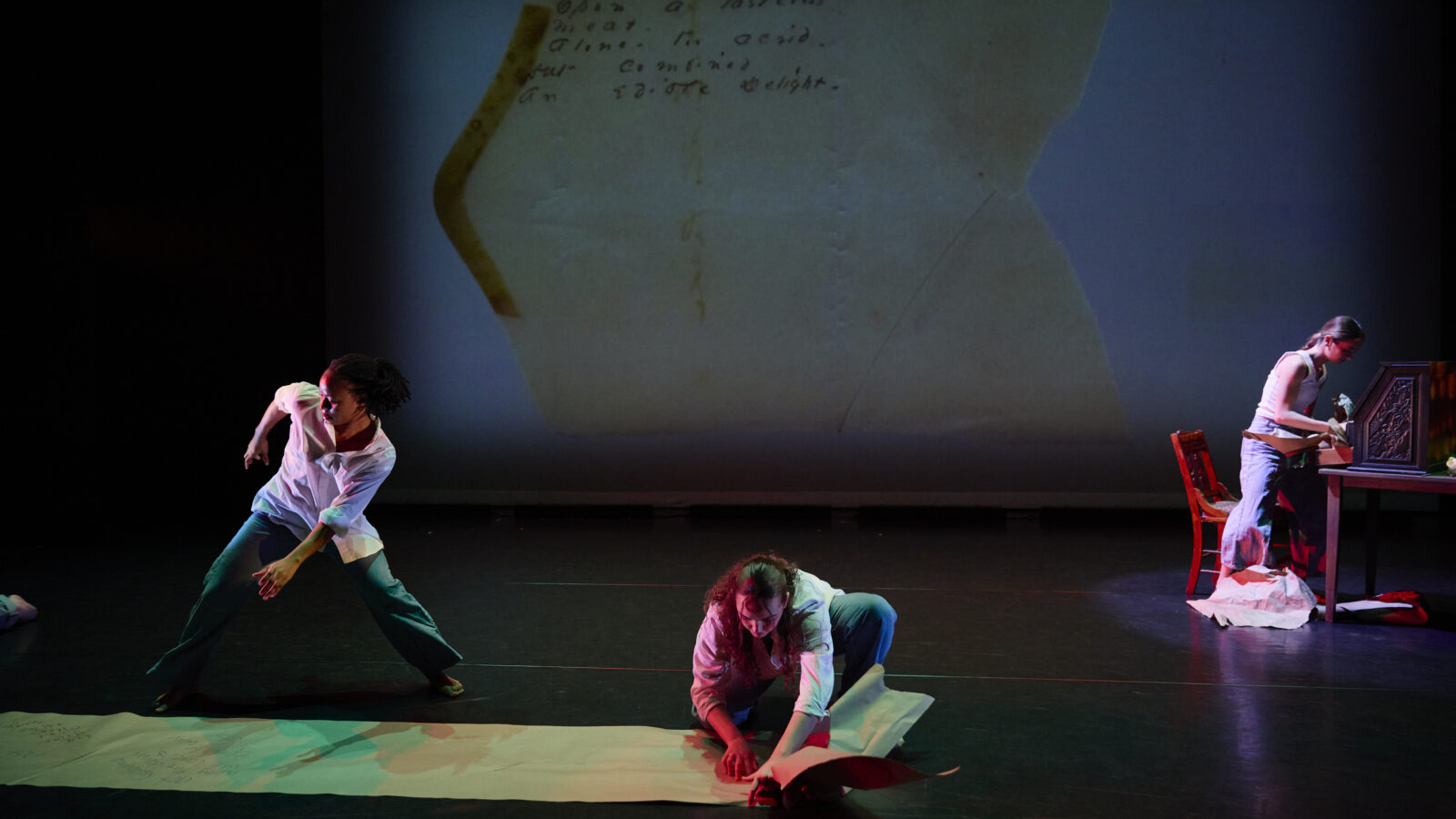
Turning to their own artistic practice through song later in the book, Spatz models this dramaturgical approach to identity while exploring the molecularity of Jewishness. In their collaborative Judaica project, Spatz self-theorizes, “I therefore take up the talmudic roots of critical theory as a project of reclamation, highlighting its potential to counter white writing in solidarity with techniques of black, indigenous, queer, and feminist writing that also displace logocentrism” (155). Building on Santiago Slabodsky’s contribution of decolonial Judaism, Spatz offers a shift for artistic research away from ethnography and towards what they term ethnotechnics: “a technical investigation of the contemporary limits and potentialities of a given category of identity” (159). Ultimately, they declare a departure from the dominant trend in performance studies wherein audiovisual documentation of performance belongs to the archive, not the repertoire (after Diana Taylor), and thus fails in an attempt to capture live embodiment. Spatz exhorts the reader, “audiovisuality should not be compared with embodiment; it should be compared with writing. The question at hand is what the audiovisual body can do, how it appears, and how it produces meaning in contrast to the written and writing body” (182).
This recalibration of thought invites us to consider the written body and audiovisual body as offering distinct tools for building distinct worlds, and to learn to use them with greater precision and understanding of their ethical implications. The racial and political stakes of this project are especially clear in Spatz’s bridging chapter on “Whiteness and the Racialization of Knowledge,” which should be required reading for all academics and artists, and indeed anyone who wants to produce and share knowledge with someone else. “If writing is technique and whiteness is identity,” Spatz writes, “then I am working here with a technical-identitarian and cultural-material concept of white writing: a racial molecule, a particle of racialized knowledge” (85). Spatz later clarifies that “white writing names the inextricability of the technology of writing from the construction of whiteness through colonialism” (87). Understanding this dynamic helps us see the decentering possibilities of the audiovisual, wherein recordings function as “performances of thought that are inscribed without being written” (89). Tracing the implications of this claim through the theoretical offerings of Walter Mignolo, Jacques Derrida, and Denise Ferreira da Silva, Spatz demonstrates the stakes for audiovisuality as an intervention into white institutionality. Here, Spatz also develops one of their major contributions, the suggestion that we must “move from critical whiteness studies to critical whiteness practice,” and that methods for doing so might be found in artistic research (105).
Just as Spatz’s own artistic practice provides some models for this critical whiteness practice, a final section of their book, “Earthing the Laboratory,” bears significant promise for further elaboration beyond its pages. Spatz continues to analyze the ramifications of artistic research when it comes to the place of the laboratory, the where of research, and how “to foreground the agency of place; or, rather, to refuse the denial of emplacement that is enacted by white ways of knowing” (195). This adds “place” to the technique and identity dyad and brings Spatz most directly into the rapidly growing and absolutely critical intersectional conversation between Black studies and Indigenous studies. Spatz reads Mark Rifkin, Marquis Bey, and Katherine McKittrick through the technique-identity-place analytic, unfolding an astounding set of final questions, such as: “Can writing be practiced in a way that acknowledges how the word arises from and is rooted in land and flesh?” (203), and “What would be a university, or a state, founded on an audiovisual constitution?” (204).
These sentences exemplify a recurring rhetorical move of Race and the Forms of Knowledge: posing a series of questions that do not necessarily aim at answers but rather aim at undoing the assumptions that undergird the search for answers. They are also questions in search of a “ceremony that must be found,” to riff on Sylvia Wynter’s vital postcolonial critique of humanism. Spatz turns to ceremony in a brief afterword, reading their own video essays alongside Tiffany Lethabo King, to argue that “the development of networked audiovisuality affords unprecedented potential for ceremony” (211). Ultimately, their book lays the groundwork for building this ceremony by calling performance studies back to its core beliefs and demonstrating their limits and affordances for liberatory practice.
Endnotes
- Spatz is clear in their author’s note that the book’s lowercasing of commonly capitalized terms like Blackness, Jewishness, and Indigeneity is part of their “molecular approach” to understanding identity—an approach that is complex and that pays off over the course of a book (xi). In a comparatively shorter review, however, I worry the approach will feel facile and so I continue to capitalize these terms in my own writing, though I lowercase them in quotations from the original.

Ariel Nereson