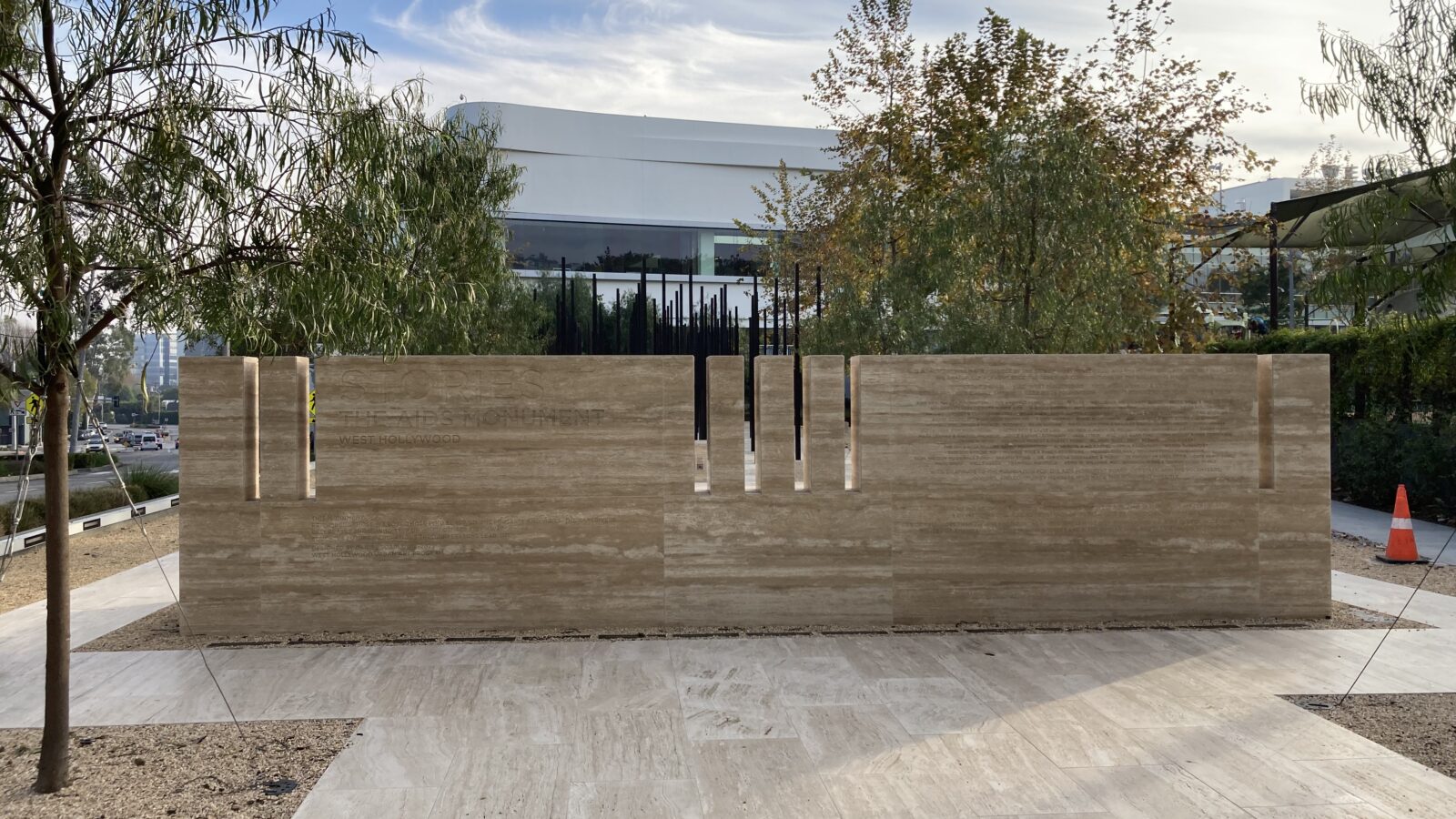
I first noted its edges out of my peripheral vision five days before Christmas. Twoish days later, I took in some of its luminescent glow from across San Vicente Boulevard, the sounds of queer excess and joy still spilling out into the post-midnight air. I meant to circle back after taking in some of what the witching hour had on offer, but the revelry got shut down like clockwork at 2:00am. Did all my circling around, I wondered, mean I was cruising this artwork? Or was the artwork cruising me?
Public art often facilitates this kind of encounter. Across my more than fifteen years walking San Francisco, I think of that city’s murals, the beautifully monumental BIPOC faces gazing at each other on the wall adorning the Women’s Building or the multihued AIDS narratives on the wall flanking the eatery I knew for years as Bagdad Cafe. Murals amplify and rework our pedestrian movements through cityscapes. Sometimes we do stop to take them in before whisking ourselves off elsewhere. But monuments, including STORIES: The AIDS Monument on San Vicente Boulevard in West Hollywood, ask us to migrate to them. Our pilgrimage is part of the experiential package.
Greater Los Angeles’s newest permanent public memorial to the AIDS epidemic, officially unveiled on November 16, 2025, STORIES invites us to bear witness to the losses and legacies of AIDS and its activisms. Designed by Dan Tobin and made possible through sponsorships by and collaborations between the City of West Hollywood, the Foundation for the AIDS Monument, and One Institute, its arrival demands our attention. The work’s verticality is immediately apparent—what solicited my peripheral and furtive gazing. Its conceptual core, 147 pillars coated in bronze, is a forest the viewer is invited to move through. Lacking a central figure or edifice to move towards, STORIES asks viewers the best way to enter its space. Moving to a corner along its stone half wall, the non-symmetry of the pillars invite further ways of seeing. I saw seismographic renderings, erratic electrocardiogram lines, and lie detectors working overtime. Earthquakes. EKGs. Lies. For anyone familiar with the disasters of the AIDS epidemic, those associations are more than metaphor.
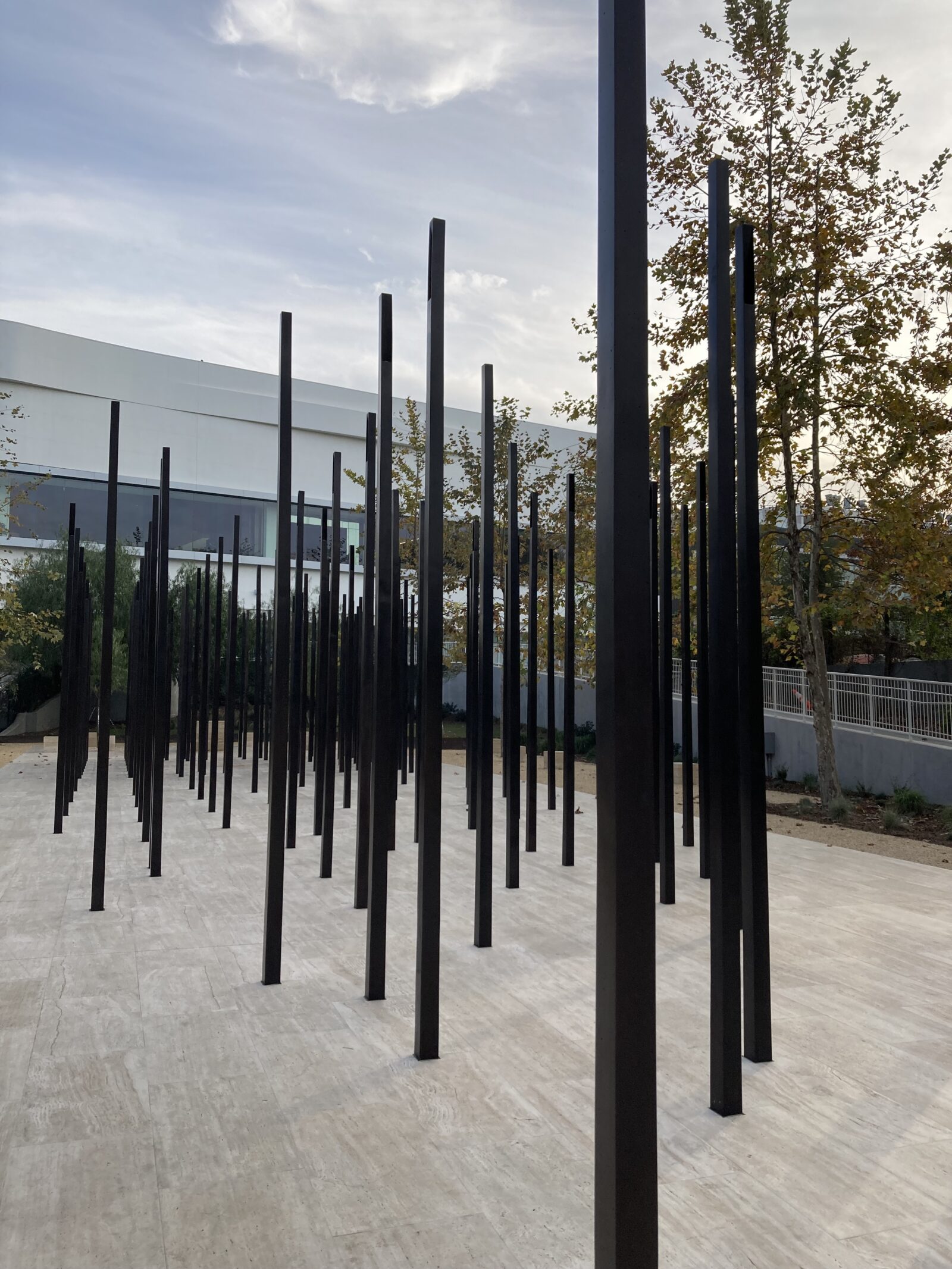
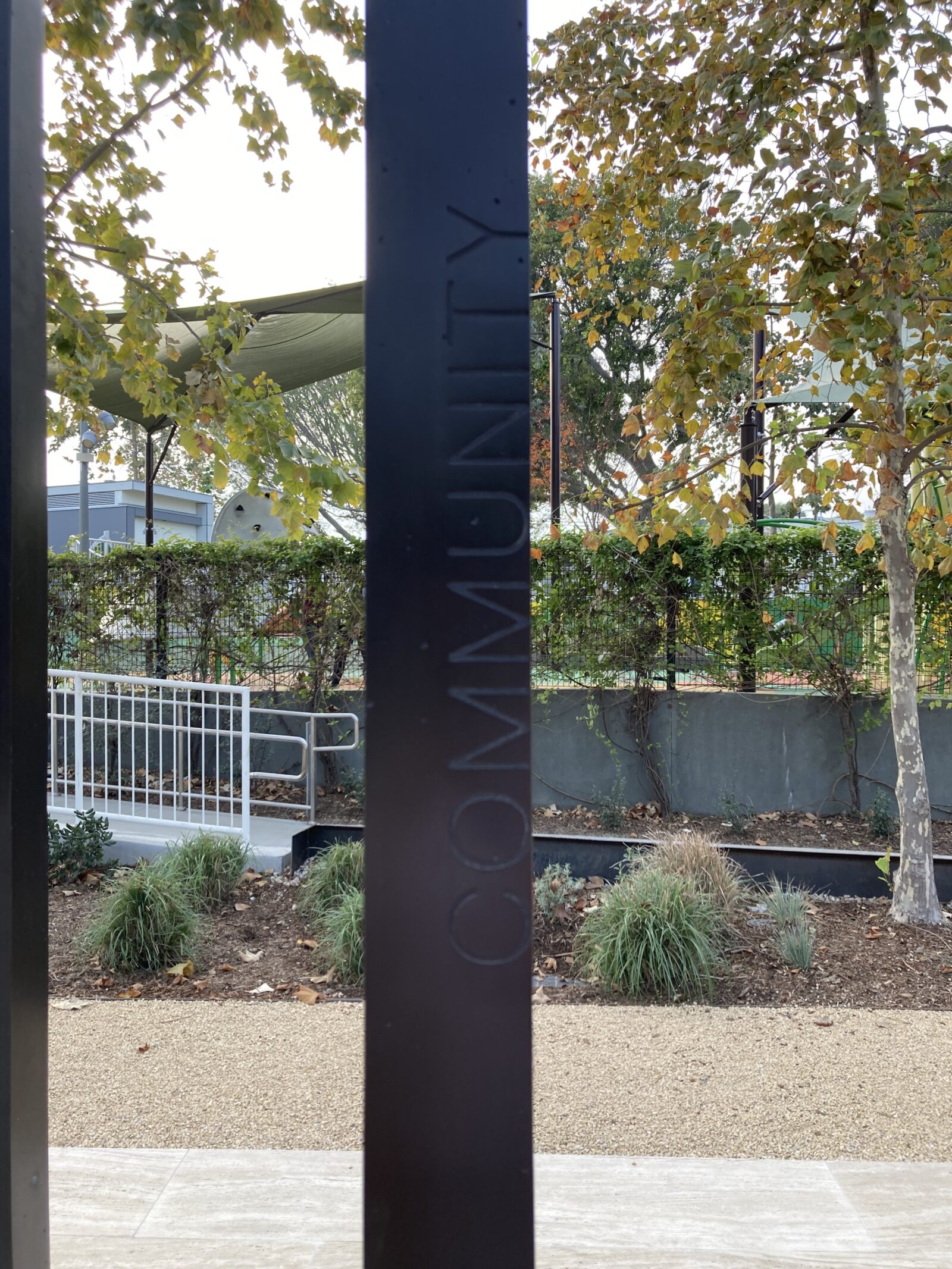
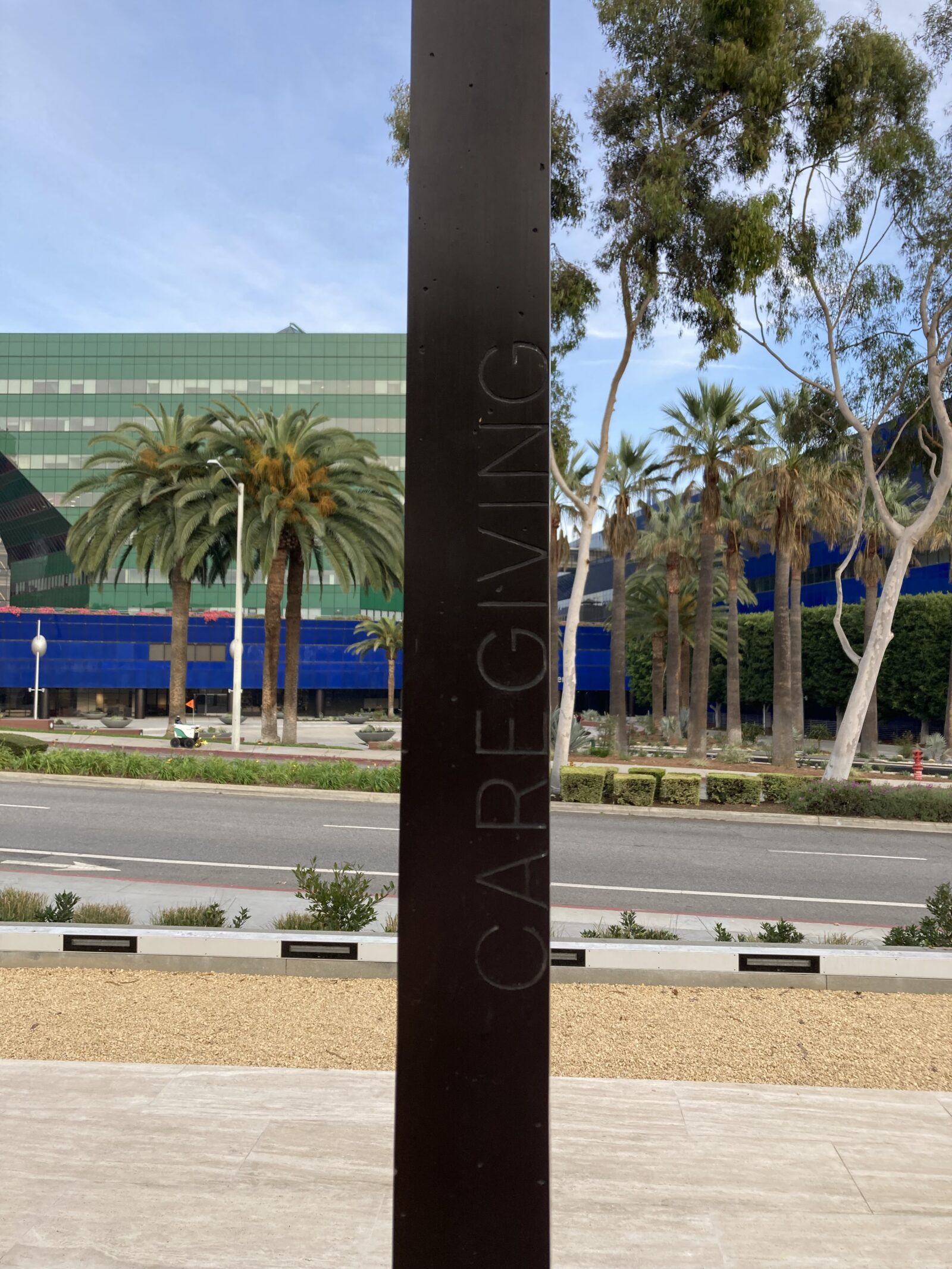
Figs. 2 and 3: Taking in STORIES’s pillars up close.
Etched words on several of the pillars do similar work in making visible what might be invisible during the AIDS crisis—pillars of strength and experience:
COMMUNITY
HELPLESSNESS
SUFFERING
LEADERSHIP
ARTISTRY
CAREGIVING
Tobin understands a monument as pedagogical. Contextualizing histories situate the epidemic in squared stone tablets—Tobin refers to them as narrative tablets—that the visitor encounters as they move through the work. Inside of the work, a section of stone slab emblazoned with the words SPEAK UP UNTIL THEY HEAR YOU represents a speaker’s podium and recalls the iconic rallying rhetorics of the AIDS Coalition to Unleash Power (ACT UP).
And yet the monument is also appreciative of the fact not all voices speaking up were heard equally. Quotations by Connie Norman and Paul Monette give voice to the innumerable losses and legacies STORIES can only hint at. Their pointed perspectives are etched in stone at eye level. But Tobin sets quotes by Gil Cuadros and Essex Hemphill apart on squared bronze plaques situated at ground level near the work’s rearguard. Here the words of two HIV positive gay writers of color are given monumental status within a larger monument. However, a viewer cannot read Hemphill’s and Cuadros’s words and biographies without walking around the square—their mirrored engravings exist in upside-down relationality. One voice is inaccessible when taking in the other one, requiring a literal change in perspective and bodily orientation. Taking seriously the words and experiences of people living with HIV and AIDS requires changes in perspective, especially given the uneven impact the epidemic has had on queer communities of color.
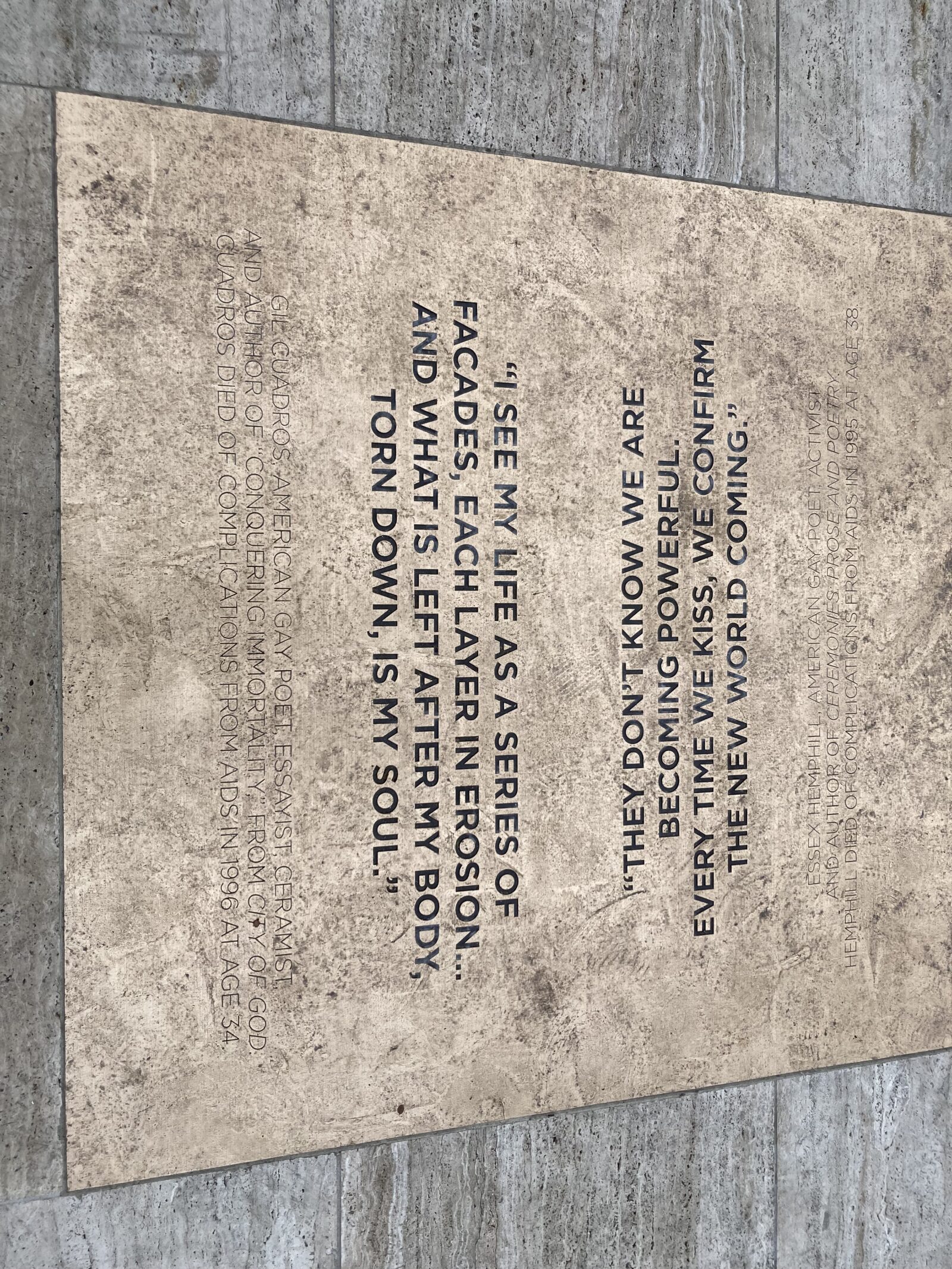
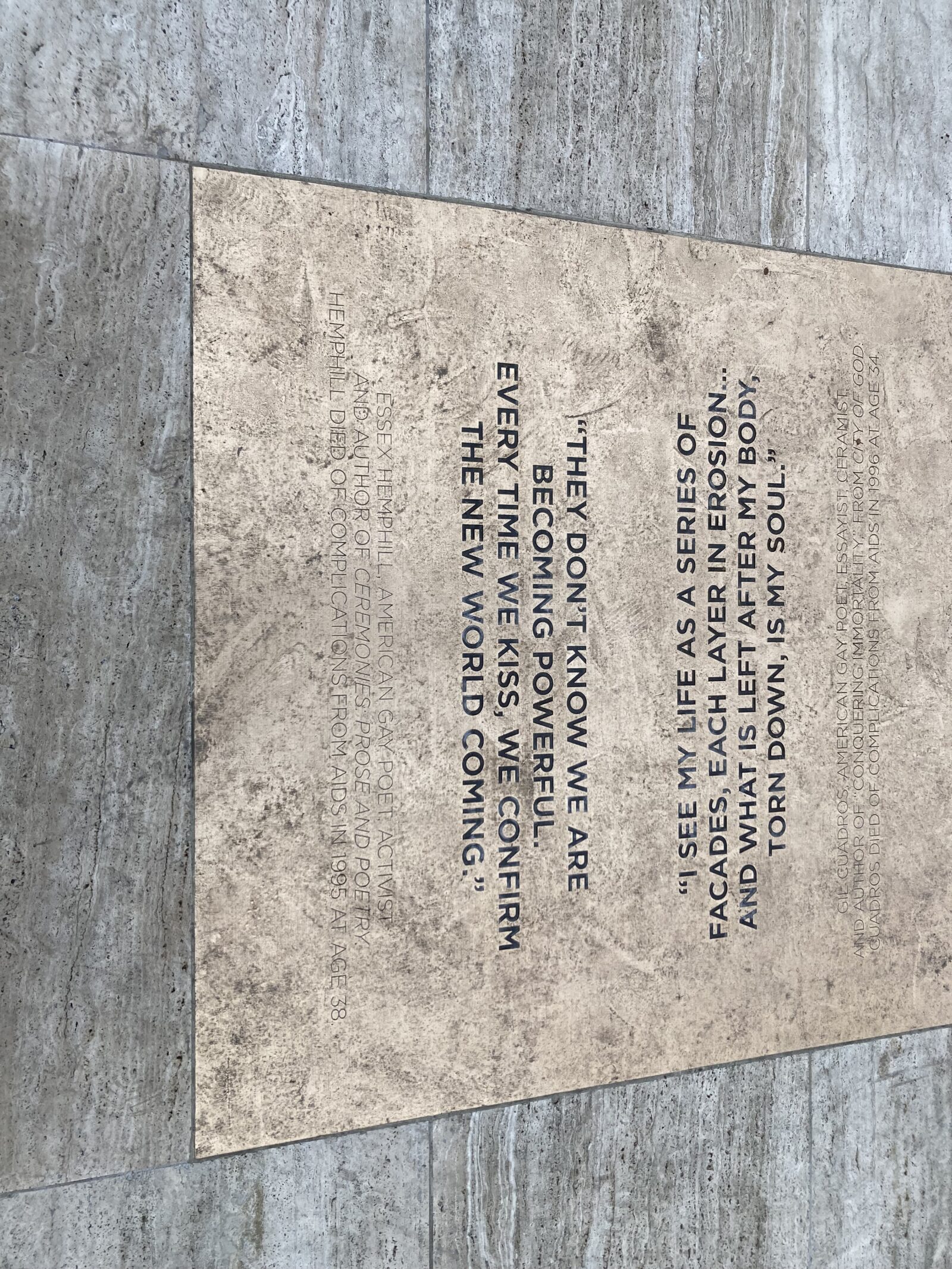
Figs. 4 and 5: These Stories which are not one: Gil Cuadros and Essex Hemphill bear witness in bronze.
: :
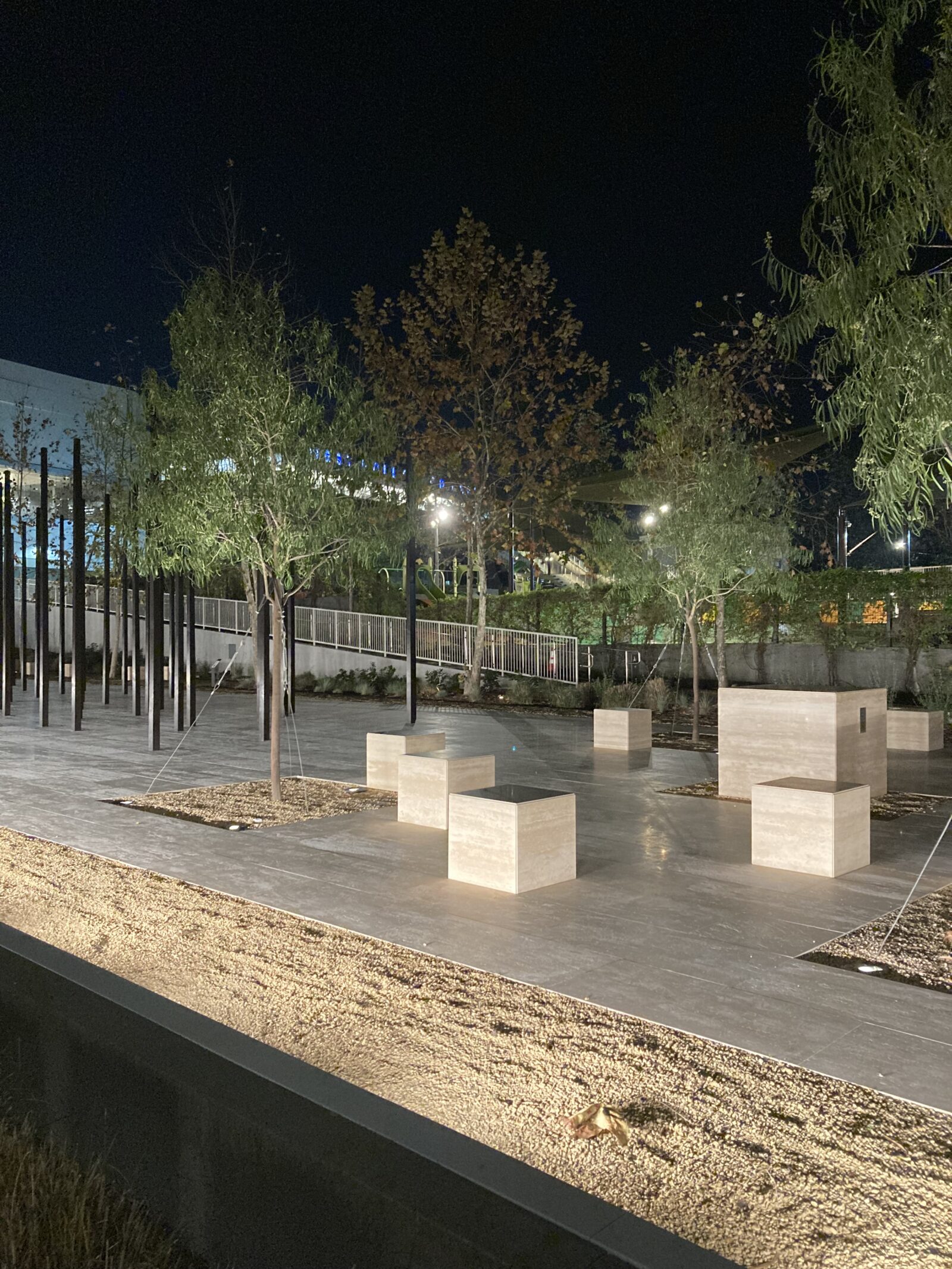
At night, STORIES literally glows. LED lighting installed at foot level along one flank of the work’s bounded edges and in-ground well lights reframe the visitor’s field of vision. Its luminescence ricochets off the lighting offered up by the nearby West Hollywood Library and Pacific Design Center as much as the traffic lights and headlights illuminating San Vincente Boulevard. At a later visit this past February, I took in the trees, gravel, plants and shrubs much more this time around, feeling I was circumnavigating through an earthwork. I also gave myself permission to sit on one of the stone square blocks, wanting to see where my field of vision took me with light directing its gazing. I found myself later thinking about the centrality of darkness, light, and shadow to the protections (against unwanted surveillance) and stagings (photographic and otherwise) of queer sociosexual life.
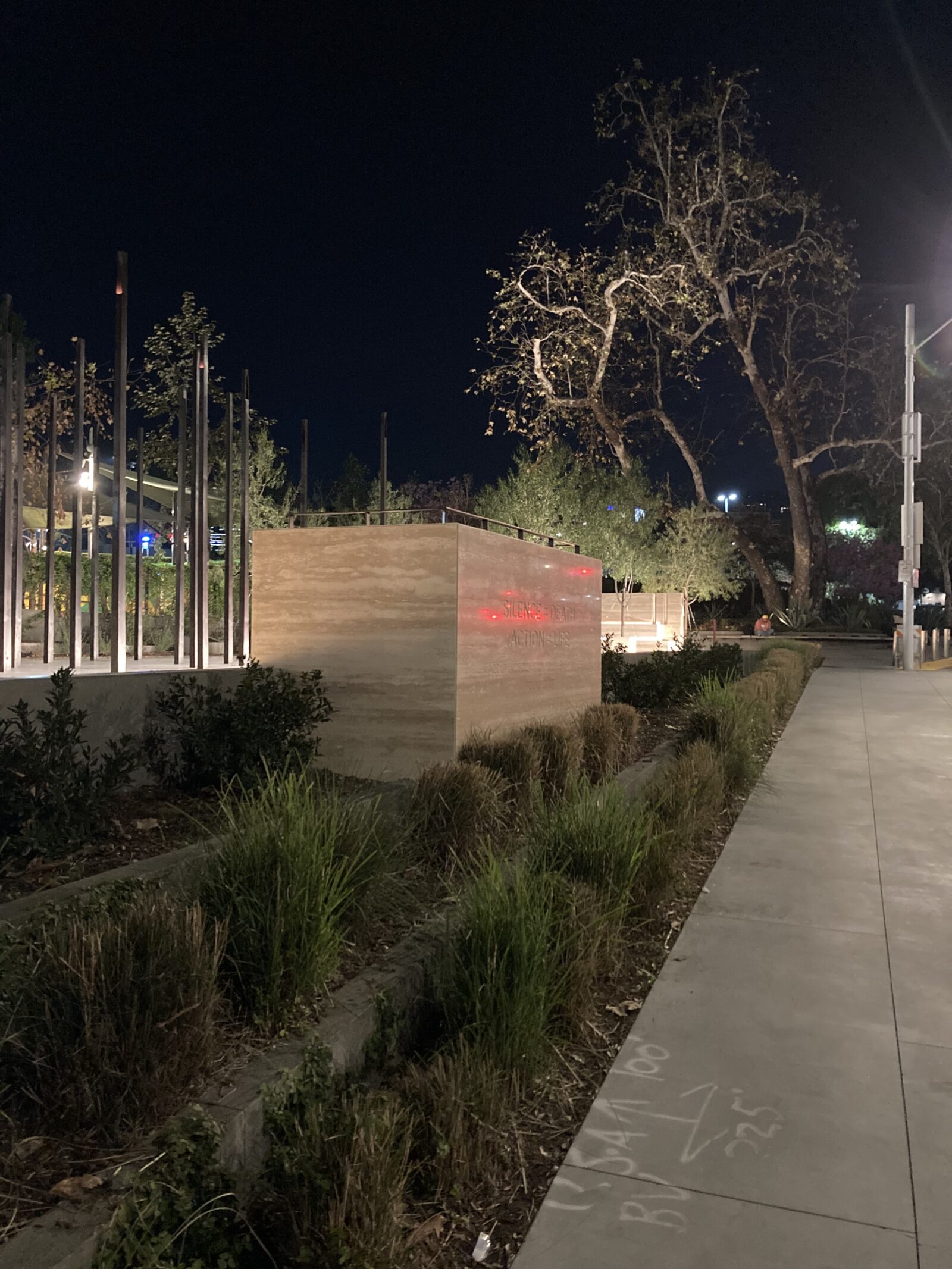
In her moving essay on Maya Lin’s Vietnam Veteran’s Memorial, revisiting the reflective qualities of its iconic black granite planes, art historian Anne Wagner writes, “It is this coming together of life and death in a single optical moment that may be what is most powerful about this memorial.”1 Walking away from STORIES I spilled out onto queer life again—the sounds and sights, beats and bodies, of queer nightlife beckoning me. Seeing drag queens just ahead of me and hearing RuPaul’s Drag Race booming from the bars and clubs got me thinking about that optical moment.
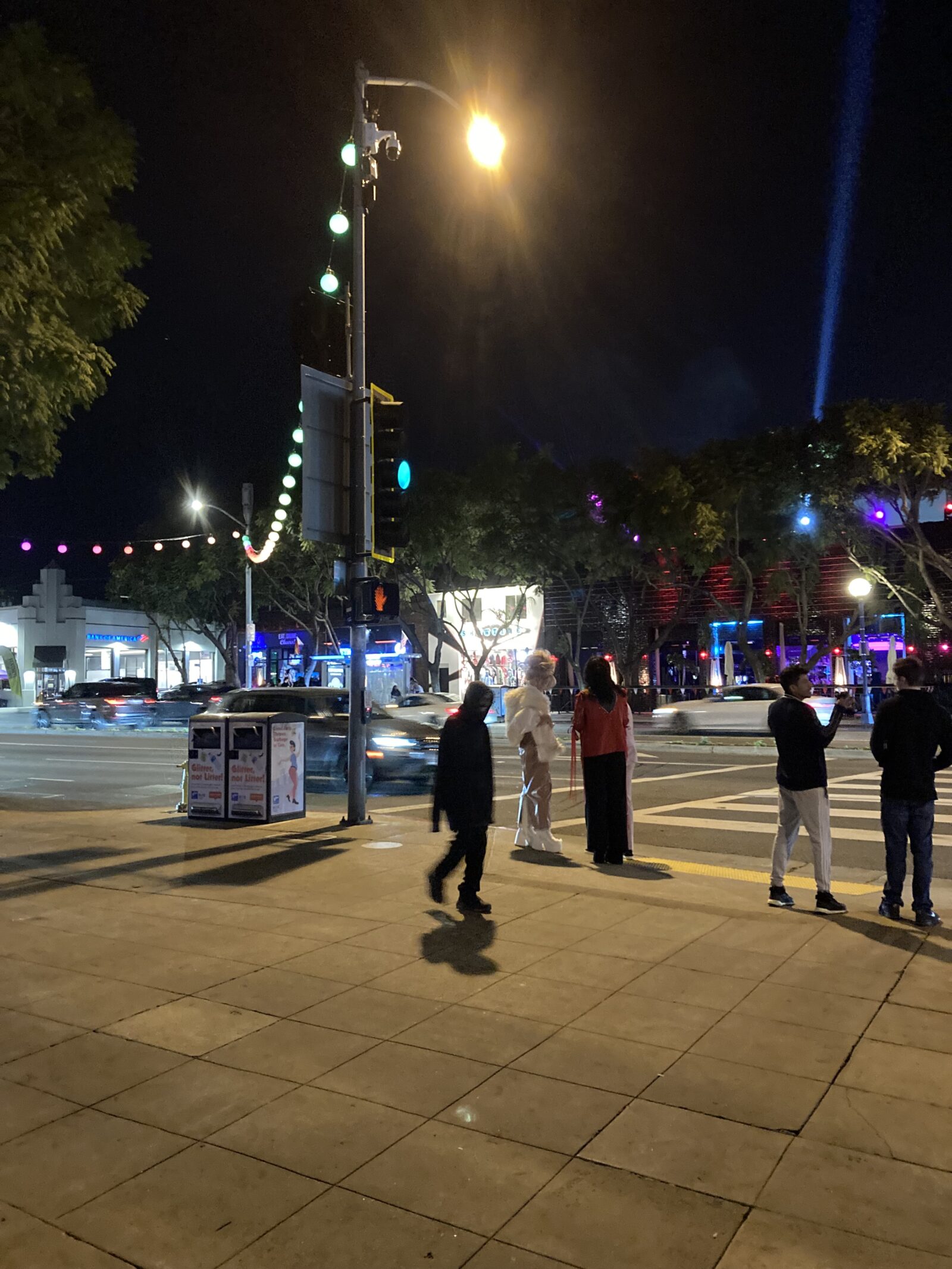
On Santa Monica Boulevard, I walked by a cluster of tables with informational materials and stickers around safer sex, getting tested for HIV, harm reduction, disposing of needles and mental health. Steps away from a row of ATMs, I asked someone if they were out here every Friday evening. They replied that they wished they could be, suggesting that even in West Hollywood local businesses aren’t especially keen to have messages about harm reduction killing the mood. Encountering these grassroots legacies of AIDS activisms and queer care work, it was hard not to see the cliché life goes on announcing itself on an invisible neon marquee. STORIES: The AIDS Monument gifts greater Los Angeles one way to acknowledge an impossible period of loss and a parallel history of coalition. Transformed visitors, our task is to continue communing and coalescing. What stories will we build and tell then?
: :
Endnotes
- Anne M. Wagner, “Maya Lin’s Wall,” in A New Literary History of America, ed. Greil Marcus and Werner Sollors (Harvard University Press, 2009), 1011.
Jason Alley