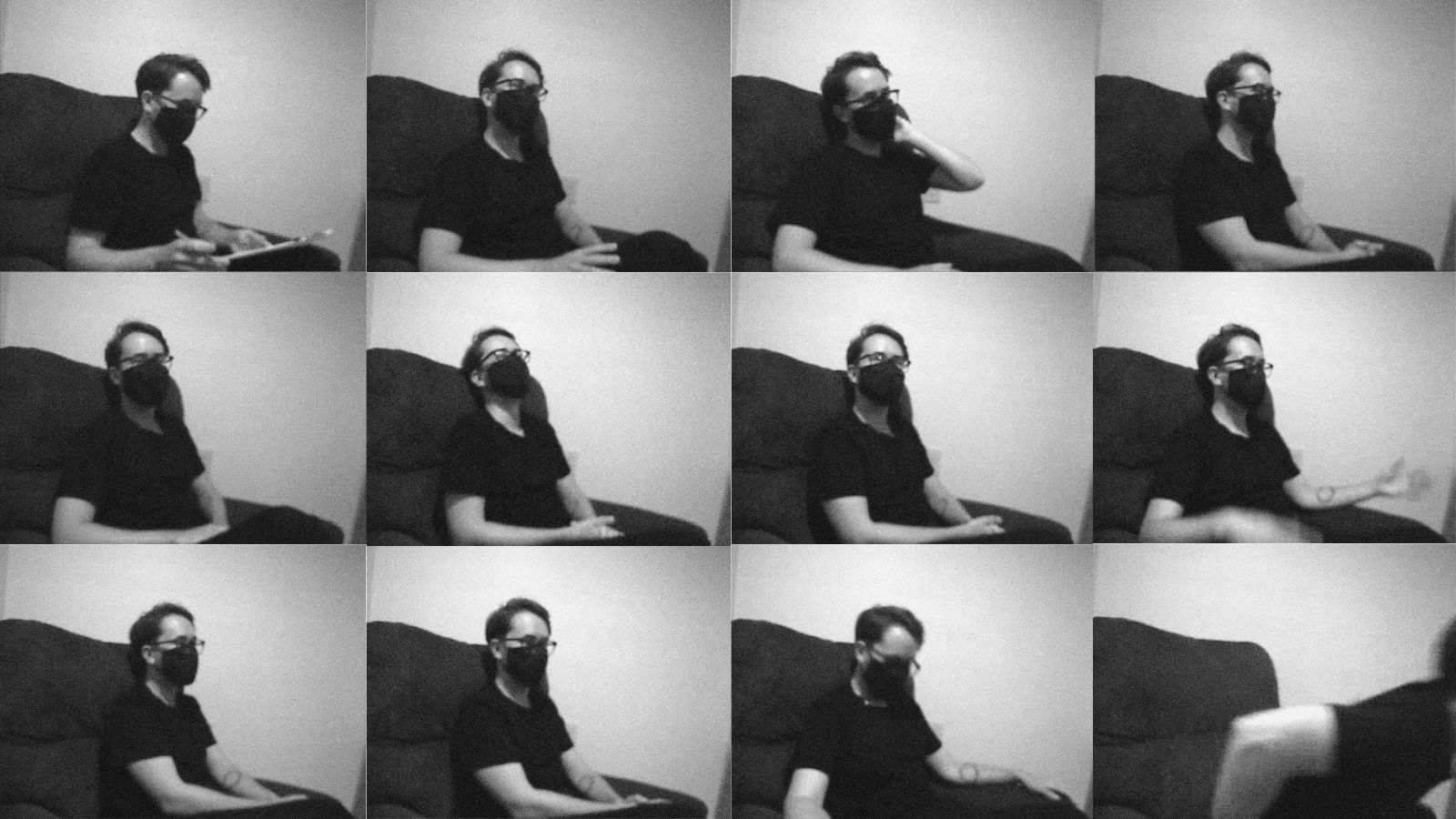
Eric Schmaltz’s latest poetry collection I CONFESS (2026) documents the poet’s experience of undergoing a lie detector test. At once intrigued and unnerved by this extractive method of truth production, Schmaltz set out to explore its poetic possibilities. The result is his most personal book to date: in a departure from his previous collection, Surfaces (2018), this one plunges deep into his body’s inner workings. A stylized printout of the polygraph data appears at intervals throughout the book, its jagged peaks etching the movement of his heart and lungs. These marks are at once profoundly intimate and utterly opaque. In a way, so too are the lyric and lyric-conceptual poems that accompany them, which use the conceit of the polygraph for thinking about the long, fraught history of truth production and the place of the poetic “I” in this lineage.
Having just published my own academic study of ambivalent literary confessions, Evasive Manoeuvres: Canadian Women’s Confessional Writing (2026), I wanted to talk to Schmaltz about the power and danger of self-exposure in the age of hypervisibility. The following interview was conducted in writing over several months in Fall 2025-Winter 2026 and has been lightly edited and condensed for clarity.
: :
Myra Bloom: What was the inspiration for I CONFESS? Was taking the lie detector test the primary conceit of the project, or did it emerge out of some of the other ideas regarding truth, selfhood, and poetry that you’re exploring in the collection?
Eric Schmaltz: It’s true; the origin story for I CONFESS is somewhat obfuscated, despite my efforts in the Notes and Orchid Tierney’s in the Afterword to clarify its beginnings. Here’s my version of events: I was visiting the Kelly Writers’ House shortly after my first book, Surfaces (2018), was published, and I was invited to read from it and discuss it with a group of graduate students and faculty. Surfaces is a book that, among other things, explores the tension between the writing body and the technologies writers, creative or not, use to convey meaning. In my recollection of the events, Orchid, who was present for the discussion, asked me, “whose body is in Surfaces?” I stumbled over the question. It was my body on the page, I thought, but I also, perhaps regrettably, hadn’t given that much thought during the composition process. I joked that my next book could be a fuller representation of my body, and that I could use a lie detector to represent its inner workings, to move from surface to medium-depth. This question was the catalyst for I CONFESS, though Orchid’s recollection of this conversation in her Afterword contests my version of the story.
From there, the project took on a life of its own. I was enamored by the idea of publishing a book solely containing sequences of polygraph charts representing my physiological responses to different lines of questioning and provocations. Around this time, conceptual writing was making its hasty exit from the center of the North American literary zeitgeist, and I felt compelled to do more than present “a small (or large) machine made out of words,” to twist William Carlos Williams’s well-worn phrase. I wanted to make a stronger intervention into the poem’s schema and think more about the self within the poem. I CONFESS had numerous past lives, each of which adjusted the hue of the work, including a failed draft thinking with Édouard Glissant’s concept of opacity and the dire complexities of capitalist surveillance in which we are currently enmeshed. Some of those ideas are now implied, but, as your question suggests, truth, selfhood, confession, and poetry are the more apparent and—given our moment of rampant disinformation and truthiness—unintentionally timely themes.
MB: Those are indeed timely themes, and I want to pick up on them. But first, tell me about the experience of undergoing the lie detector test. We’ve all seen them on TV, but few of us have had the experience of actually doing one. You characterize your book as “a document of truth’s performance under duress”: was it a stressful experience?
ES: I tried out various disclaimers to preface I CONFESS, but that one, “This book is a document of truth’s performance under duress,” struck me as the most honest opening statement I could offer. I found the experience to be unnerving. Lie detection occupies a unique place in popular culture. We see the supposed anxiety of the test time and again across media. When coming to my own voluntary polygraph examination, my expectations were partly formed by the media, which, in part, may have contributed to the weight I felt during the examination.
My discomfort surprised me. I worked with a polygraph analyst in advance of the test, and I thought I had a clear understanding of the process. Despite this planning, I was still very nervous to undergo the test. My examination was separated into three sections. First, there was an overview of the exam itself (how it works, what to expect). Second, there was a “pre-test” where the examiner asked me a series of background questions to assess a few related things, including my physical and mental fitness, how I use language, and my willingness to be truthful. The third, and final part of the exam, was the actual polygraph itself. The entire session is recorded with video and audio to be scrutinized later on. Those conditions are uncomfortable in themselves. All of this is reflected in the book.
I was not as prepared to be as honest and forthcoming as I needed to be during the test. I really only met my examiner that morning, and her “pre-test” questions were very personal: What is your relationship to your mother? Who was the disciplinarian at home when you were growing up? And so on. I felt compelled to be as thorough and truthful as possible, so I was spilling my guts to this stranger who was monitoring me closely, paying close attention to what I said, how I said, and how and if I moved. In a way, this pressure forced parts of me to the surface, prompting its own kind of self-examination, to see the emergence of my selves in relation to those who came up for me during that conversation. It was from this self-examination and discomfort, my own resistance to speaking the truth, that I found the lyric impulse that drives I CONFESS.
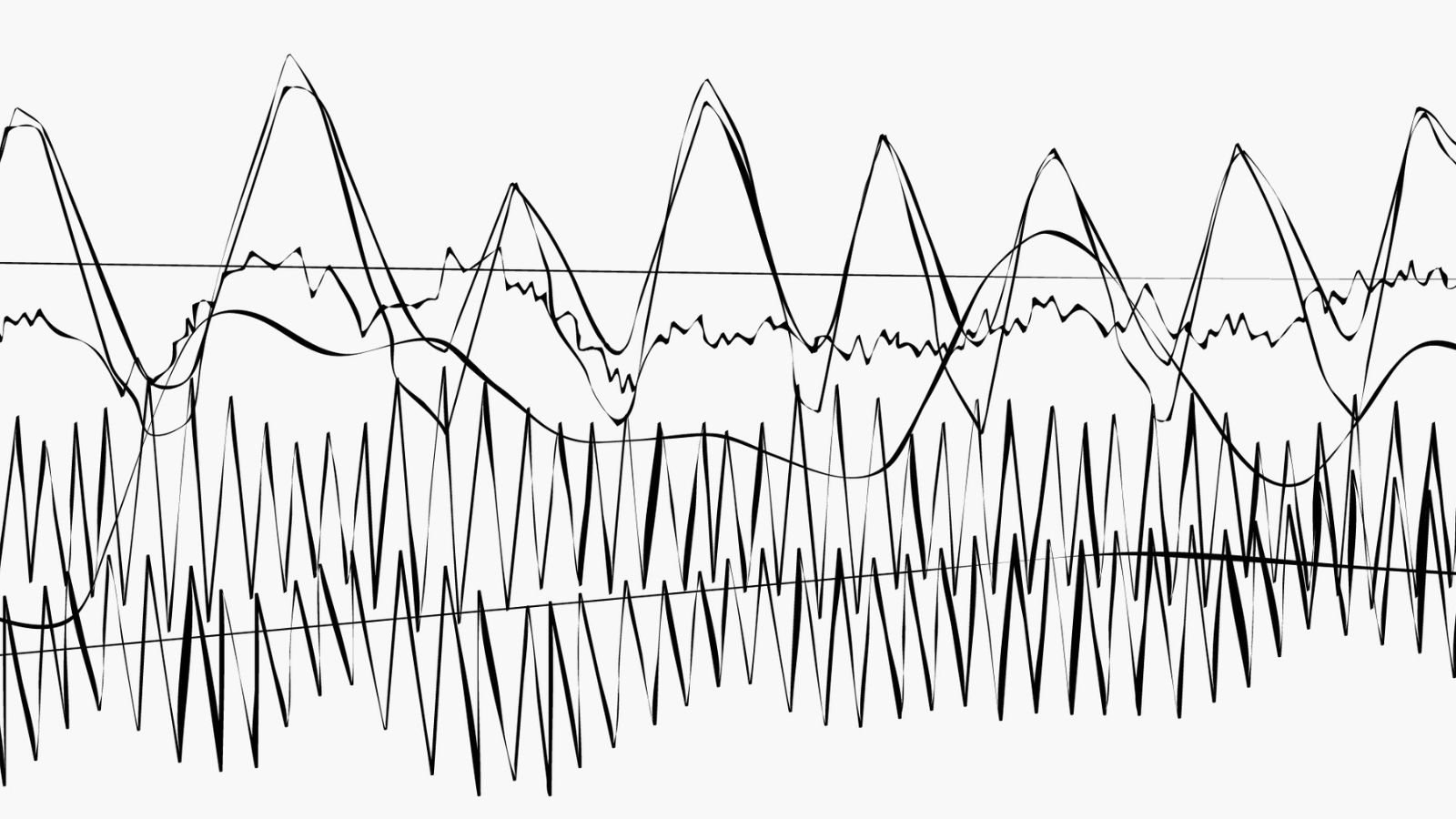
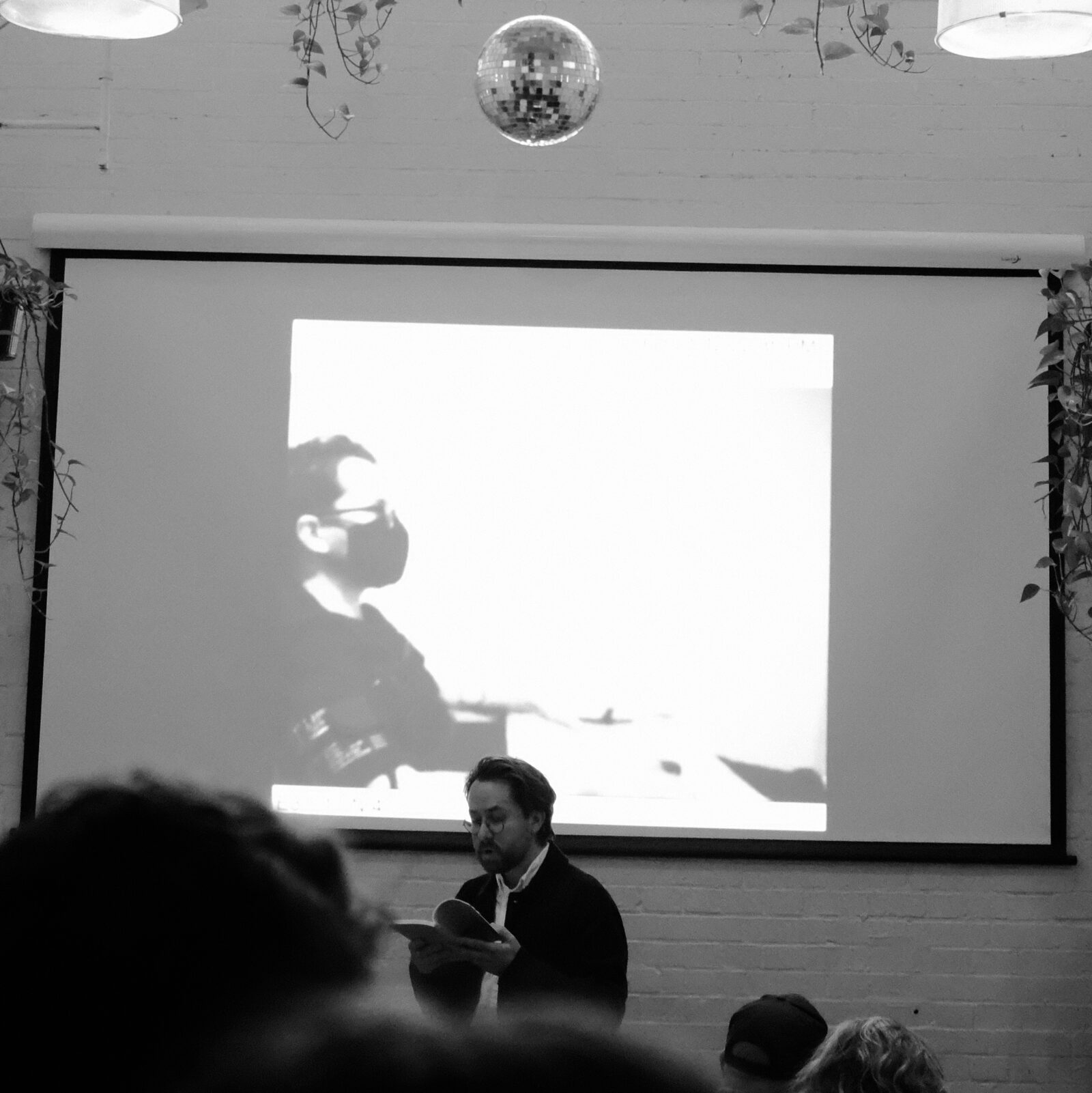
MB: There’s a fabulous interplay between that lyric impulse and the book’s more conceptual or experimental qualities (e.g., the inclusion of biometrics from the lie detector test; the use of found material). One of the most powerful moments in the collection is the sequence where—as you explained at a launch event I attended—you compiled phrases from obituaries of people who shared your name and fashioned them into a kind of alt-autobiography for your poetic persona. The result, especially when read aloud, is very moving! You mentioned above that in this book, you wanted to “think more about the self within the poem.” Can you talk about how that happens in this sequence specifically and in the collection more broadly?
ES: It was important to me to include many expressive modes: biometrics, sound waves, found text, emails, still images, and so on. I want the book to feel like a dossier, despite actually being a bound volume. It was at that same launch you mentioned, in Kjipuktuk (Halifax), where I briefly offered a few comments on my poetics: that my work emerges from a deep distrust of “ordinary” language’s ability to fully convey experience. Words are limited. Communication exceeds language. All of these elements that more widely encompass a reader’s sensorium convey meaning, meaning that exceeds the linguistic.
The poem you refer to, the final text-based poem, directly engages with this problem. It’s a response to my examiner’s question, “How would you describe yourself?” I often say that “this is my favorite poem in the book, and I didn’t write a single word of it.” It’s true. Every word in that poem is drawn and arranged, respectfully, from an obituary notice for anyone with the first name “Eric” or the last name “Schmaltz.” It’s me and also not me. Here’s the first stanza:
I was born / was born & raised / born & grew up / I am the youngest child / the eldest / the middle child / I am the only girl amongst five brothers / the only boy among four girls / I am the only boy / the only girl / my family moved when I was a child / moved when I was a teenager / my family returned before I was ten / didn’t return / I have attended / I have graduated / graduated with honours / I have been a proud recipient (79)
I love reading it aloud to an audience and listening because I notice people audibly respond to different identity traits mentioned in the poem, perhaps identifying with these characteristics themselves. When I read that poem, though, I don’t think of myself. When I read it, what comes up for me is everyone else.
MB: It’s fascinating how that poem uses the idea of selfhood to refract individuality across a collective body, just as obituaries simultaneously celebrate the individual life and situate it within the shared experience of mortality. It’s a wonderful way of pushing back against the coercive modes of truth-production you’re exploring and critiquing. That brings me to the contrast we find repeated in the collection between “truth” and “poetry.” In this era of (self-)surveillance, do you think it’s possible to make meaningful statements about the self? What’s the role of poetry in doing so?
ES: Is it “possible to make meaningful statements about the self?” and “What’s the role of poetry in doing so?” are some of the questions my book asks. I want to know, too, whether access to one’s interiority is always reshaped by the means of accessing it, be that by the poem or some other mechanism. I’ve always felt that the “lyric I” is an illusion, feigning some kind of stable voice and subjectivity, but I think of the self in that same way. We are constantly unmaking and remaking ourselves, coming into contact with new phenomena and experiences that can make subjectivity bend and swerve. For me, any meaningful statement about the self, made in the poem, is necessarily underwritten by its fleeting nature. Perhaps, just like everything else, meaning is impermanent, too. The poem can be a site of meaningful statements, however, for the reader. I think of the way poet Alice Oswald gestures toward this in “The Art of Erosion,” her inaugural lecture as Oxford Professor of Poetry. She says, “the poem isn’t always what happens in the words but is the trace that the words leave inside you as it vanishes.” For me, that trace is the meaning, and its affect, imparted to the reader in the moment of encounter. The realization, the insight.
MB: How/do you situate your practice within the lineage of so-called “confessional” poetry, from the eponymous mid-century school to the Instagram poets of the contemporary moment? Are you working within that tradition? Against it?
ES: I was recently discussing artistic lineages with the musician, improviser, and Deep Listener Anne Bourne, and she reminded me that I fit neatly within a lineage of experimental and avant-garde poets, especially those working in intermedia contexts in Canada and the United States. I believe this to be true. This is to say, I don’t see myself as fitting into a confessional lineage, neither historical nor contemporary. I’m not working against this tradition either. In my work, I hope to provide openings, to be a co-creator working across traditions, curious to see what emerges. The book does, I admit, push the idea of the confessional poem to an extreme.
Before I CONFESS, my poetic work had few explicit traces of my self. My self was expressed in the gesture of a conceptual approach or an asemantic register. That’s how I came to the lie detector; it is a mark-making device, and I wanted to use my body to make marks with it. During the book’s early stages, though, I was deeply uncomfortable with the idea of actually putting my self into the work, and I tried a variety of methods of displacing my self from the composition. Eventually, I started to work against these impulses. It’s what it needed. That’s when it became recognizably confessional, with the caveat that expression of the self is necessarily multifaceted; it occurs across media and gesture, across the linguistic and the non-linguistic.
MB: I’m thinking of Virginie Despentes’s line in King Kong Theory that doing sex work made her feel less exposed than telling her story publicly as a writer and public figure. I’m curious whether this collection, which is as you say the most lyric to date, feels more vulnerable to you. Did you ultimately overcome your discomfort, or do you still feel it?
ES: I have made peace with it (though my family hasn’t read the collection yet…). It’s not that the poems of I CONFESS are salacious or particularly risky; there are no taboos being broken. Rather, they’re honest, for the most part. I’ve mentioned this generative discomfort a few times here to emphasize my experience of the creative process, but because it also marks an opening for me or within me as a poet.
MB: You mentioned that an early version of the project engaged more directly with questions of surveillance and opacity. I have a feeling that polygraphs will come to seem quaintly antiquated as predictive AI gets more sophisticated: the American Department of War’s recent dalliances with companies like Anthropic and OpenAI are frightening steps in the direction of mass surveillance and autonomous weaponry. Was this lineage on your mind? Would you ever consider collaborating with AI as a next step in thinking about modes of extractive truth production? Or, put another way, what are the ethics of using these technologies to make art?
ES: The Canadian writer bpNichol eagerly explored new tools for the production of language. He was an early adopter of the Apple IIe computer, released in 1983. By 1984, he published First Screening, a dozen programmed poems on 5.25″ floppies. There is an enthusiasm, openness, and curiosity in this work that I admire. Before I CONFESS, I came to my work, perhaps naively, with optimism about emergent digital technologies. For all the reasons you mention above—surveillance and autonomous weaponry, as well as the environmental impacts, job losses, intellectual and cultural extraction, and so on—I can’t ethically engage with some of these more advanced technologies right now.
Since the publication of I CONFESS, the problem of “extraction” has been clarified for me. It is a collection interested in what “truth” is, but for me, it also raises questions about its extraction. In this context, the forceful extrication of a person’s interiority and, as we know from false confessions, the forceful creation of false utterances. For the surveillance line of thinking, scholar Shoshanna Zuboff’s The Age of Surveillance Capitalism (2019) and artist Legacy Russell’s Glitch Feminism: A Manifesto (2020) offered me great insight. However, artist and scholar Dylan Robinson presents this most clearly for me when he writes about extraction in his book Hungry Listening, wherein he frames settler listening positionality as broadly extractive: hungry for the land, hungry for resources, hungry to find meaning. As he points out, extraction isn’t limited to a listening modality; it is a perceptual inheritance, created by apparatuses that attune the senses, driven by a belief that extraction—whether it’s for resources, meaning, or someone’s internal world—is valuable and necessary. That question of perception and extraction, and the possibility of reorienting that impulse, is one I have often held in my mind as of late.
MB: I wonder whether by drawing our attention to this extractive dimension of truth production, I CONFESS creates an opening for less coercive and rapacious modes of relationality, or even just makes people want to talk candidly. At your launch, we playfully solicited anonymous confessions and read them out to the room. I’m curious whether you’ve had any other notable conversations or encounters occasioned by the book that reinforce human solidarity or connection.
ES: I can only hope that I CONFESS can inspire relational means that involve less force, domination, or exploitation, and that both openness and listening are grounded in compassion and understanding. We saw this openness and compassion at the launch. Beyond the levity of anonymous confessions being read in public, the confessions from the audience were really striking. I still have the folder of them, and looking back over them again, I notice how honest these seem to be. Not a single one strikes me as insincere. There are confessions about cheating, infidelity, illicit drug use and excessive drinking, theft (intentional and unintentional), vandalism, faux pas, inappropriate sex dreams, roommate dramas, and so much more. I hope everyone left that evening feeling a little less burdened by themselves.
: :
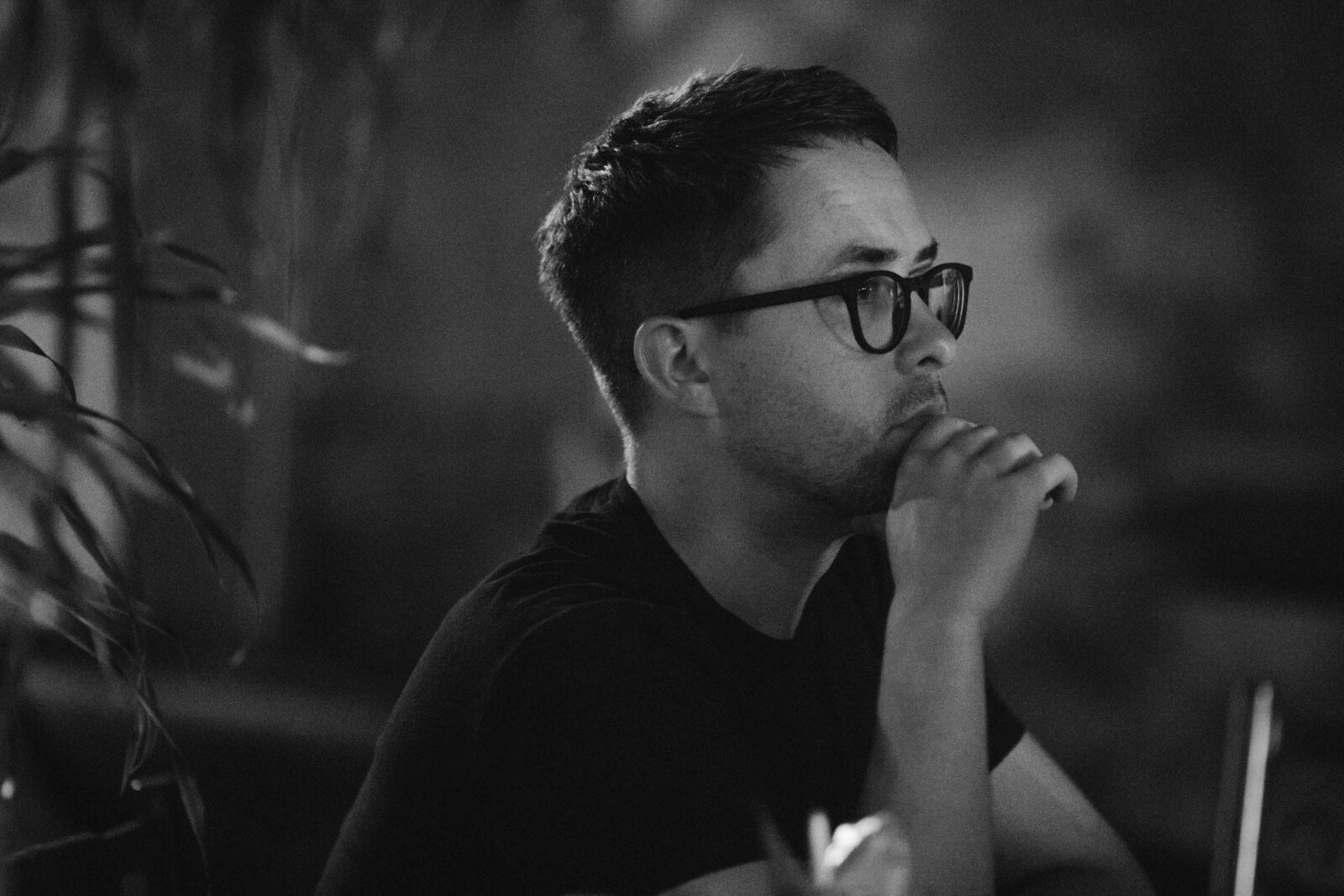
Eric Schmaltz, an intermedia artist, poet, scholar, and editor, is an Assistant Professor in the Department of English at Dalhousie University. He is the author of numerous creative and scholarly works, including poetry books I CONFESS (Coach House Books) and Surfaces (Invisible Publishing) and the scholarly monograph Borderblur Poetics: Intermedia and Avant-gardism in Canada, 1963-1988 (University of Calgary Press). He also edited and introduced Another Order: Selected Works of Judith Copithorne(Talonbooks) and the forthcoming We Have Seasonal Bodies: The Poetry of Gerry Shikatani (Wilfrid Laurier University Press). He was co-editor of I Want to Tell You Love by bill bissett and Milton Acorn. He lives in Kjipuktuk (Halifax), Canada.
: :
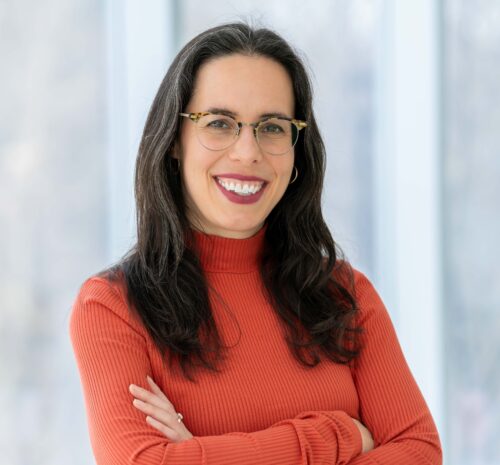
Myra Bloom