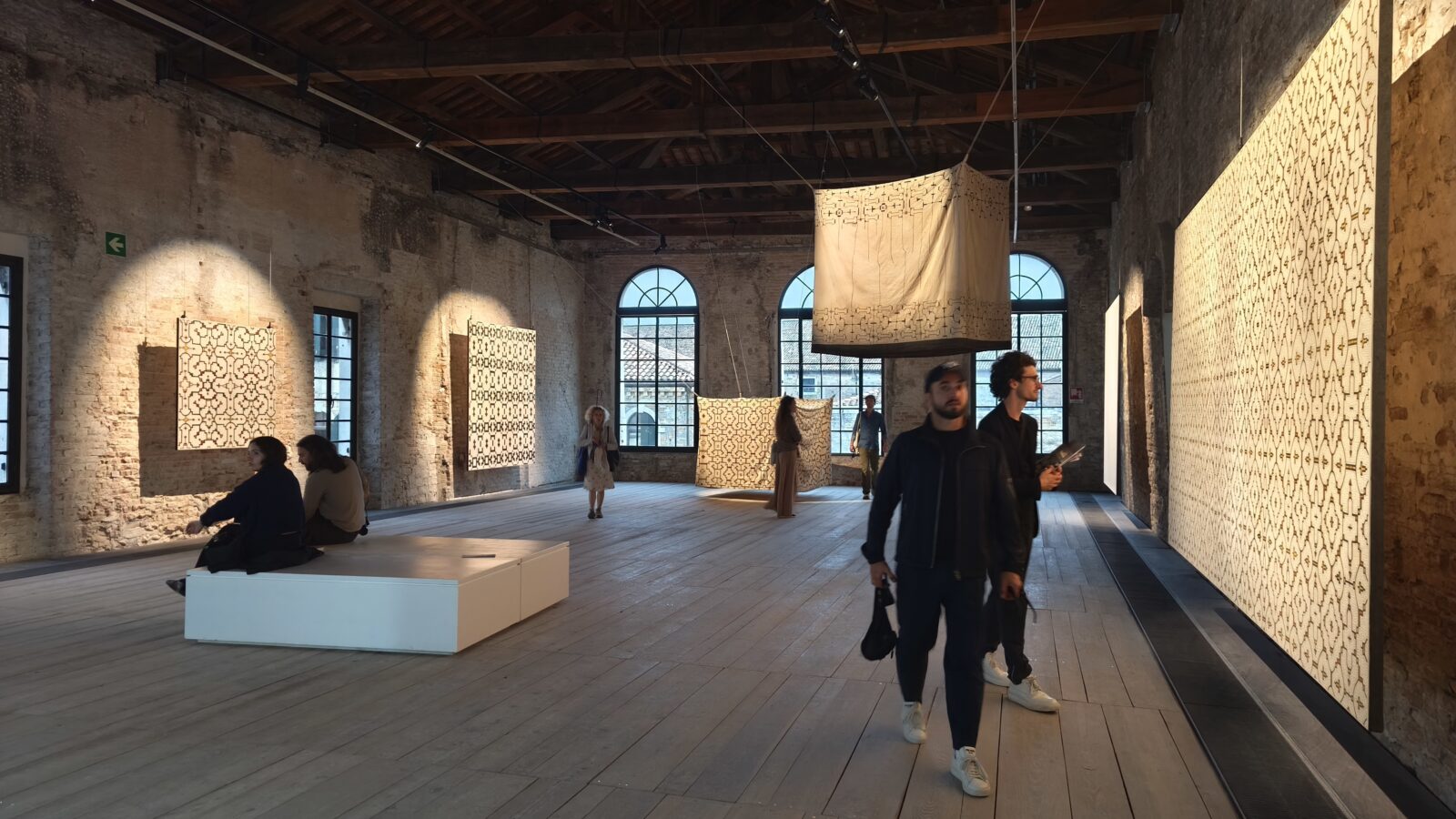
The 61st Venice Biennale, “In Minor Keys,” cites One Hundred Years of Solitude by Gabriel García Márquez as one of its inspirations—the story of Macondo, the town where the novel unfolds.
A fragment that never made it into the final book tells us how one of its characters, Úrsula Iguarán, escaped from the pages of the novel to find out how Macondo had inspired the Biennale. The original Spanish version follows.
Tumbling off the pages, Úrsula Iguarán landed on her feet in the middle of the Venice Biennale, in the place they call the Giardini.
She saw the pavilions, some modern, others with imperial architecture, and wondered what all those countries were doing in these gardens.
She saw surprising things that she later learned were called artworks.
She also saw resistance: people with hoods and flags, ready to act, even to go on strike, to sacrifice everything for the cause.
With her prodigious sense of direction, Úrsula was profoundly lost among the shoals of people galloping from one line to another and from building to building. The smell of sea salt and Florida Water were so strong that Úrsula could hardly feel anything else.
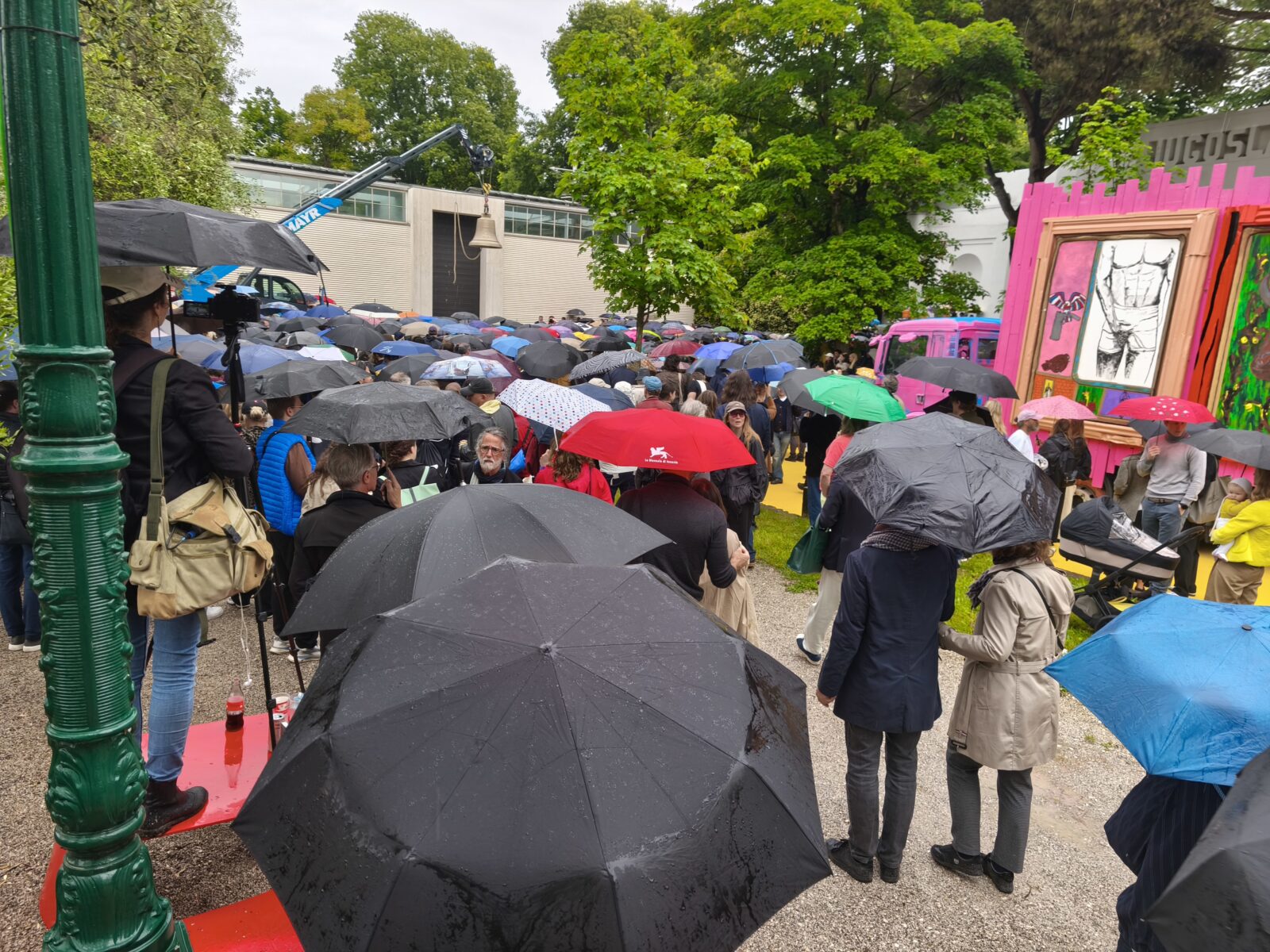
One of the resistance women, who had wrapped her body in a large flag, took Úrsula by the arm. Sturdy and round, the woman had a red silk umbrella with lace to scare away the downpour that was about to take over the Biennale. They walked like Siamese twins, entering and leaving halls, large houses, and mansions and crossing little bridges that joined the land like stitches of thread across the canals.
“This is the central exhibition,” the woman told Úrsula, pressing her arm against her flag. “I want you to see the work of the artist Mohammad Joha. It’s at the end, on the right.” The sturdy woman slid her arm away, undoing the octopus knot of the Siamese twins. Úrsula never saw her again.
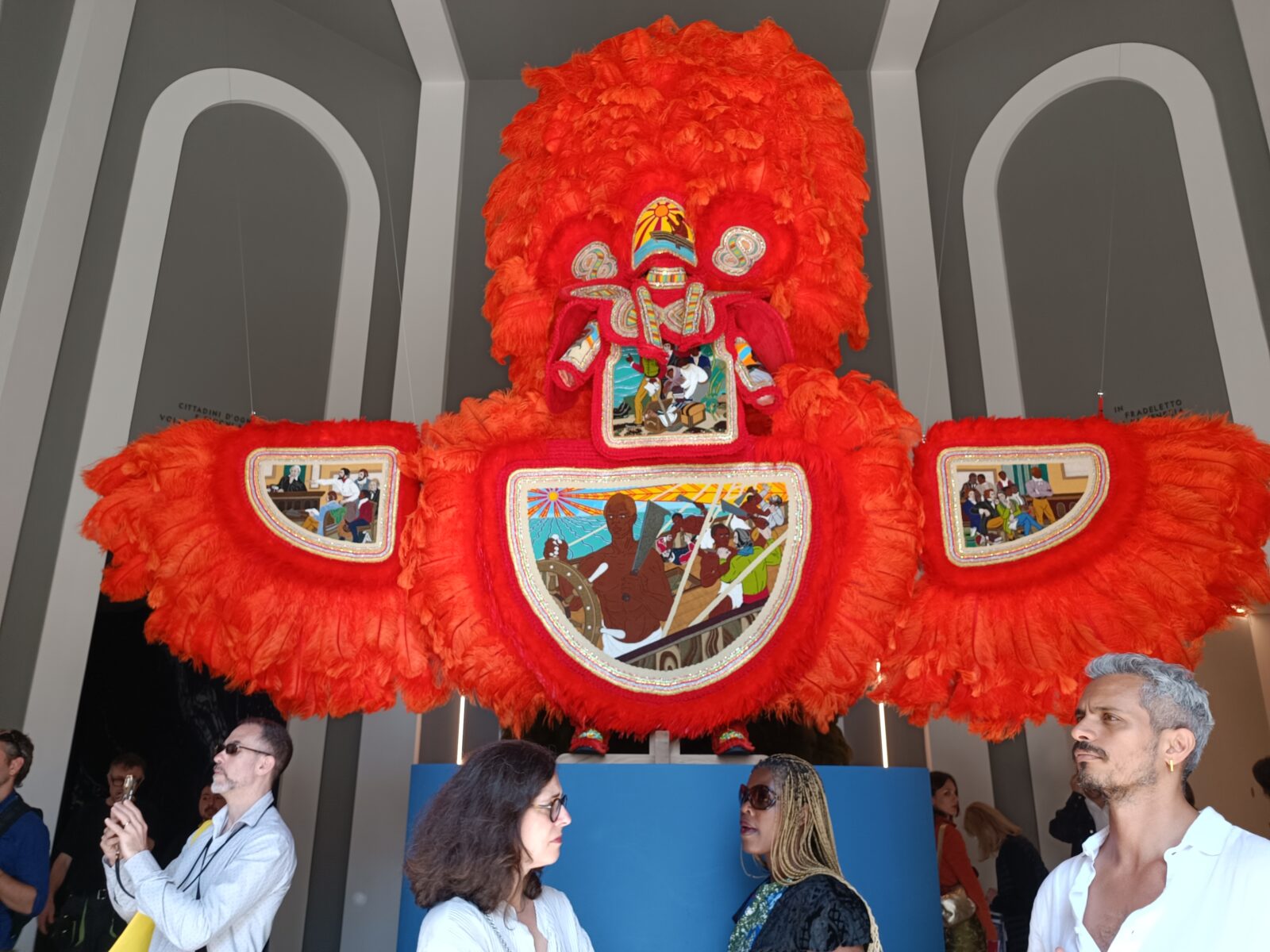
Although she felt small before the threshold of the splendid pavilion, Úrsula let herself be carried along by the giant bird that welcomed her with open arms, its plumage of a pink more intense than that of the Amazonian camellias in the gardens of Macondo. They said the bird was called Amistad Takeover and that it had been made by Big Chief Demond Melancon.
She crossed the large house that displayed a quantity of fabrics, satins, draperies and rags, embroidered or not, such as she had never seen before—not even on Calle de los Turcos, where the Arabs who had settled in Macondo exhibited winged canvases that made the street levitate. Úrsula was bewitched by the pots, jugs, earthenware jars and casseroles that she fantasized showing off in her kitchen.
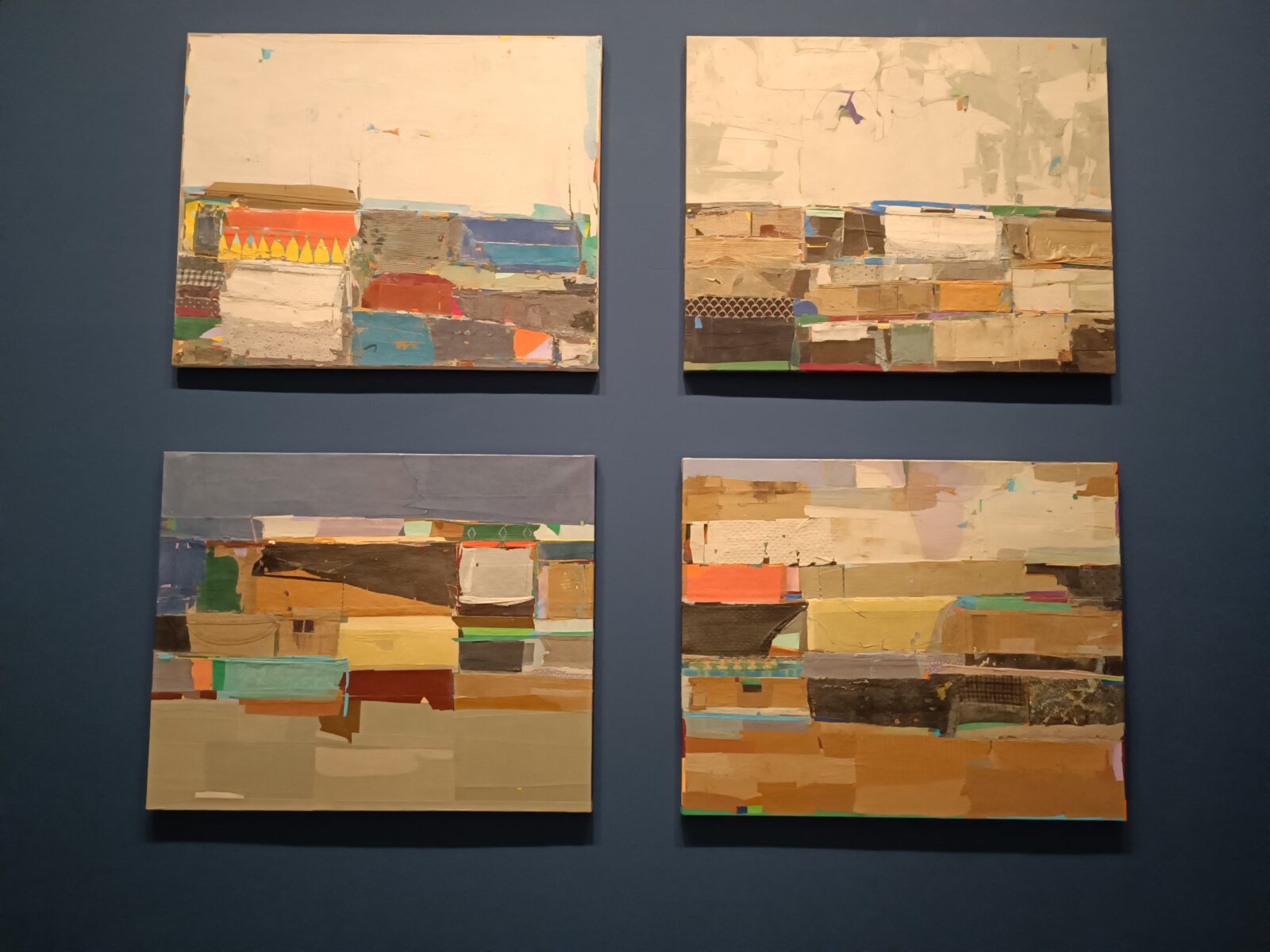
It was hard to keep the thread among all these marvelous objects, but she wanted to get where the woman with the flag had indicated. There she saw little paintings by Mohammad Joha that were like broken mirrors, like a hope shattered among colors. Splinters of different materials were assembled with paste, stuck one to another. Úrsula’s eyes pierced the little paintings, not through the colors but through the cracks in the glue. She saw, as if she had a telescope of time, the blood in which her son Aureliano would bathe when he went on to become Colonel Aureliano Buendía, commander general of the revolutionary forces.
Amid the tumult of people running from one painting to another, among fabrics and rags, pots and casseroles, Úrsula had no respite to find out how Macondo had inspired the Biennale. She had to feel.
With her usual matriarchal pragmatism, she exclaimed: “I’m going to let myself be led by my sense of smell!”
The first thing she sensed were the caterpillars. She let her nose lead her until she found herself in front of a woman as strong as the women of Macondo. She was the one who had brought the caterpillars from Brazil. Her name was Rosana Paulino and she was an artist.
Rosana told Úrsula that she knew her very well and that she loved One Hundred Years of Solitude, which she had read three times.
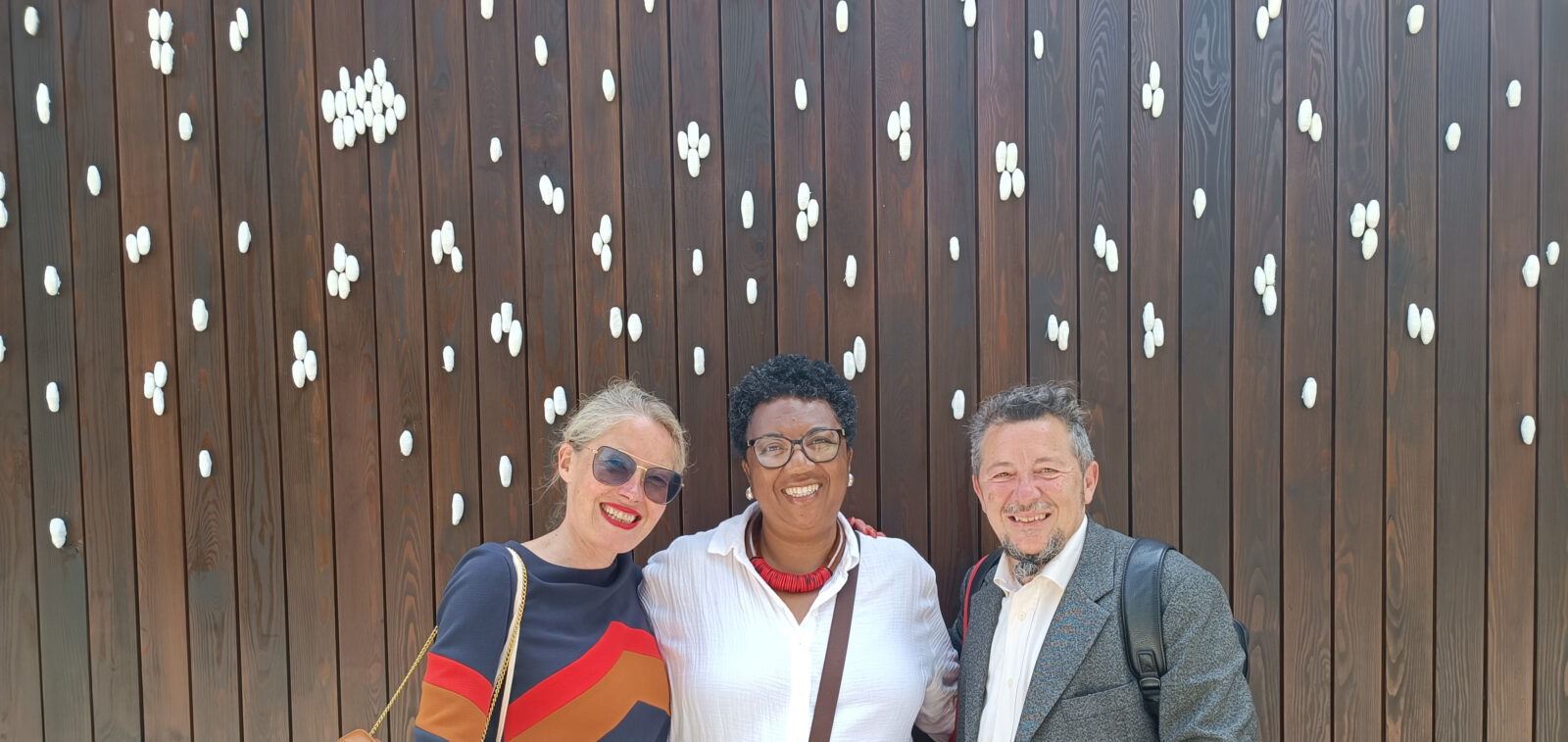
“But for us in Brazil, I come from a Black community,” said Rosana, “our life is not magical realism, it’s everyday reality. In my family, when we are sick, we have to ask the tree for permission before plucking its medicinal leaves. These are not fantasies, but part of our culture.”
Úrsula nodded, as if she had been listening to her mother.
And Rosana added: “We believe that other forms of life are as important as that of human beings. I don’t see human life here and nature over there. And this is not something we have to think about, but something we feel because we live our daily life this way.”
But Úrsula smelled neither the trees nor the plants—even though everything in this pavilion was inspired by a plant well known in Macondo, a poisonous plant that in Portuguese they call comigo ninguém pode. Úrsula smelled the caterpillars.
“Rosana, I was born with the caterpillars, and I know that my great‑great‑granddaughter, whom I will come to know because I will live more than a century, will marry a worker from the banana plantation that the gringos will install in Macondo, and this worker will always appear with yellow butterflies fluttering around him. But have the people here ever smelled the caterpillars?” asked Úrsula, desolate, with glassy eyes.
“That’s why the façade of the pavilion is covered with these caterpillars and there are more inside,” replied Rosana with a voice like honey that had settled upon a log crazed by the lashes of the sea waves. “There are caterpillars with women’s bodies, coming out of those cocoons. And at the end, there are spiderwebs with photographs of enslaved women from the colonial period of Brazil. I am a descendant of slaves and I don’t know who my ancestors are. Maybe one of those women is my great‑great‑grandmother. This is my way of paying homage to them and, at the same time, weaving a bond, a thread, a network with my possible ancestors.”
She was barely saying goodbye to Rosana with a lunar embrace when Úrsula began to smell other smells: the trees. There was a smell of tree coming from a pavilion that said “Nordic Countries.” This was the only pavilion open, because it was made entirely of glass, without any walls. Everything outside and inside was so confused that there was even a tree that had happened to grow inside.
Úrsula ran to smell the tree. The one that smelled was not the one standing up, but the one lying down that had a human head.
Her sniffing experience was interrupted by a giant, who crawled from the glass area and started climbing the stairs.
Although very courageous, Úrsula was frightened, especially when the giant began to sing through his fly.
Then the giant began to shrink and a life‑sized woman came out of the giant’s body. When she raised her eyes, the woman, who was an artist like Rosana, could see no one but Úrsula, in the middle of the large crowd.
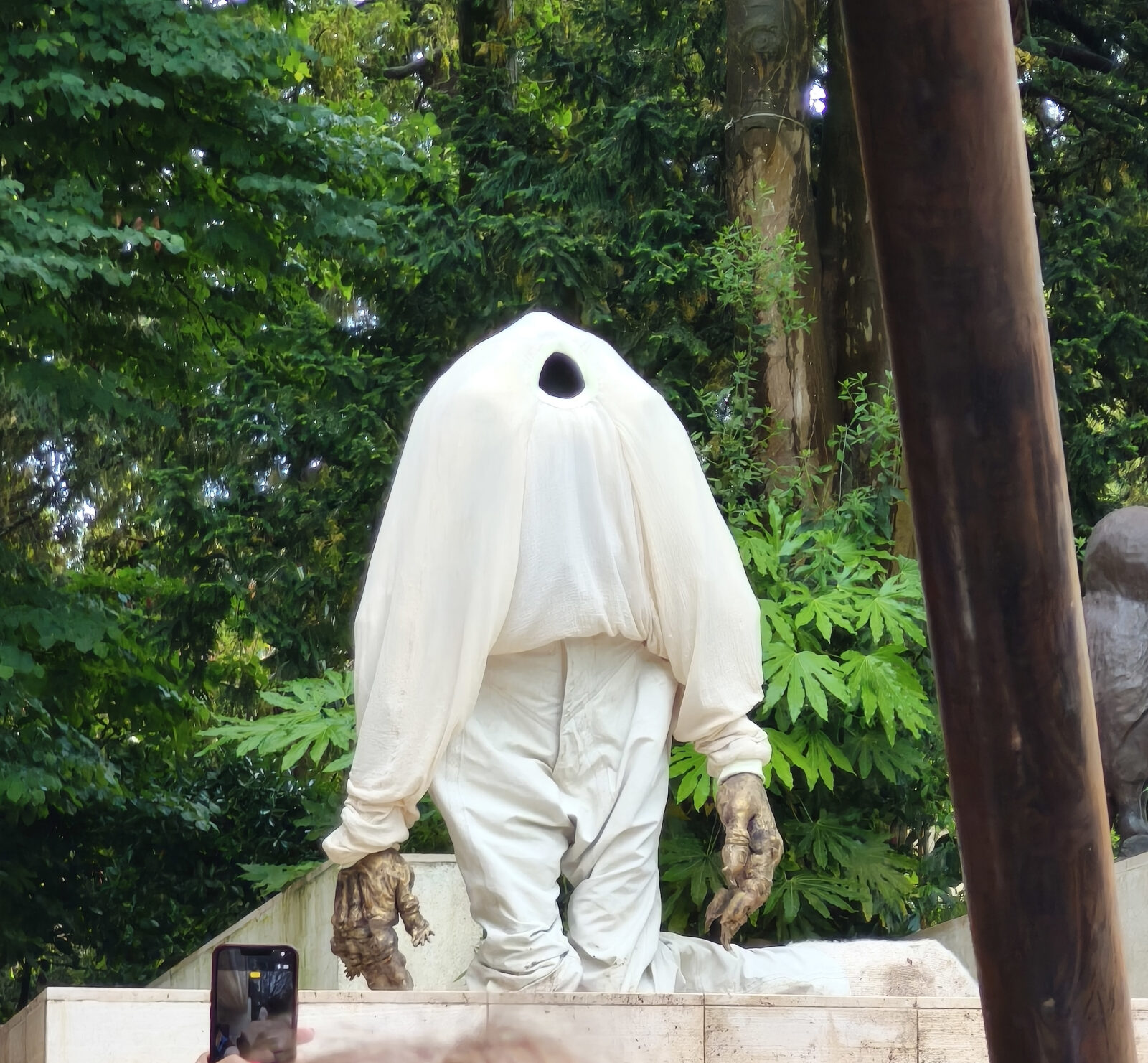
Tori Wrånes—that was the artist’s name—called Úrsula and said: “The giant’s body is made of sails, sails from a ship that crossed the ocean twenty times, and once went around the world. The sails are torn by the wind and mended by the sailors.”
“And the other giant inside has bird feet,” said Úrsula.
“Yes, because birds have no borders, like the wind and like this open pavilion. Nor does the voice have borders. The voice that came out of the giant’s fly—which is my own voice—reverberates in my bones, like the voice of the trees.”
Úrsula felt nostalgia and thought that maybe she could get into the giant’s sail suit, that the birds could take her back to Macondo, among wings, wind and sails. But she smelled a very familiar smell, flying across the water in the distance.
“It’s tocuyo!” exclaimed Úrsula. She headed in a straight line, without hesitating, with her nose in the front row, leading her to a room that said “Peru.”
When she saw the kenés of the artist Sara Flores, Úrsula went into a trance, such an intense trance that she thought it could kinetically return her to Macondo. Unlike the other rooms, this one was in a silence that exists only at the bottom of the ocean.
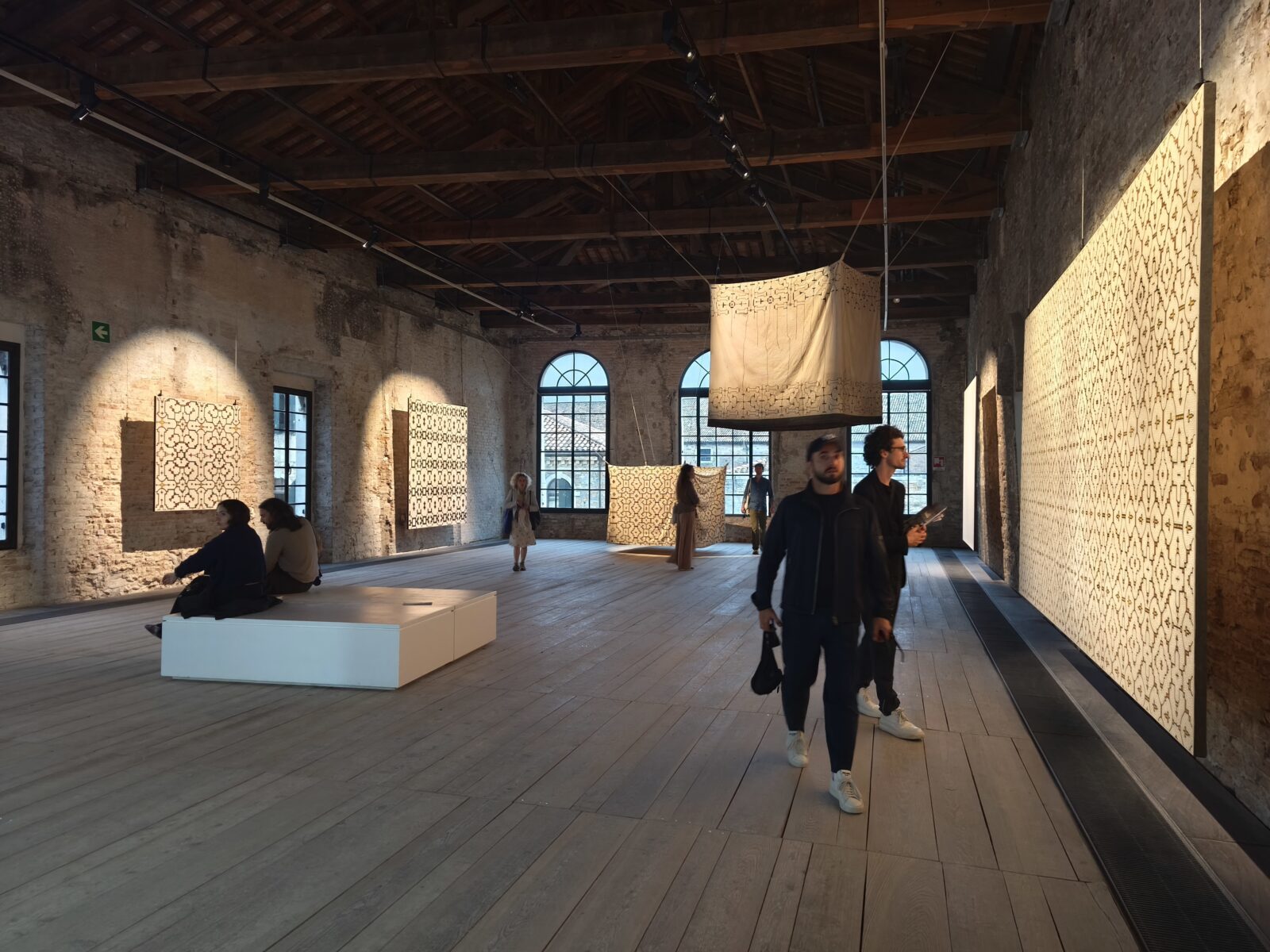
As she traveled through the cosmic designs, Úrsula felt that the smell was not only that of tocuyo, the wild cotton that abounded in Macondo, but of tocuyo imbued with tree barks, roots, leaves, fruits and the whole Amazonian arsenal of exquisite fragrances. Sara had transported all those essences in the form of pigments that she made with her own hands.
In Sara’s works, Úrsula saw anacondas, leaf veins, fish scales; she saw Macondo and the Amazon. She saw that the world was one, where animals, plants, earth weighed the same on the scale of the world. She saw that art was not separate from life and she saw life interwoven in the pigments, like the red line of blood that traveled through Macondo, announcing the death of her first son. Úrsula saw herself, as a continuous thread of maternity, leading to her and from her. Macondo was no longer alone in its hundred years of solitude, but in the universe of all beings.
Sitting on a wicker chair, in a corner of the room, Sara Flores rocked. Úrsula knew who she was, but she did not need her words. Sara had told her everything with her kenés.
Úrsula left the room and, dazed, nothing smelled like anything anymore. Then she knew it was time to return. The trances of the kenés could, without a doubt, return her to Macondo, just like Tori’s torn sails or Rosana’s metamorphic cocoons.
Walking just a few steps and without her nose marking the way, she saw a room that said “Chile.” She entered.
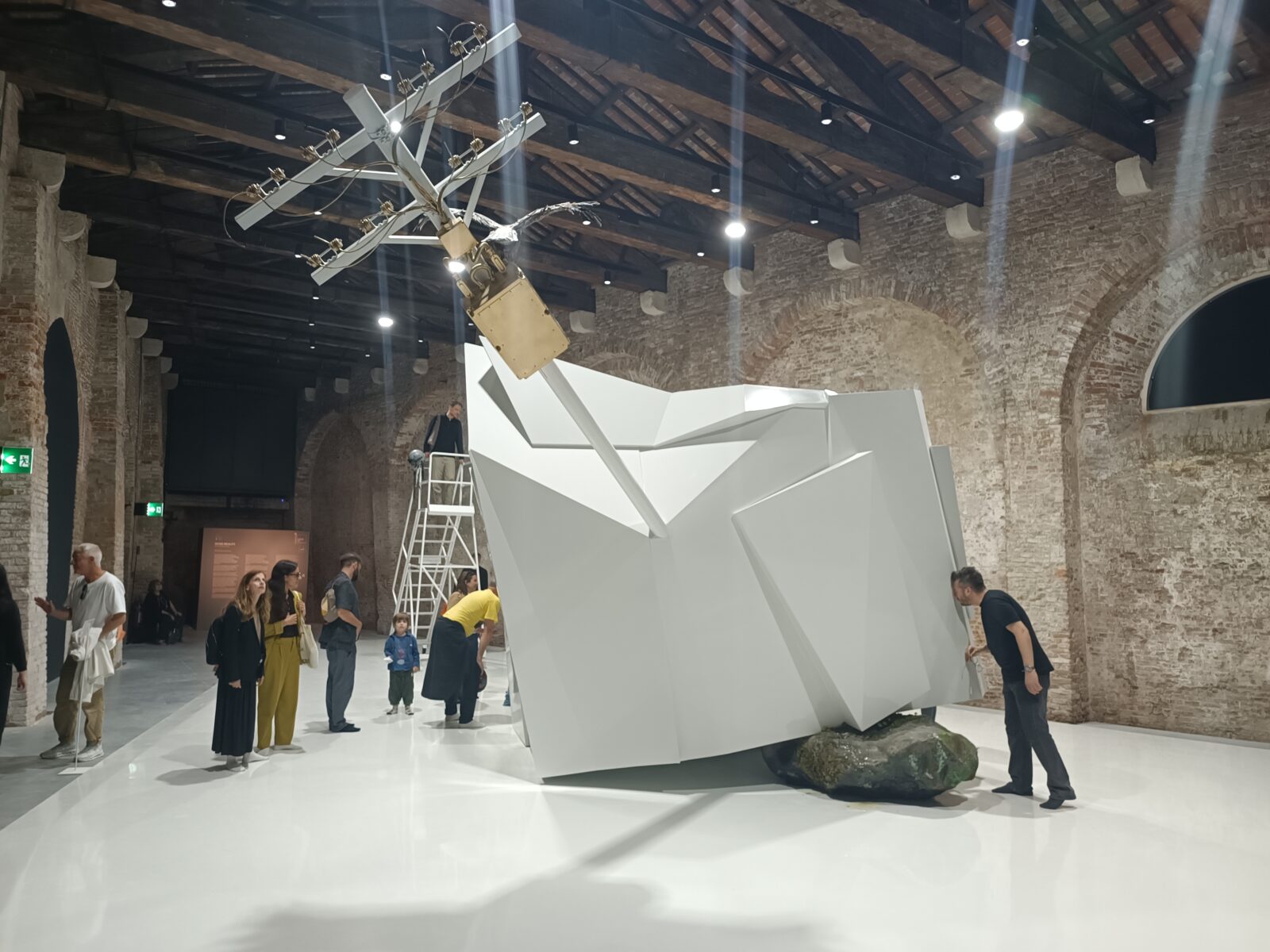
In this room were all the omens of her return. There was a telegraph pole that crossed a white sealed cabin and an inter‑lunar helmet with an oxygen tube. Úrsula took off her sandals and saw the astronaut winking at her from inside the cabin. She reached out her hand and the astronaut’s glove helped her pass through the peephole, from where you could see the inside of the sealed cabin.
“Where are you headed, ma’am?” the helpful astronaut asked Úrsula.
The builder of this strange building, the artist Norton Maza, blew a kiss to Úrsula as she began her ascent, but Úrsula did not see him.
A few days later, the people of Macondo came to see what had fallen from the sky into the middle of the river. Úrsula was fine. Just a little wet.
“So, did they talk about Macondo?” shouted José Arcadio Buendía from a distance.
Overwhelmed by tears gushing out in torrents, he added: “I brought you these hot chestnuts, my heart, you must be hungry and cold.”
Beside the babbling pebble river, the inhabitants of Macondo sat down, forming a circle around Úrsula, who held the gourd bowl with steaming chestnuts.
In her hands, Úrsula had three bags and a basket in which she had brought to Venice delicacies made with her own hands to share: breads, sponge cakes, meringues and little caramel animals.
From one of the bags, she took out a marvelous cloth with a red kené and slid it over her back.
“This is what Sara Flores gave me when I offered her a bag of bread baked in the clay oven,” said Úrsula.
From the other bag, she took out some bird feet, each with a different ring, one made by a friend of Tori Wrånes and another that her father had given her. The artist had put them in Úrsula’s bag when she gave her the sponge cakes.
“These are clay caterpillars,” said Úrsula, as she placed the small caterpillars on the sand. “Rosana Paulino gave them to me when I gave her a bag of meringues.”
The basket, where she had brought the little caramel animals, was creaking almost to the point of bursting. “José Arcadio, this is for you. Let’s see if it helps you keep on with your inventions,” said Úrsula, lifting the basket stuffed with the inter‑lunar helmet that Norton Maza’s astronaut had exchanged for the caramels.
From the right pocket of her dress, she took out a feather that had slid over her feet while she admired the pink color of Amistad Takeover, so that her daughters, Rebeca and Amaranta, could compare its color with that of the Amazonian camellias in the gardens of Macondo.
From her left pocket, she stretched a strip of dried glue that hung from one of Mohammad Joha’s little paintings. “Aureliano, this is for you,” she said with the resignation given to her by the certainty that nothing would change the destiny written in her son’s hands.
Úrsula closed her eyes.
“It smells of burnt almonds,” she said. “And there is a very low humming that does not come from the air. It comes from the earth. As if an underground animal were learning to speak.”
Úrsula looked each of the inhabitants of Macondo in the eyes and pronounced: “We will have to wage so many wars, only for them to go and paint our house blue in the end.”
: :
La Bienal de Venecia: Una fábula
Por Alt Går Bra
Branko Boero Imwinkelried (Argentina) & Agnes Nedregård (Noruega)
La 61ª Bienal de Venecia, “In Minor Keys”, cita algunas de sus fuentes de inspiración. Una de ellas es Cien años de soledad de Gabriel García Márquez—la historia de Macondo, el pueblo donde transcurre la novela.
Este fragmento ficcional nos cuenta que uno de los personajes, Úrsula Iguarán, se escapó de las páginas del libro para saber cómo Macondo había inspirado la Bienal.
Resbalando sobre las páginas, Úrsula Iguarán cayó de pie en medio de la Bienal de Venecia, en el lugar que llaman Giardini.
Vio los pabellones, algunos modernos, otros de arquitecturas imperiales, y se preguntó qué hacían todos esos países en estos jardines.
Vio cosas sorprendentes, y después supo que se llamaban obras de arte.
También vio a los resistentes, gente con capuchas y banderas, preparada a actuar, hasta a hacer huelga, a sacrificarlo todo por la causa.
Con su prodigioso sentido de orientación, Úrsula estaba profundamente perdida entre los cardúmenes que galopaban de una cola a otra y de edificio en edificio. Había tanto olor a mar salado y a Agua de Florida que casi no podía sentir otra cosa.
Una de las mujeres de la resistencia, que había envuelto su cuerpo en una gran bandera, tomó a Úrsula del brazo. Robusta y redonda, la mujer tenía un paraguas de seda rojo con puntillas para espantar el aguacero que iba a adueñarse de la Bienal de cabo a rabo de la tarde. Caminaron como siamesas, entrando y saliendo de salas, casonas, mansiones y atravesando puentecitos que unían la tierra como puntadas de hilo a través de los canales.
—Esta es la exposición central —le dijo la mujer a Úrsula, ciñéndole el brazo contra su bandera—. Quiero que veas la obra del artista Mohammad Joha. Está al final, a la derecha.
La mujer deslizó su brazo, deshaciendo el nudo de pulpo de las siamesas. Úrsula no la volvió a ver.
Aunque se sintió chiquita ante el umbral del soberbio pabellón, Úrsula se dejó llevar por el pájaro gigante que daba la bienvenida con brazos abiertos y un plumaje de un rosa más intenso que el de las camelias amazónicas de los jardines de Macondo. Decían que el pájaro se llamaba Amistad Takeover y que lo había hecho el Gran Jefe Demond Melancon.
Atravesó la casona que exhibía una cantidad de telas, satines, pañerías y trapos, bordados o no, como nunca había visto antes — ni siquiera en la Calle de los Turcos, donde los árabes radicados en Macondo exhibían sus lienzos alados que hacían a la calle levitar. Úrsula se hechizó con los cacharros, jarros, tinajas y cazuelas que fantaseaba lucir en su cocina.
Entre todos estos objetos maravillosos, era difícil mantener el hilo, pero quería llegar adonde la mujer de la bandera le había indicado. Allí vio los cuadritos de Mohammad Joha que eran como espejos rotos, como una esperanza resquebrajada entre colores. Esquirlas de materiales diferentes estaban ensambladas con engrudo, pegaditas unas con otras. Los ojos de Úrsula perforaron los cuadritos, no a través de los colores sino por las hendijas de la cola. Vio, como si tuviera un telescopio del tiempo, la sangre en que su hijo Aureliano se bañaría cuando fuera a transformarse en el Coronel Aureliano Buendía, comandante general de las fuerzas revolucionarias.
Entre el tumulto de la gente que corría de un cuadro a otro, entre telas y trapos, cacharros y cazuelas, Úrsula no tuvo respiro para averiguar cómo Macondo había inspirado la Bienal. Tenía que sentir.
Con su habitual pragmatismo de matriarca, exclamó:
—¡Me voy a dejar llevar por el olfato!
Entonces olió. Y lo primero que sintió fueron las orugas. Se dejó llevar por su nariz hasta que se encontró frente a una mujer tan fuerte como las de Macondo. Era ella la que había traído las orugas de Brasil. Se llamaba Rosana Paulino y era artista.
Rosana le dijo a Úrsula que la conocía muy bien y que adoraba Cien años de soledad, que había leído tres veces.
—Pero para nosotros en Brasil, yo vengo de una comunidad negra —dijo Rosana—, nuestra vida no es realismo mágico, es la realidad de todos los días. En mi familia, cuando estamos enfermos, tenemos que pedirle permiso al árbol antes de arrancarle sus hojas medicinales. Estas no son fantasías, sino parte de nuestra cultura.
Úrsula asintió, como si hubiera estado escuchando a su madre.
Y Rosana agregó:
—Nosotros creemos que las otras formas de vida son tan importantes como la de los seres humanos. Yo no veo la vida humana aquí y la naturaleza allá. Y esto no es algo que nosotros tengamos que pensar, sino algo que sentimos porque vivimos nuestra vida cotidiana de este modo.
Pero Úrsula no olía ni los árboles ni las plantas — a pesar de que todo lo que había en este pabellón estaba inspirado por una planta bien conocida en Macondo, una planta venenosa que en portugués llaman comigo ninguém pode — Úrsula olía las orugas.
—Rosana, yo nací con las orugas, y sé que mi tataranieta, que habré de conocer porque viviré más de un siglo, se casará con un obrero de la plantación de bananas, que los gringos instalarán en Macondo, y él aparecerá siempre con mariposas amarillas que aletean a su alrededor. ¿Pero la gente que está acá habrá olido las orugas alguna vez? —preguntó Úrsula desolada con ojos de vidrio.
—Por eso la fachada del pabellón está cubierta de estas orugas y hay más adentro. Hay orugas con cuerpos de mujeres, que salen de esos capullos. Y al final, hay telas de araña con fotografías de mujeres esclavas del periodo colonial de Brasil. Yo soy descendiente de esclavos y no sé quiénes son mis ancestros. Quizás una de esas mujeres es mi tatarabuela. Esta es mi manera de rendirles homenaje a ellas y, al mismo tiempo, tejer un vínculo, un hilo, una red con mis posibles ancestros —respondió Rosana con voz de miel de abeja, asentada en un tronco resquebrajado por los azotes de las olas del mar.
Apenas se despedía de Rosana con un abrazo lunar, Úrsula comenzó a oler otros olores: los árboles. Había olor a árbol que venía de un pabellón que decía “Países Nórdicos”. Este era el único pabellón abierto porque era de vidrio, sin paredes. Todo lo de afuera y lo de adentro estaba tan confundido que hasta había un árbol al que se le había ocurrido crecer adentro.
Úrsula corrió a ver el olor a árbol, pero el que olía no era el que estaba de pie, sino el que estaba acostado y tenía cabeza de ser humano.
Su experiencia olfativa fue interrumpida por un gigante, que se arrastró desde el área de vidrio y empezó a subir las escaleras.
A pesar de ser muy corajuda, Úrsula se asustó, sobre todo cuando el gigante empezó a cantar a través de su bragueta.
Después el gigante comenzó a achicarse y una mujer de tamaño real salió del cuerpo del gigante. Cuando levantó sus ojos, la mujer, que era artista como Rosana, no pudo ver a nadie más que a Úrsula, en medio del gran público.
Tori Wrånes, así se llamaba la artista, llamó a Úrsula y le dijo:
—El cuerpo del gigante está hecho de velas, velas de un barco que atravesó el océano veinte veces, y una vez dio la vuelta al mundo. Las velas están rasgadas por el viento y remendadas por los marineros.
—Y el otro gigante que está adentro tiene pies de pájaros —dijo Úrsula.
—Sí, porque los pájaros no tienen fronteras, como el viento y como este pabellón abierto —respondió Tori—. Tampoco tiene fronteras la voz. La voz que salió de la bragueta del gigante, que es mi propia voz, reverbera en mis huesos, como la voz de los árboles.
Úrsula sintió nostalgia y pensó que a lo mejor podía meterse en el traje de gigante de velas y que los pájaros la podían llevar de regreso a Macondo, entre alas, viento y velas. Pero sintió un olor muy familiar, que volaba a través del agua a la distancia.
—¡Es tocuyo! —exclamó Úrsula, y se dirigió en línea recta, sin vacilar, con su nariz en primera fila, conduciéndola hacia una sala que decía “Perú”.
Cuando vio los kenés de la artista Sara Flores, Úrsula entró en trance, un trance tan intenso que pensó que podría devolverla a Macondo. Al contrario de las otras salas, esta estaba en un silencio como solo existe en el fondo del océano. Todos estaban en trance.
Mientras viajaba por los diseños cósmicos, Úrsula sintió que el olor no era sólo el del tocuyo, el algodón salvaje que abundaba en Macondo, sino el del tocuyo embebido con cortezas de árboles, raíces, hojas, frutas y todo el arsenal amazónico de fragancias más exquisitas. Sara había transportado todas esas esencias en forma de pigmentos que ella fabricaba con sus propias manos.
En las obras de Sara, Úrsula vio las anacondas, las venas de las hojas, las escamas de los peces, vio Macondo y el Amazonas. Vio que el mundo era uno solo, donde animales, plantas, tierra pesaban lo mismo en la balanza del mundo. Vio que el arte no estaba separado de la vida y vio la vida entretejida en los pigmentos, como la línea roja de sangre que viajó por Macondo, anunciándole la muerte de su primer hijo. Úrsula se vio a sí misma, como un hilo continuo de maternidad, conduciendo hasta ella y desde ella. Macondo ya no estaba solo en sus cien años de soledad, sino en el universo de todos los seres.
Sentada en una silla de mimbre, en un rincón de la sala, se mecía Sara Flores. Úrsula supo quién era, pero no necesitó de sus palabras. Sara le había dicho todo con sus kenés.
Úrsula salió de la sala y, aturdida, ya nada olía a nada. Entonces supo que era tiempo de regresar. Los trances de los kenés podían, sin duda alguna, devolverla a Macondo, así como las velas rasgadas de Tori o los capullos metamórficos de Rosana.
Caminando solo unos pasos y sin que su nariz le marcara el rumbo, vio una sala que decía “Chile”. Entró.
En esta sala estaban todos los presagios de su retorno. Había un poste de telégrafo que atravesaba una cabaña blanca acorazada y un casco interlunar con tubo de oxígeno. Úrsula se sacó sus sandalias y vio al astronauta que le guiñaba el ojo desde el interior de la cabaña. Ella le extendió la mano y el guante del astronauta la ayudó a pasar por la mirilla, desde donde se podía ver el interior de la cabaña blindada.
—¿A dónde se dirige, Señora? —le preguntó el astronauta servicial a Úrsula.
El constructor de este raro edificio, el artista Norton Maza, le tiró un beso a Úrsula cuando ella comenzaba su ascenso, pero Úrsula no lo vio.
Unos días más tarde, la gente de Macondo vino a ver qué era lo que había caído del cielo en medio del río. Úrsula estaba bien. Sólo un poco mojada.
—¿Y hablaron de Macondo? —gritó José Arcadio Buendía desde la distancia.
Abrumado por las lágrimas que le brotaban a borbotones, agregó:
—Te traje estas castañas calientes, mi corazón, debés tener hambre y frío.
Al lado del río de guijarros parloteantes, los habitantes de Macondo se sentaron haciendo una ronda alrededor de Úrsula, que sostenía la totuma con castañas humeantes.
En sus manos, Úrsula tenía tres bolsas y una cesta en las que había llevado a Venecia exquisiteces hechas con sus propias manos para compartir: panes, bizcochuelos, merengues y animalitos de caramelo.
De una de las bolsas, sacó una tela maravillosa con un kené rojo y la deslizó sobre su espalda.
—Esto es lo que me dio Sara Flores cuando le ofrecí una bolsa de pan horneado en el horno de barro —dijo Úrsula.
De la otra bolsa, sacó unos pies de pájaro, cada uno con un anillo diferente, uno hecho por un amigo de Tori Wrånes y otro que le había dado su padre. La artista había puesto los pies de pájaro en la bolsa de Úrsula cuando ella le regaló los bizcochuelos.
—Estas son orugas de arcilla —dijo Úrsula, mientras ponía sobre la arena las pequeñas orugas—. Rosana Paulino me las dio cuando le regalé una bolsa de merengues —explicó Úrsula orgullosa.
La cesta, donde había llevado los animalitos de caramelo, crujía casi al punto de reventar.
—José Arcadio, esto es para vos. A ver si te ayuda a seguir con tus inventos —dijo Úrsula, levantando la cesta atascada con el casco interlunar con un tubo de oxígeno, que el astronauta de Norton Maza le había cambiado por los caramelos.
Del bolsillo derecho de su vestido, sacó una pluma que se había deslizado sobre sus pies mientras admiraba el color rosa de Amistad Takeover para que sus hijas, Rebeca y Amaranta, la compararan con las camelias amazónicas de los jardines de Macondo.
De su bolsillo izquierdo, estiró una tirita de cola seca que colgaba de uno de los cuadritos de Mohammad Joha y dijo:
—Aureliano, esto es para ti. —Con la resignación que le daba la certeza de que nada iba a cambiar el destino que estaba escrito en las manos de su hijo.
Úrsula cerró los ojos.
—Huele a almendras quemadas —dijo—. Y hay un zumbido muy bajito que no viene del aire. Viene de la tierra. Como si un animal subterráneo estuviera aprendiendo a hablar —agregó sin abrir los ojos.
Úrsula miró a cada uno de los habitantes de Macondo a los ojos y sentenció:
—Habremos de hacer tantas guerras, y todo para que al final nos terminen pintando la casa de azul.
: :
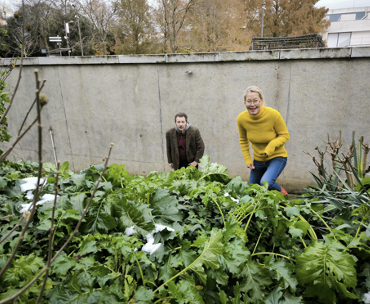
Alt Går Bra (Branko Boero Imwinkelried and Agnes Nedregård)